
Case study: PFA sanitary piping for a cheese production line
Challenge
Cheese at roughly 80°C built up inside the piping, requiring a heavy sequence of pig cleaning, disassembling the pipe, circulation cleaning, and manual brush scrubbing — an extremely demanding workload.
Solution
Replacing the stainless piping with PFA sanitary piping, fully custom-dimensioned to fit the production line exactly.
Result
Manual cleaning is no longer needed at all. Soaking the pipe overnight and rinsing it the next morning is now enough to clean it completely — while also sharply cutting raw material loss.
Customer profile: A dairy manufacturer focused on cheese production and sales, dedicated to building a production line that balances quality with efficiency.
A Production Floor at Its Limit With Manual Brush Cleaning
The project started with a phone inquiry to MONOVATE and a request to experiment with a sample. Improving the cleanability of their piping had been a long-standing challenge in cheese production, and they wanted to see the real-world effect of PFA sanitary piping firsthand.
In the piping used to send cheese, heated to around 80°C, on to the next process step, the previous stainless piping suffered from serious buildup — cheese sticking to the inside of the pipe — leading to both raw material loss and a heavy cleaning burden. Given the nature of the raw material, buildup inside the pipe was unavoidable, and cleaning it out took enormous effort.
The cleaning process itself involved pushing the material out with a silicone pig, disconnecting the pipe for circulation cleaning, and then manually scrubbing the inside with a brush. This work was genuinely grueling, consuming significant time and effort.
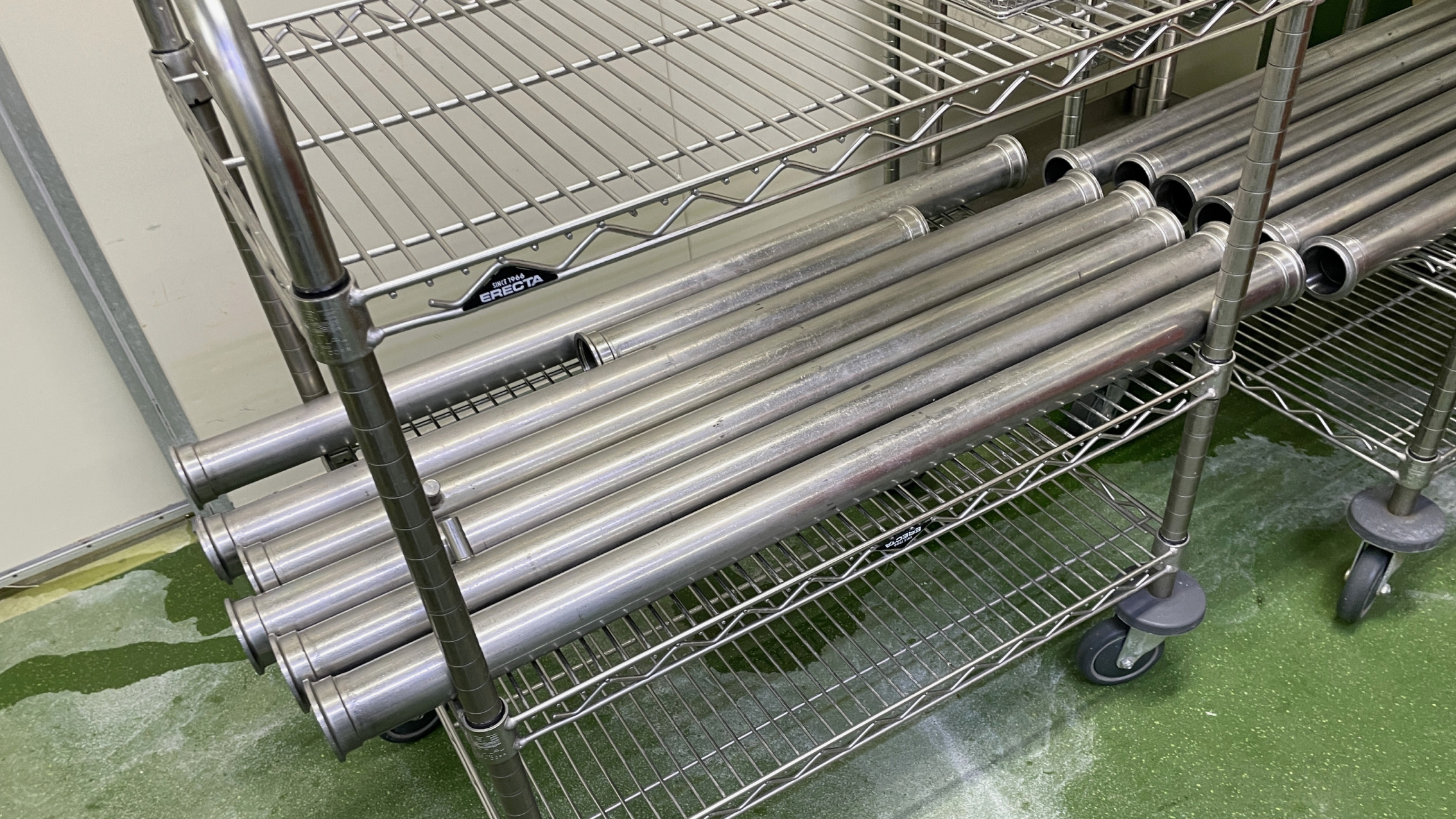
A Fully Custom Fit
Since the real-world cleaning performance of PFA sanitary piping was still an unknown before installation, the process began with sample-based performance testing. Once the results turned out to exceed expectations, the project moved into full-scale installation. MONOVATE’s sales representative conducted multiple on-site surveys and proposed a piping layout optimized for the existing production line.
The final product was a fully custom design built to fit the customer’s production line exactly — including switching the ferrule sections on the specialized long-run PFA sanitary piping to stainless steel for added strength, and using reducers at the junctions between pipes of different diameters. Every detail was tailored to the specific requirements of the floor.
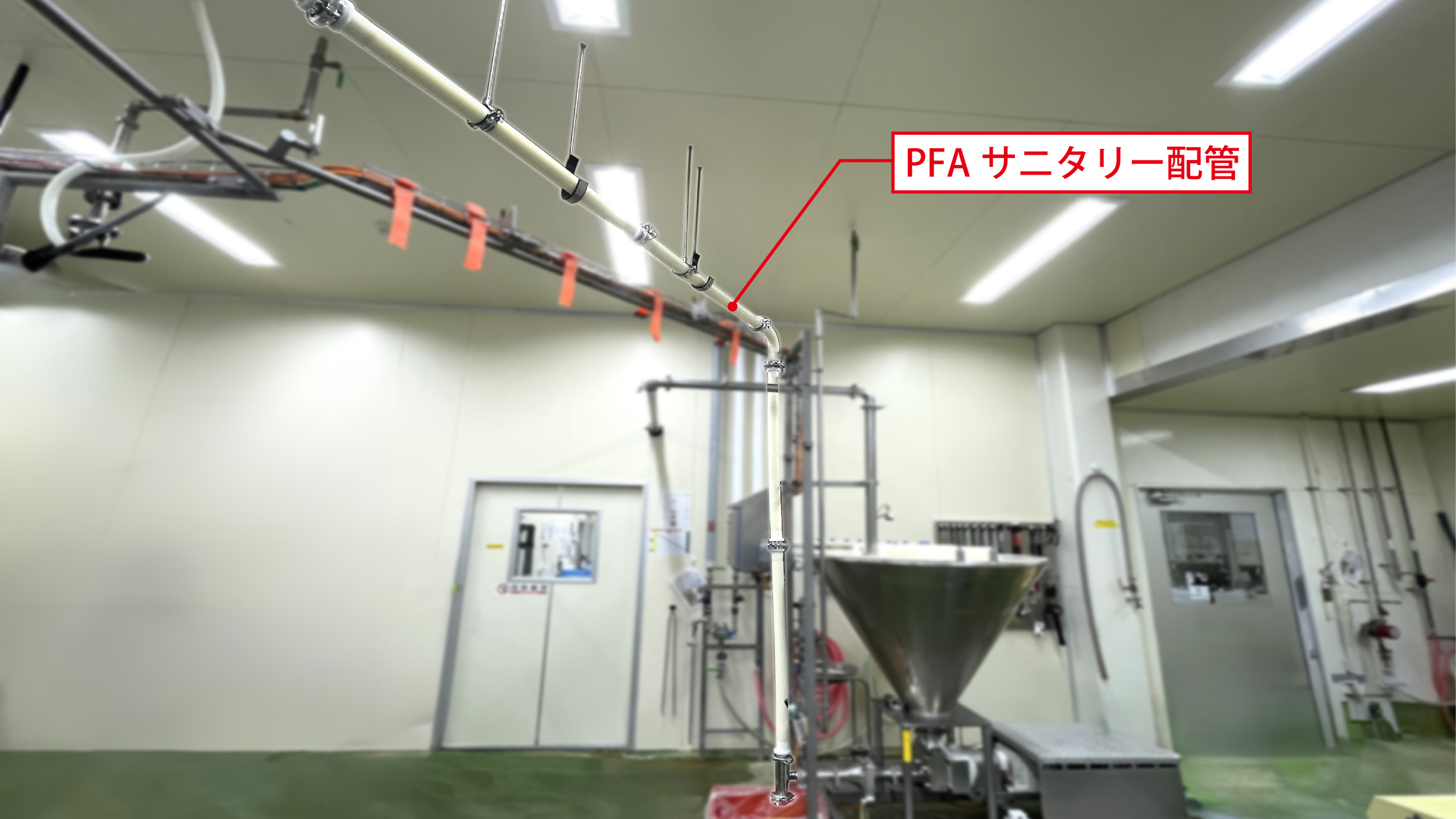
The “Rinse It Right Off” Result
Once installed on the actual production line, the change was dramatic. Where cleaning had previously required manual brush scrubbing, switching to PFA sanitary piping meant circulation cleaning alone was enough — the cheese now rinses off cleanly on its own.
The improvement went beyond cleanability alone; raw material loss dropped dramatically as well. The cost of installing PFA sanitary piping isn’t small, but weighed against the labor saved on cleaning and the reduction in material loss, they’re genuinely satisfied with the investment.
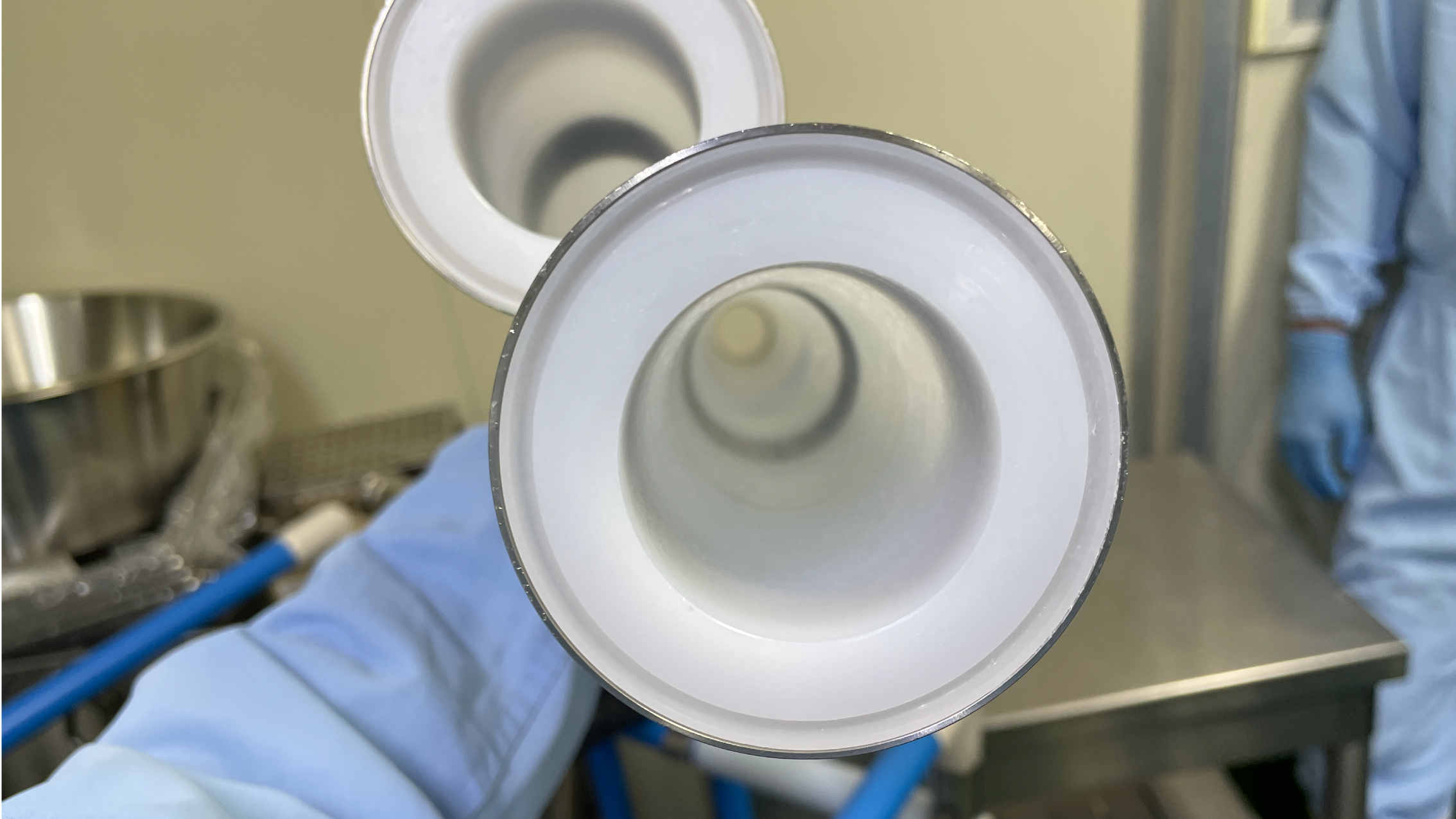
Cleaning got so much easier in practice that staff say they could never go back to the old stainless piping and its cleaning routine.
Cleaning process before: pig cleaning → disassemble piping → circulation cleaning → manual brush scrubbing.
Cleaning process after: pig cleaning → disassemble piping → circulation cleaning → soak overnight in a water tank → simply rinse the next morning to finish.
Feeling the Return on Investment, and Planning to Expand
This project targeted what was identified as the single highest-priority point in the production process, and the company is now considering replacing stainless piping with PFA sanitary piping on its other cheese production lines as well.
Since this was their first time using PFA sanitary piping, they had some concern about long-term durability and running costs — but MONOVATE reassured them that PTFE-based materials essentially don’t degrade, and that many companies have used it reliably for years, which put those concerns to rest.
From the sales team: On a follow-up visit after delivery, hearing that “cleaning time has improved dramatically” and “we can’t go back to the old piping” was genuinely rewarding. This project took considerable time from design through delivery. We visited the customer’s plant repeatedly, checking the site in person and working through the piping specification and layout together at every step. The equipment manager’s genuine enthusiasm for improving the process came through clearly, and we’re glad we could deliver a product they’re truly satisfied with.
Editor’s note: In this post-installation interview, the team kindly answered every question and gave us a thorough tour of the plant despite a busy schedule — thank you sincerely. Hearing just how difficult the old cleaning process had been, and about the back-and-forth between the customer and our sales team working through the solution together, made seeing the finished PFA sanitary piping installed a genuinely moving moment for us too. Hearing the floor say, in their own words, that they could never go back to the old piping was, more than anything, the best part of this visit. We’ll keep working on proposals that can put a smile on the faces of the people actually working on the floor.
No tags for this post.