
Case study: Heater unit with built-in mixing
Challenge
Rising production volume had pushed three small heating units (120L total capacity) to their limit. Splitting batches across them, along with manually transferring heavy containers and stirring by hand, stretched the production cycle to two full weeks.
Solution
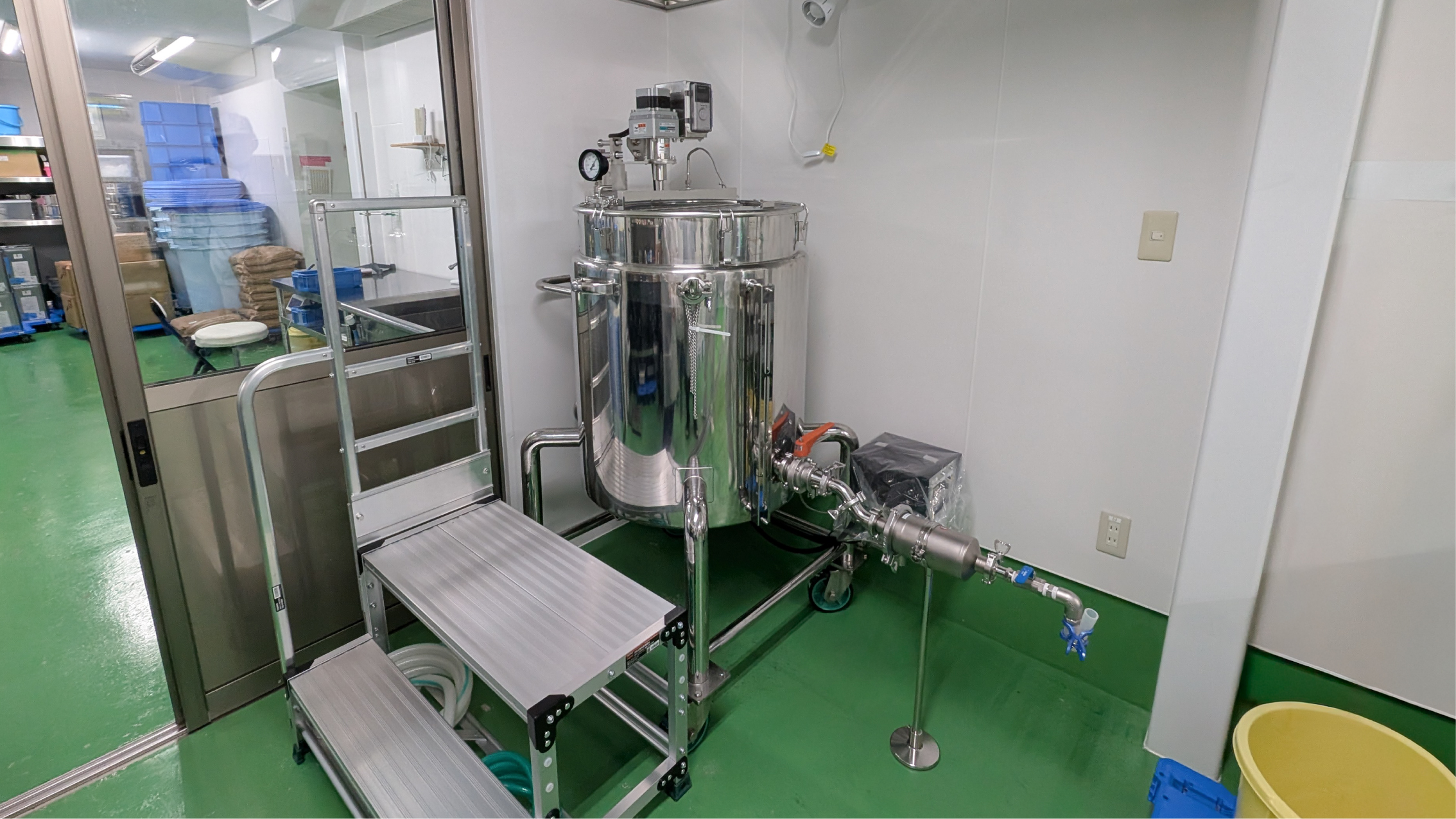
Installing a MONOVATE heater unit enabled processing 200 liters in a single batch. A pre-installation test confirmed the unit could reach 90°C and verified the benefit of its built-in mixer, with customization worked in along the way.
Result
The production cycle dropped from two weeks to five days, batch capacity rose from 120L to 200L, and overall productivity improved dramatically.
Customer profile: Respect Co., Ltd., headquartered in Otsu City, Shiga Prefecture, a manufacturer of fermented plant extracts. The company holds Organic JAS certification and supplies high-quality organic fermented products.
The Process, and the Problem Before the Upgrade
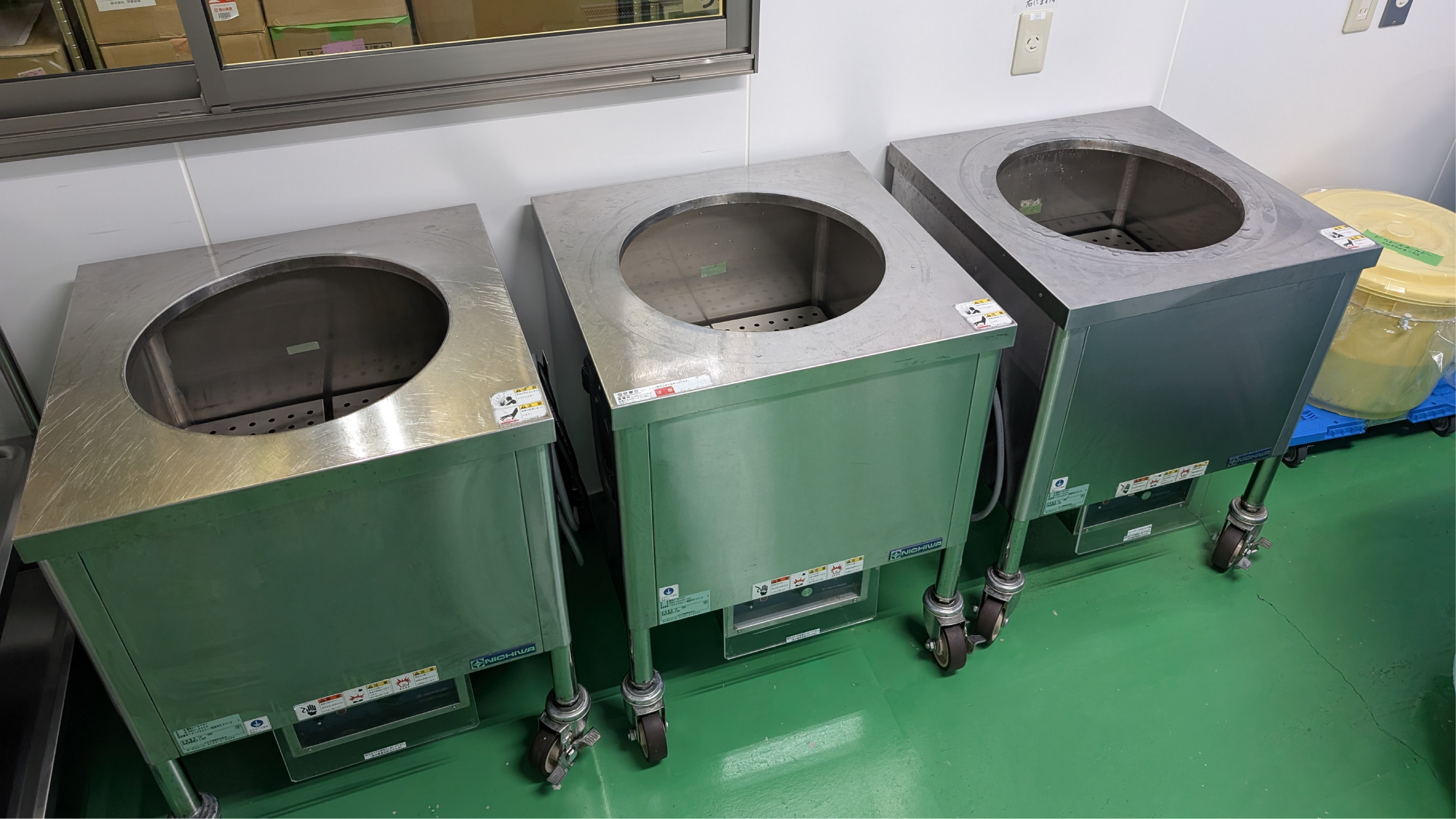
Before installing the heater unit, the company warmed its product using commercial soup warmers — three units, each capable of handling only up to 40 liters. On top of that limited capacity, the process before installation involved manually transferring the warmed raw material into other containers, a genuinely demanding task. Every bit of stirring while the material was being warmed was also done entirely by hand.
As production volume grew, the company began looking for a tank with a built-in mixer that could process a larger volume in a single run.
Finding MONOVATE, and Why They Chose It
While searching online for a temperature-controlled tank with a built-in mixer, the company came across MONOVATE’s heater unit and immediately thought, “this could handle a lot more volume in one go.” After discussing it with the company president — who already had a track record buying stainless vessels from MONOVATE — they called to inquire directly.
Having that existing relationship of trust in place made it easy to move the conversation forward with confidence.
Testing Before Committing
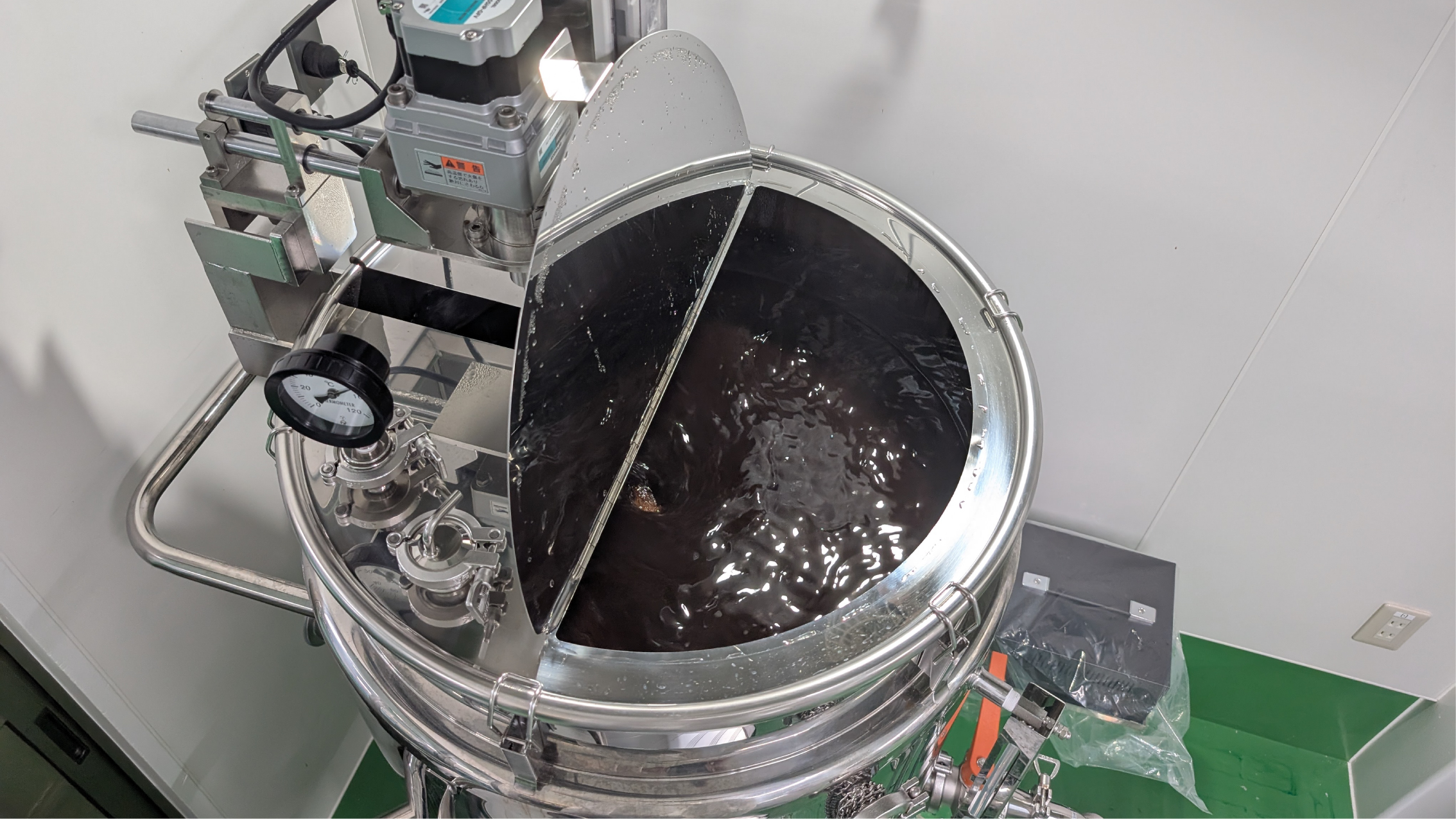
Since MONOVATE offers pre-installation testing for the heater unit, they ran a real test at MONOVATE’s Yashio plant. By the time they arrived, the unit was already running, and they were able to confirm 150 liters heating up in about two hours — an immediately convincing result.
Some of their raw materials needed to reach as high as 90°C, and the test confirmed the unit could comfortably reach that temperature too. (Reaching 90°C depends on the specific application — always worth discussing directly.)
What Sealed the Decision
Their three soup warmers together handled the equivalent of 120 liters; one heater unit could process 200 liters at once — a major jump in capacity on its own. Layered on top of that was the built-in mixer, replacing what had been entirely manual stirring and meaningfully cutting labor. Getting both a major capacity increase and reduced manual work from the same piece of equipment was what made the decision clear.
The Results After Installation
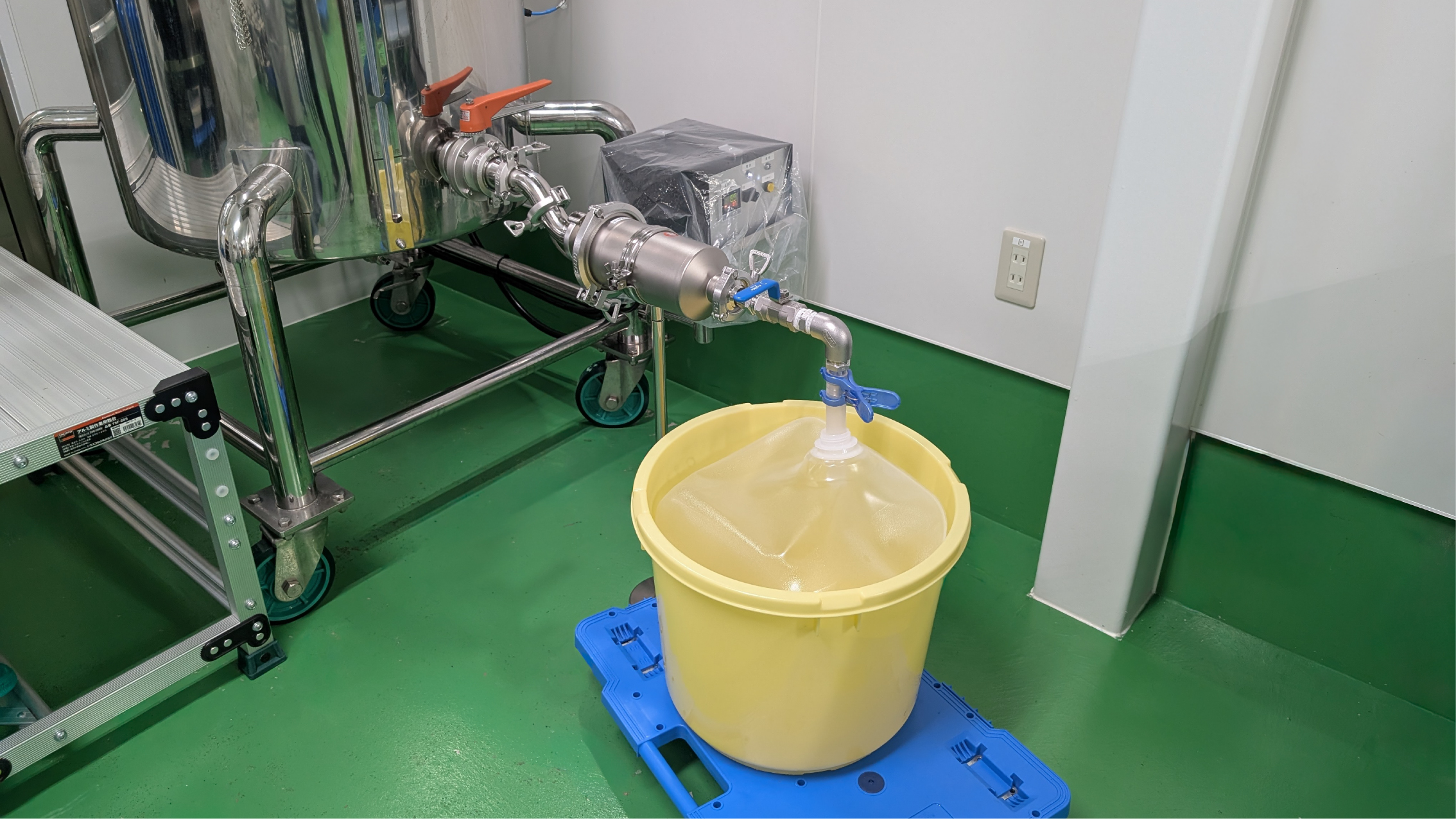
After installation, the work of lifting heavy containers off the soup warmers and transferring their contents elsewhere disappeared entirely — the tank now heats the material and staff can fill directly from it, sharply reducing physical workload.
What used to take two weeks now finishes in five days, a major reduction in overall production time. With that time freed up, staff can now put more attention into other tasks, and shifting from manual to mechanical mixing has also helped stabilize product quality.
Customization and Everyday Usability
Working with MONOVATE’s sales representative, the tank’s leg height was customized to match the size of the containers being filled, making the filling process easier. Once installed, it fit the available space perfectly, and casters mean it can be relocated to another room easily whenever that need comes up.
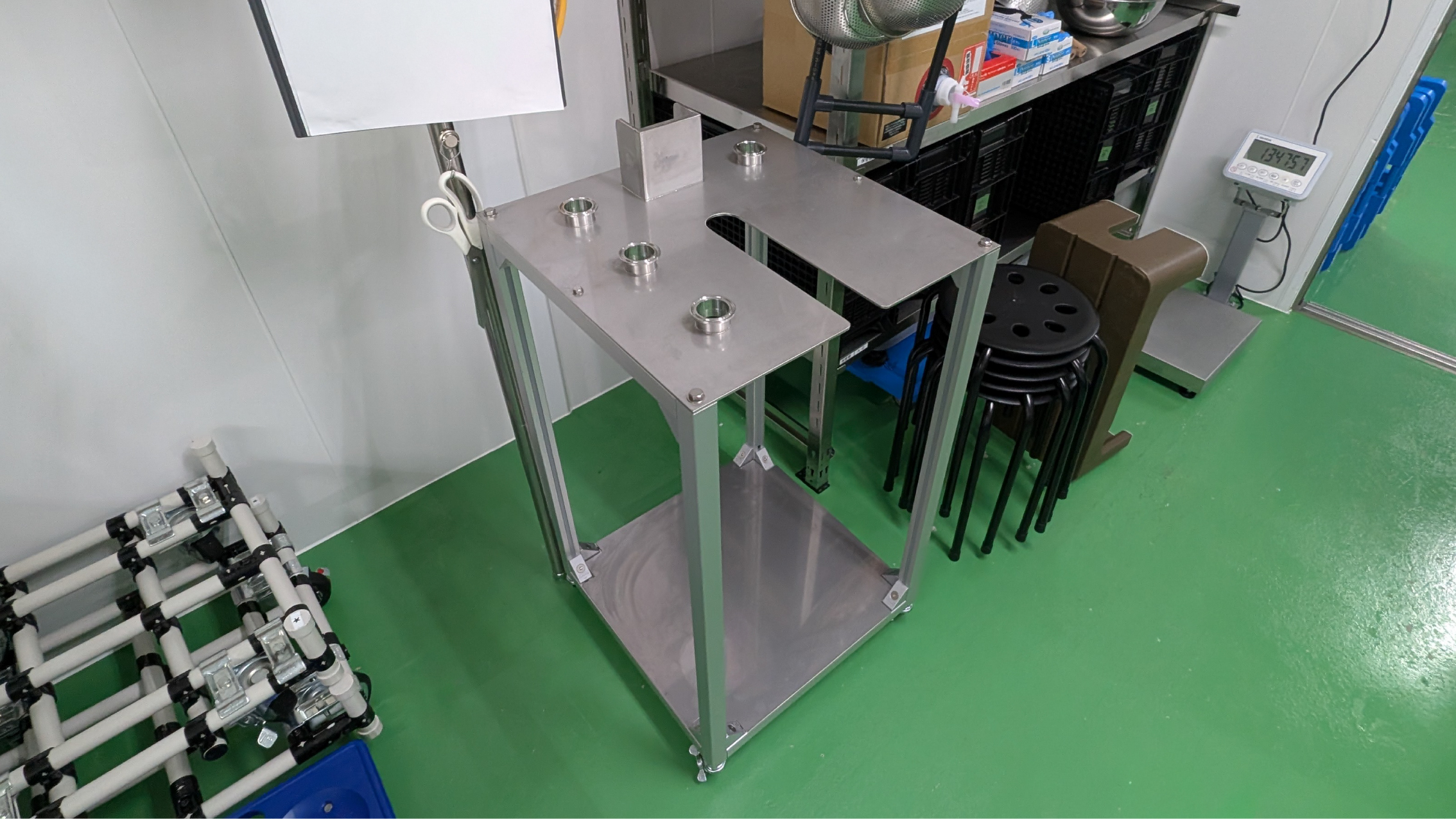
They also had a stand built for the mixer, baffle, and temperature sensor used during cleaning — a small addition that’s proven genuinely convenient in everyday use.
One Year In: The Overall Evaluation
After roughly a year of use, the honest reaction is that things would have been genuinely difficult without it. MONOVATE’s sales representative was responsive throughout, with plenty of direct conversation that kept the process moving smoothly right up to installation. Delivery came together faster than expected, the cost never felt excessive, and considering the results, it’s been a genuinely good investment.
One request going forward: in a separate blending process using a disperser-type hand mixer, they’ve been running into foaming issues with certain raw materials. They plan to work with MONOVATE’s sales representative on a mixer design that also works with a hand mixer while keeping foaming under control.
From the sales team: On our first visit to the customer’s plant, the production floor was moving at a fast, busy pace, and everyone there clearly had their hands full. Wanting to genuinely help, we put together several proposals to fine-tune the heater unit’s specification. The equipment manager was deeply committed to improving efficiency, and we went through the specification — including the pre-installation test — multiple times together. That effort paid off: after delivery, we heard that the result matched exactly what they’d pictured, which meant a great deal to us. Everyone on the floor clearly took pride in what they were making, and we could feel real momentum behind the company. We look forward to continuing to support them closely.
Editor’s note: This interview gave us a real look at the plant, from raw organic plant fermentation extract all the way through the production process. The fermentation process itself was genuinely fascinating, and we found ourselves drawn into the appeal of the business itself. Hearing how the production cycle dropped from two weeks to five days, starting from that first pre-installation test, was something we were honestly thrilled to hear. Thank you sincerely for the generous time you gave us.
No tags for this post.