Soak It Overnight, Rinse in the Morning: How New Piping Ended a Cheese Maker’s Manual Scrubbing

Case study: PFA sanitary piping for a cheese production line

Challenge

Cheese at roughly 80°C built up inside the piping, requiring a heavy sequence of pig cleaning, disassembling the pipe, circulation cleaning, and manual brush scrubbing — an extremely demanding workload.

Solution

Replacing the stainless piping with PFA sanitary piping, fully custom-dimensioned to fit the production line exactly.

Result

Manual cleaning is no longer needed at all. Soaking the pipe overnight and rinsing it the next morning is now enough to clean it completely — while also sharply cutting raw material loss.

Customer profile: A dairy manufacturer focused on cheese production and sales, dedicated to building a production line that balances quality with efficiency.

A Production Floor at Its Limit With Manual Brush Cleaning

The project started with a phone inquiry to MONOVATE and a request to experiment with a sample. Improving the cleanability of their piping had been a long-standing challenge in cheese production, and they wanted to see the real-world effect of PFA sanitary piping firsthand.

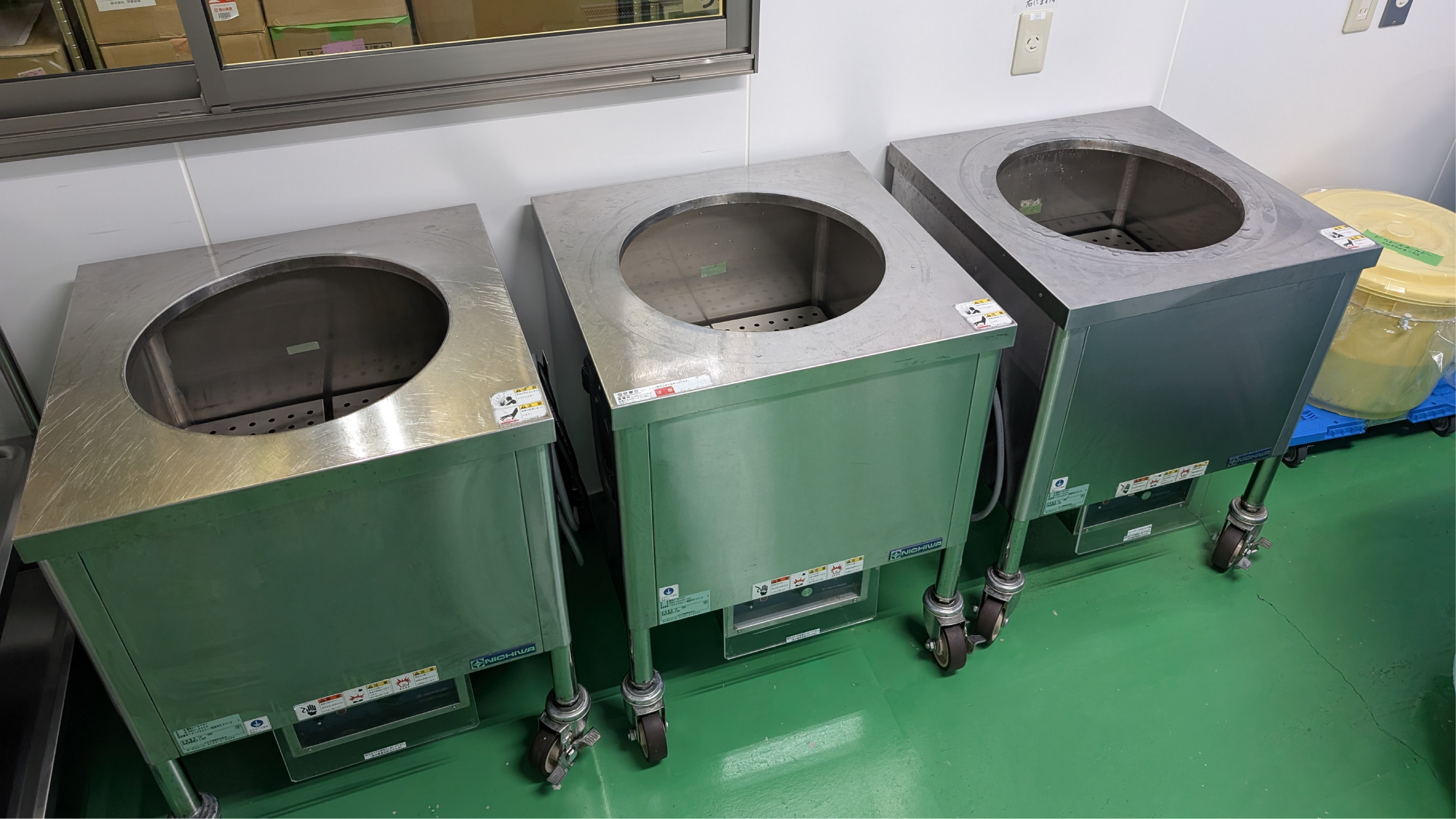
In the piping used to send cheese, heated to around 80°C, on to the next process step, the previous stainless piping suffered from serious buildup — cheese sticking to the inside of the pipe — leading to both raw material loss and a heavy cleaning burden. Given the nature of the raw material, buildup inside the pipe was unavoidable, and cleaning it out took enormous effort.

The cleaning process itself involved pushing the material out with a silicone pig, disconnecting the pipe for circulation cleaning, and then manually scrubbing the inside with a brush. This work was genuinely grueling, consuming significant time and effort.
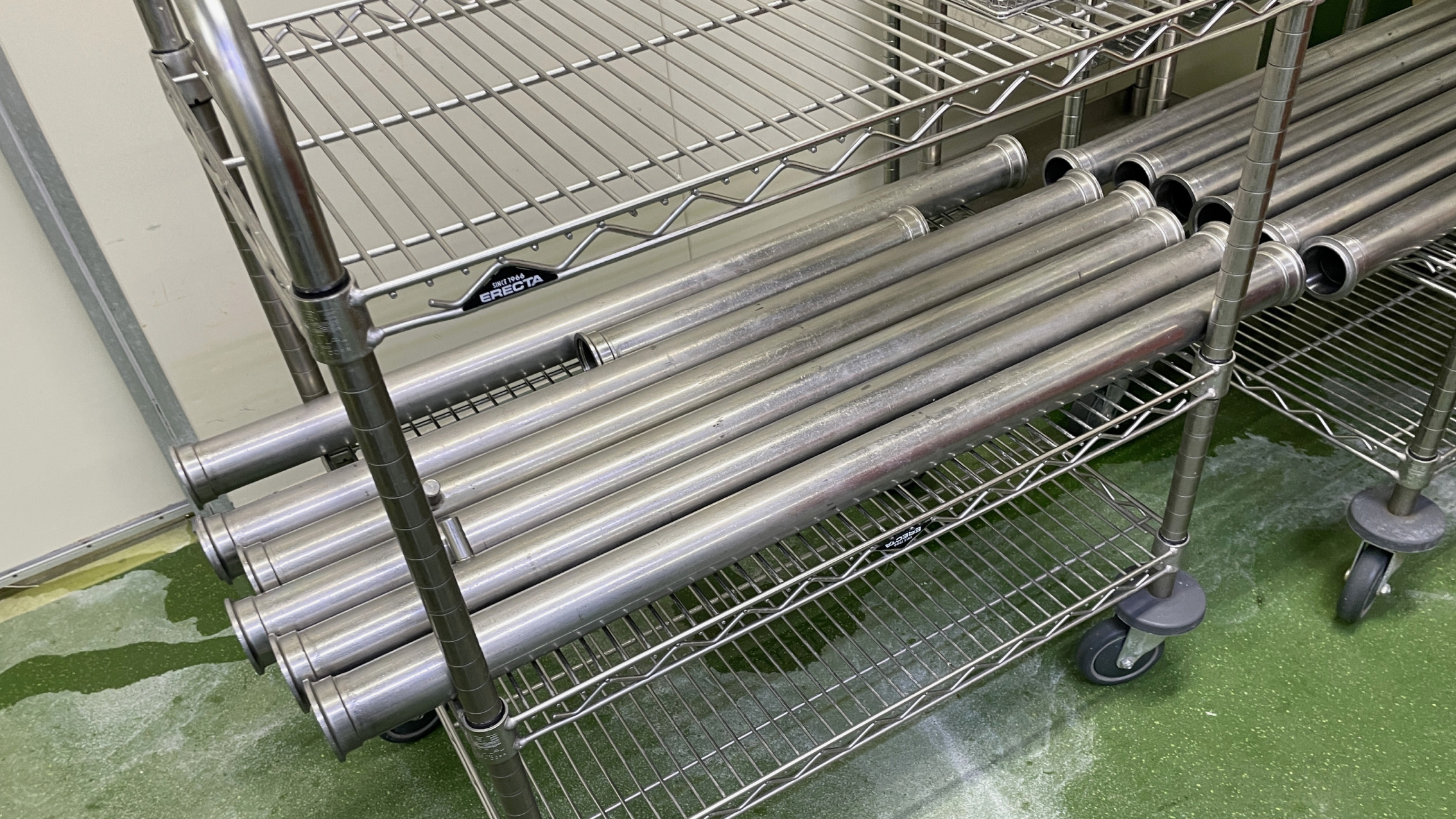
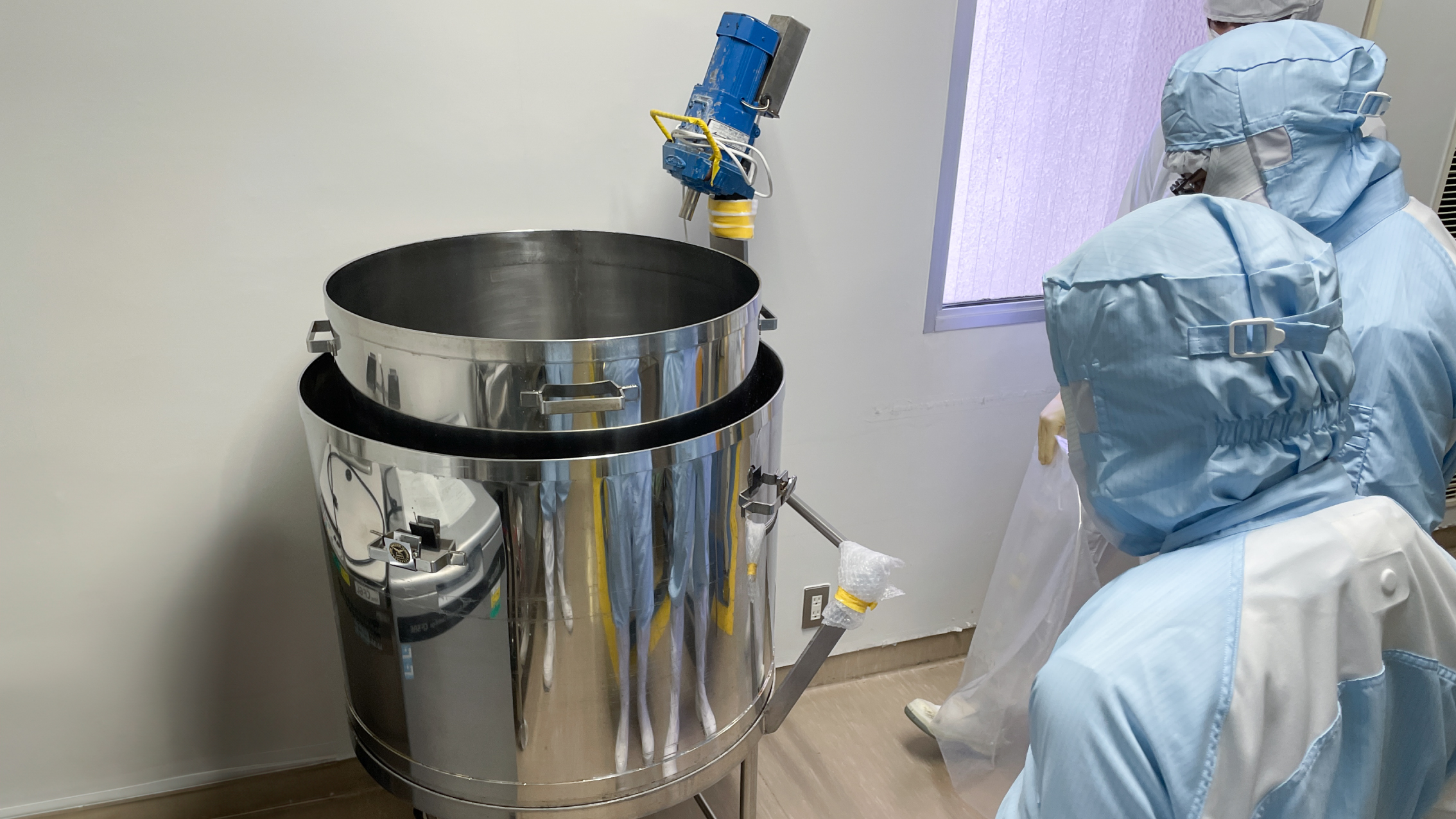
The previous stainless piping with cheese buildup and manual cleaning
The previous stainless piping, with cheese buildup requiring manual cleaning

A Fully Custom Fit

Since the real-world cleaning performance of PFA sanitary piping was still an unknown before installation, the process began with sample-based performance testing. Once the results turned out to exceed expectations, the project moved into full-scale installation. MONOVATE’s sales representative conducted multiple on-site surveys and proposed a piping layout optimized for the existing production line.

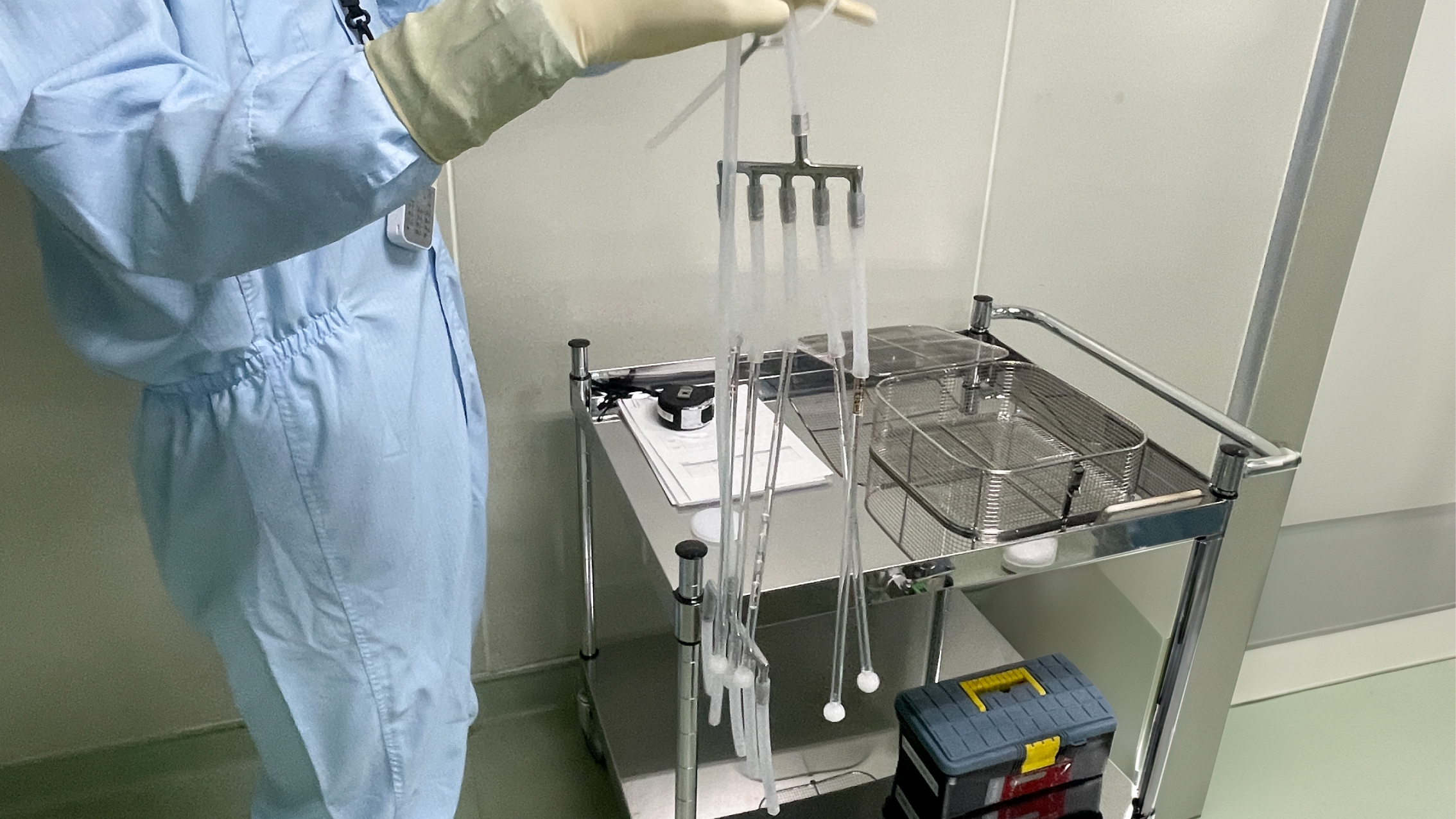
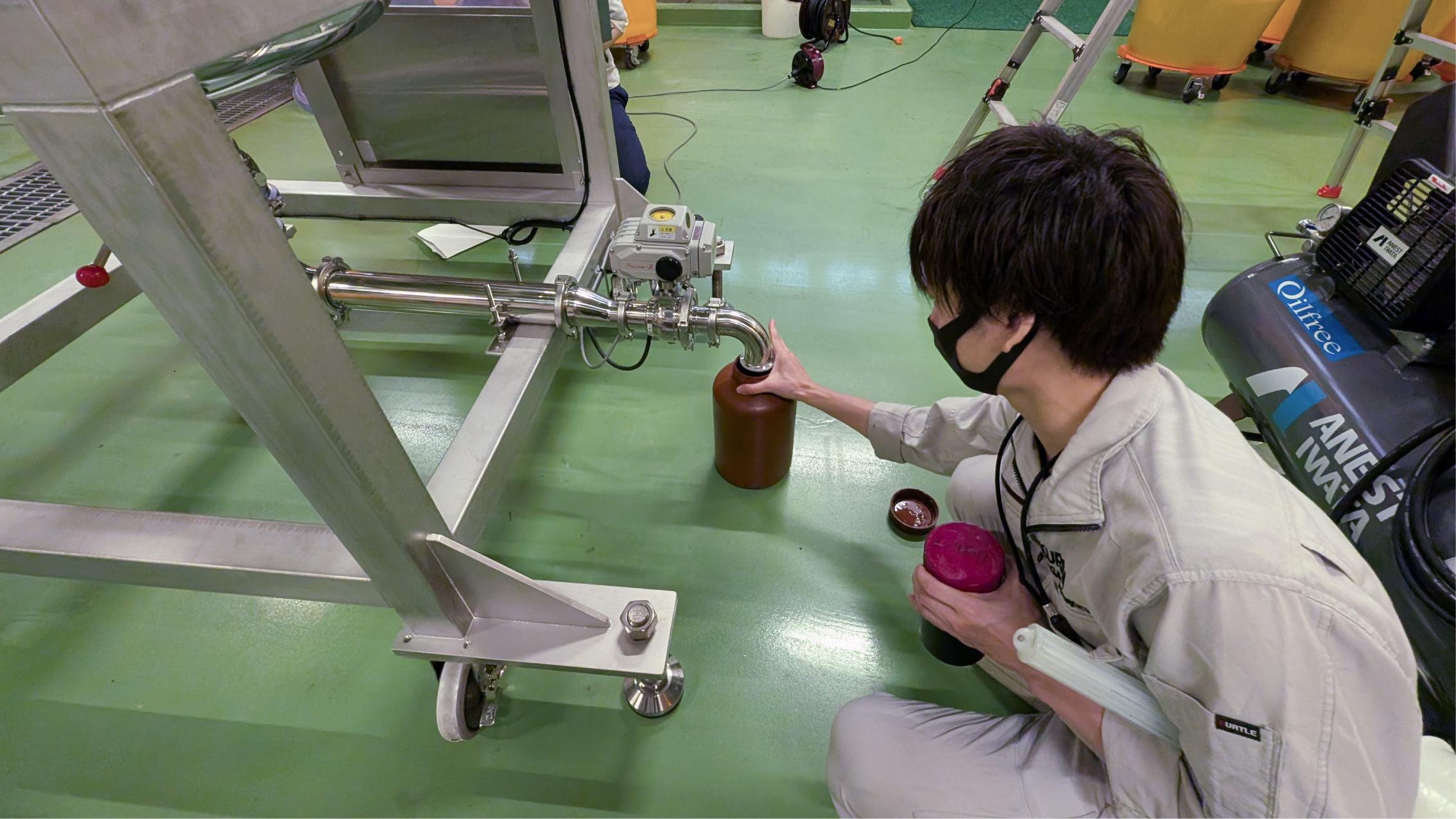
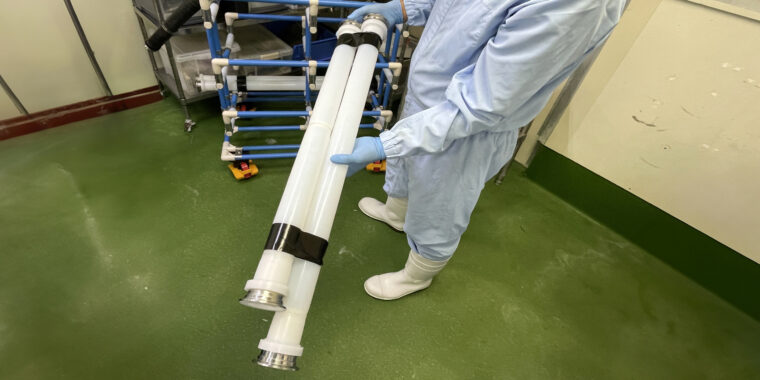
The final product was a fully custom design built to fit the customer’s production line exactly — including switching the ferrule sections on the specialized long-run PFA sanitary piping to stainless steel for added strength, and using reducers at the junctions between pipes of different diameters. Every detail was tailored to the specific requirements of the floor.
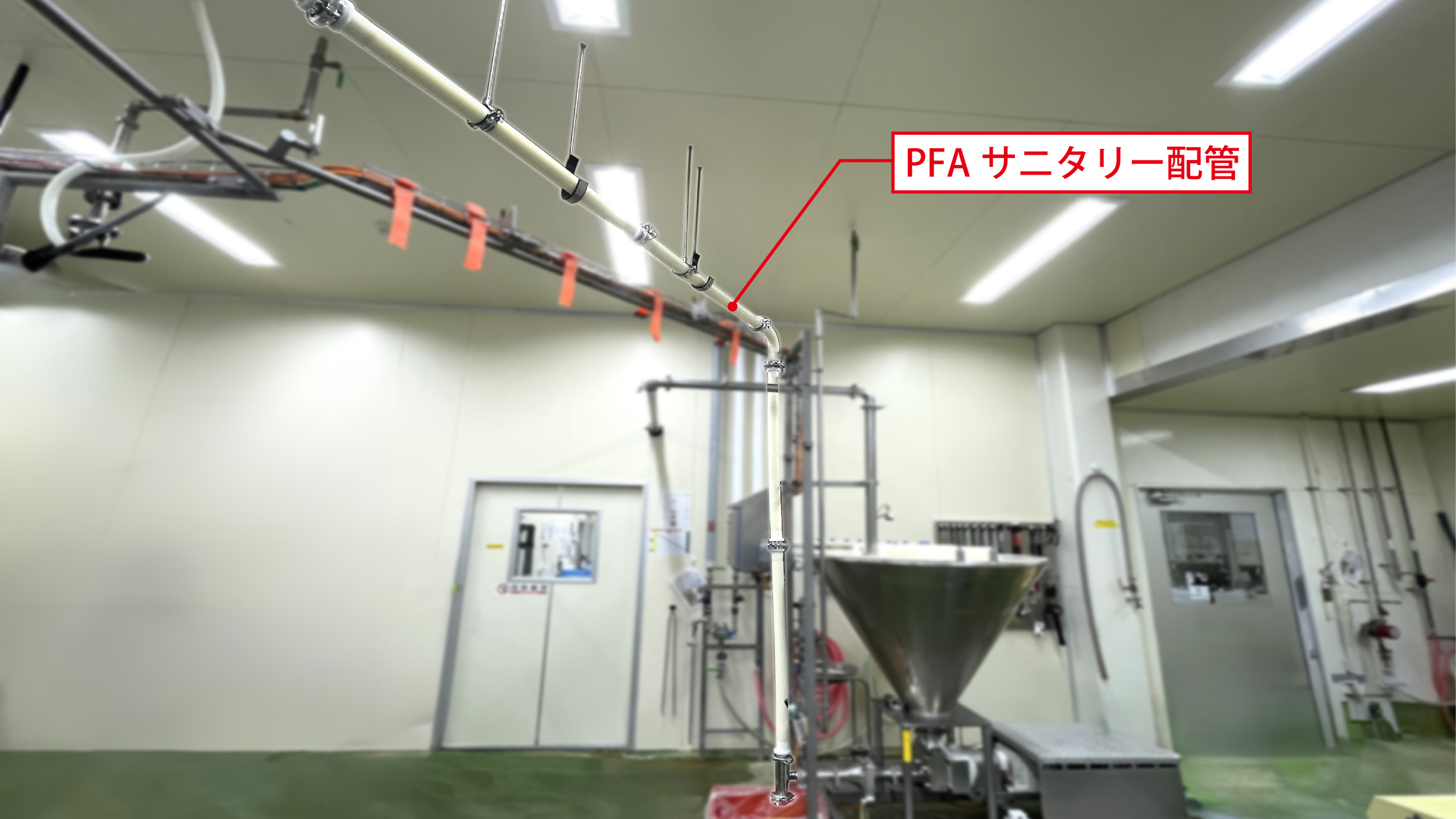
The custom-designed PFA sanitary piping installed on the cheese production line
The custom-designed PFA sanitary piping, installed on the cheese production line

The “Rinse It Right Off” Result

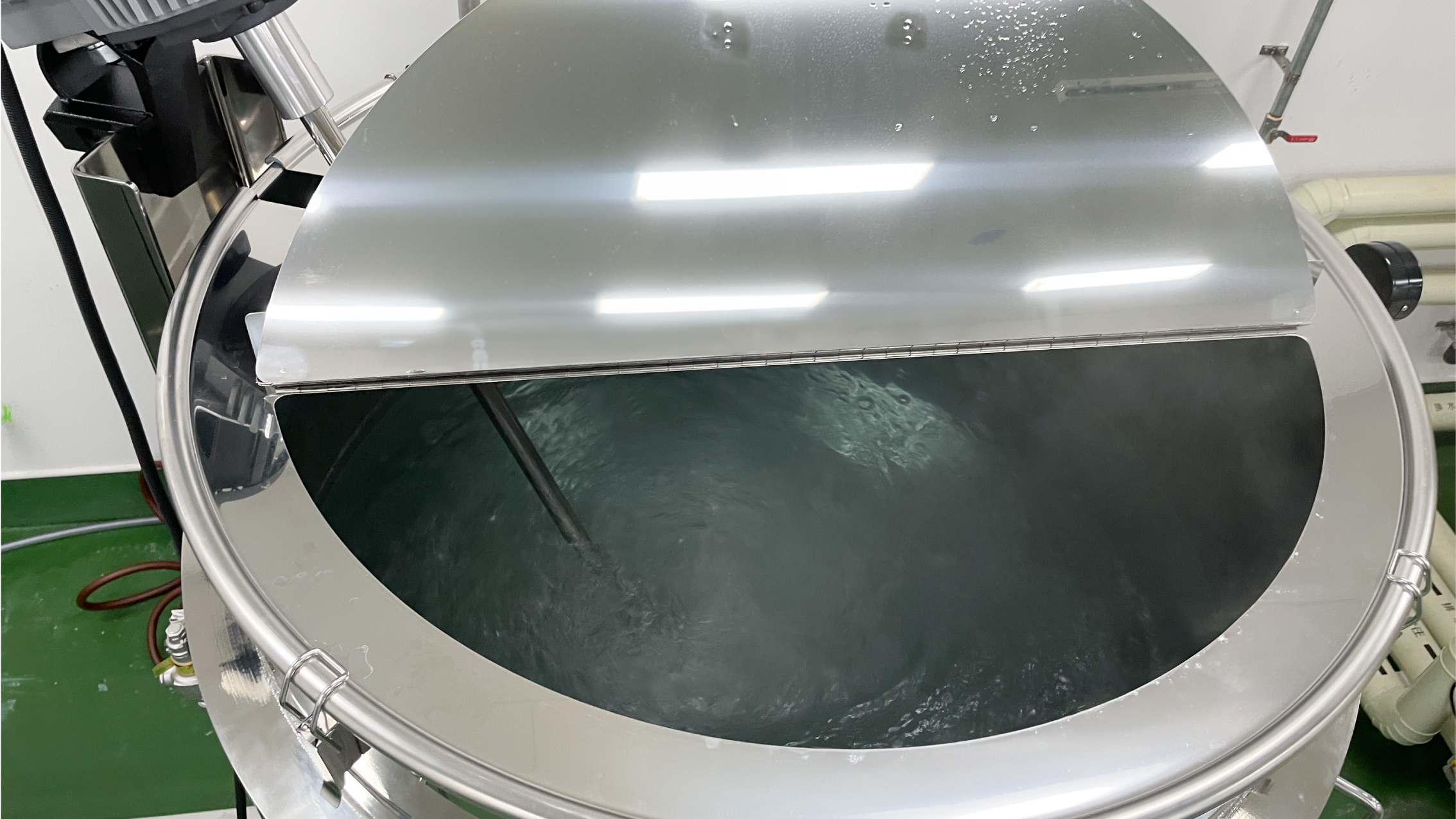
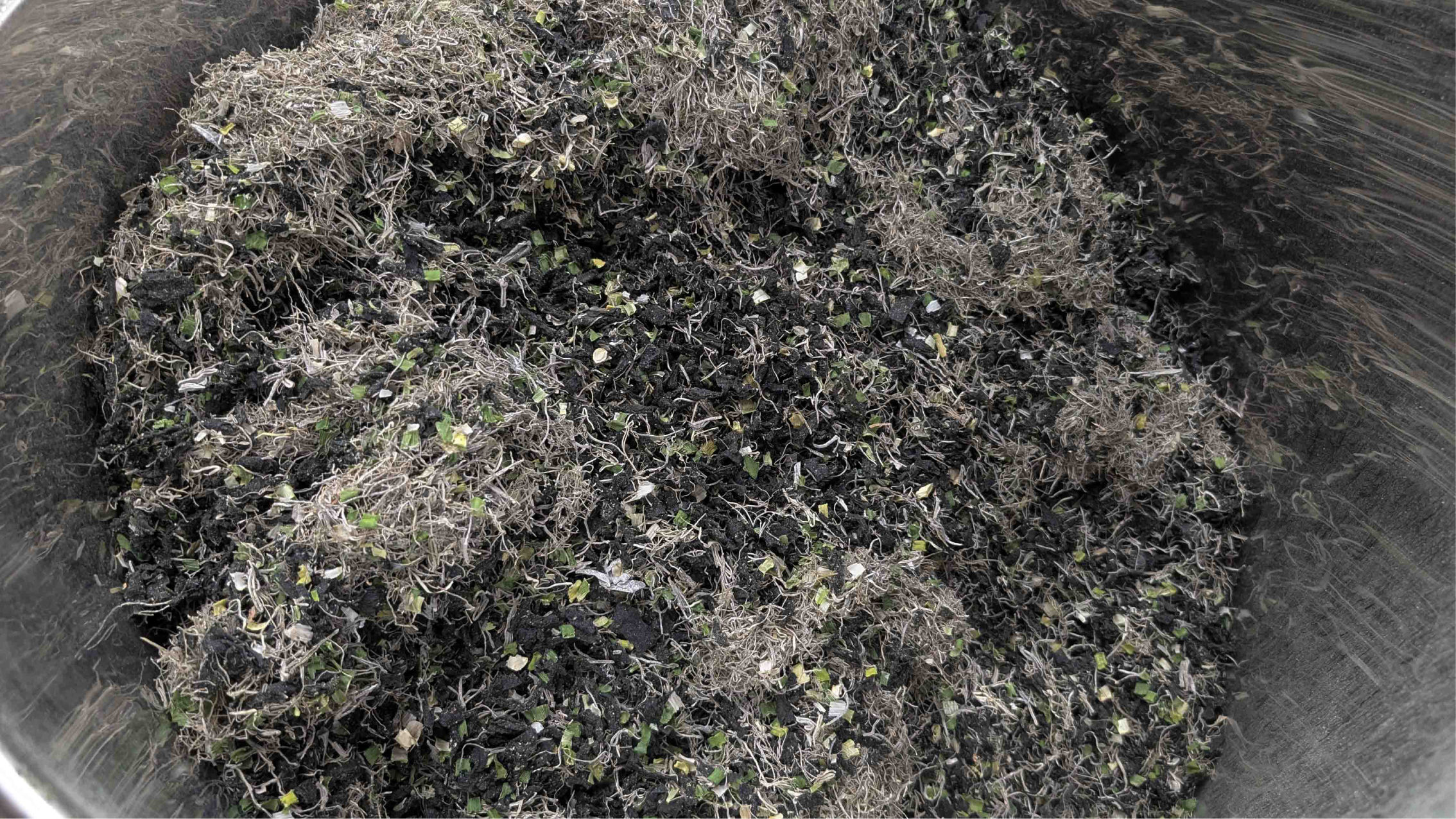
Once installed on the actual production line, the change was dramatic. Where cleaning had previously required manual brush scrubbing, switching to PFA sanitary piping meant circulation cleaning alone was enough — the cheese now rinses off cleanly on its own.

The improvement went beyond cleanability alone; raw material loss dropped dramatically as well. The cost of installing PFA sanitary piping isn’t small, but weighed against the labor saved on cleaning and the reduction in material loss, they’re genuinely satisfied with the investment.
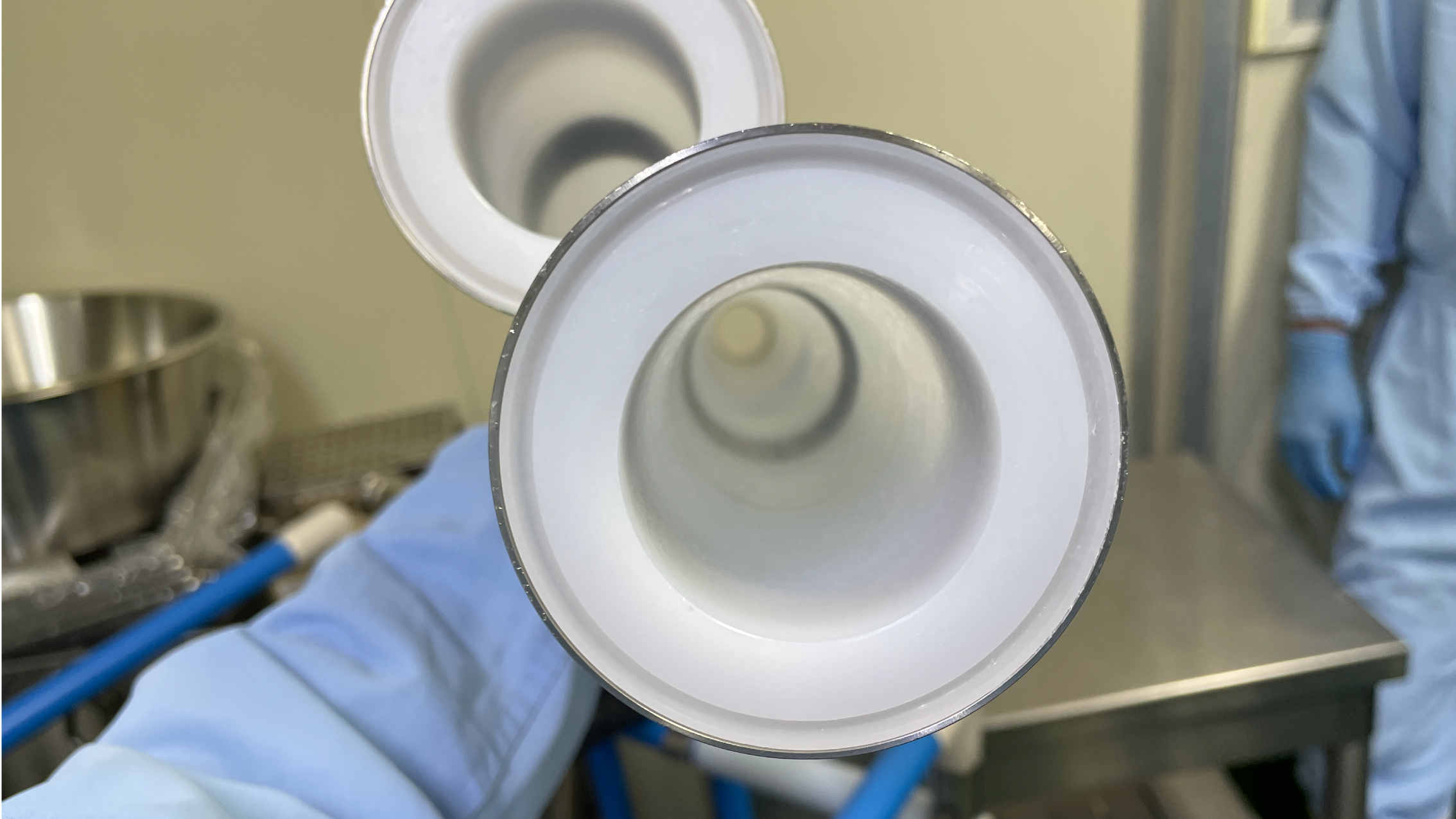
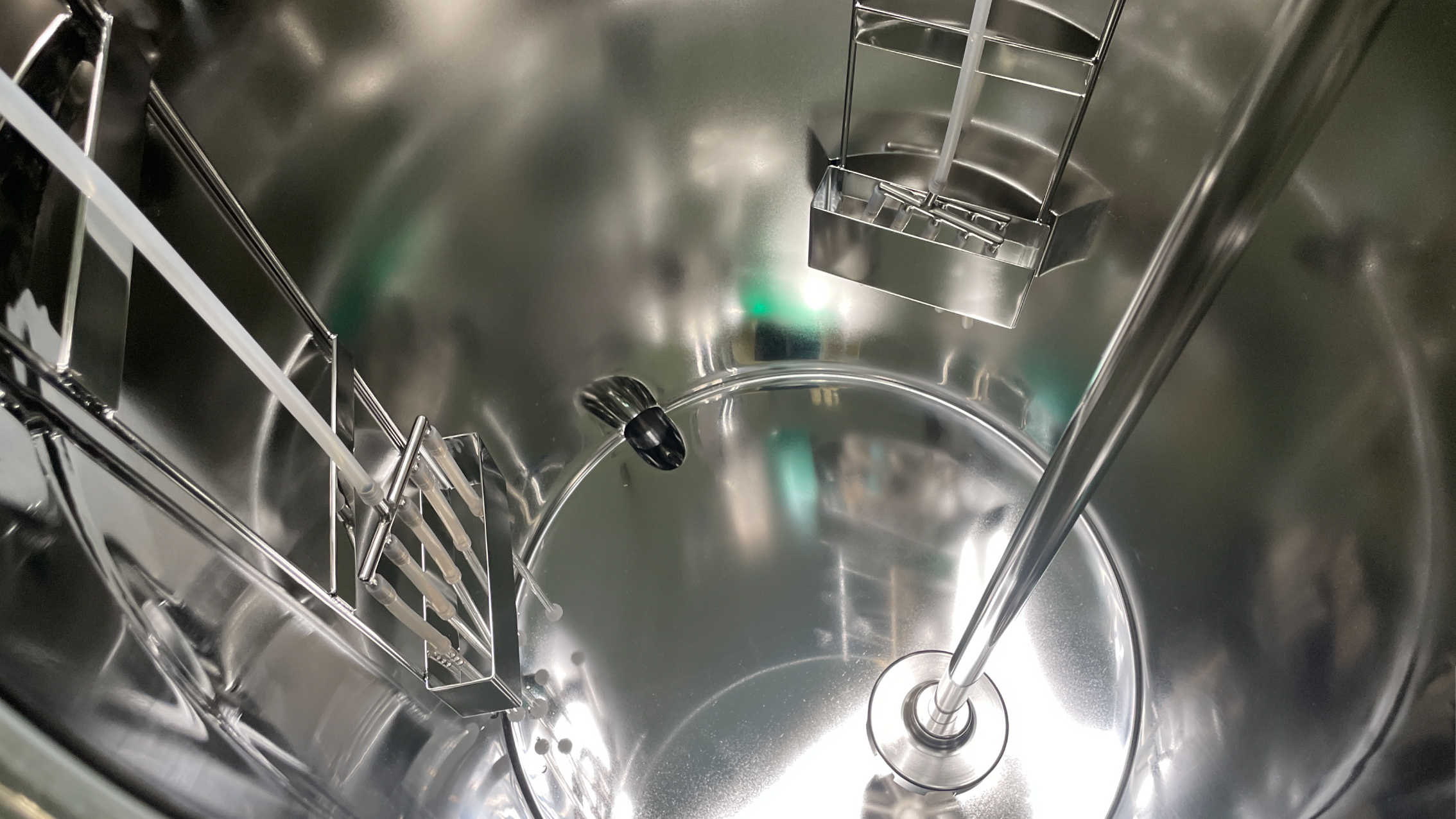
Inside the PFA sanitary piping after cleaning

Cleaning got so much easier in practice that staff say they could never go back to the old stainless piping and its cleaning routine.

Cleaning process before: pig cleaning → disassemble piping → circulation cleaning → manual brush scrubbing.
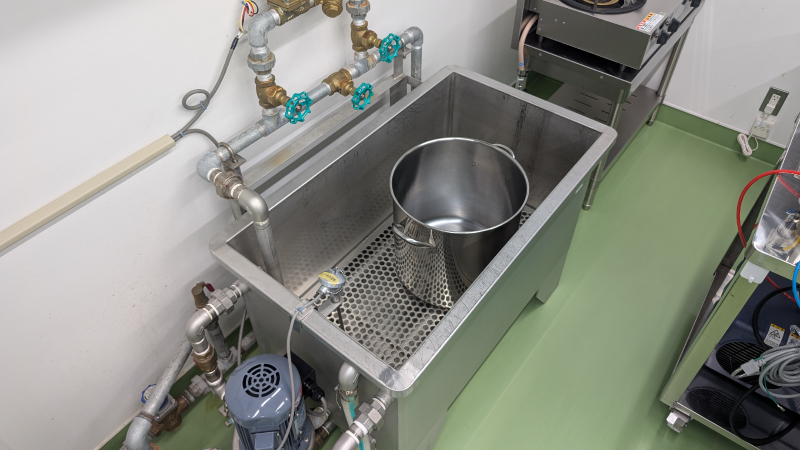
Cleaning process after: pig cleaning → disassemble piping → circulation cleaning → soak overnight in a water tank → simply rinse the next morning to finish.

Feeling the Return on Investment, and Planning to Expand

This project targeted what was identified as the single highest-priority point in the production process, and the company is now considering replacing stainless piping with PFA sanitary piping on its other cheese production lines as well.

Since this was their first time using PFA sanitary piping, they had some concern about long-term durability and running costs — but MONOVATE reassured them that PTFE-based materials essentially don’t degrade, and that many companies have used it reliably for years, which put those concerns to rest.


From the sales team: On a follow-up visit after delivery, hearing that “cleaning time has improved dramatically” and “we can’t go back to the old piping” was genuinely rewarding. This project took considerable time from design through delivery. We visited the customer’s plant repeatedly, checking the site in person and working through the piping specification and layout together at every step. The equipment manager’s genuine enthusiasm for improving the process came through clearly, and we’re glad we could deliver a product they’re truly satisfied with.

Editor’s note: In this post-installation interview, the team kindly answered every question and gave us a thorough tour of the plant despite a busy schedule — thank you sincerely. Hearing just how difficult the old cleaning process had been, and about the back-and-forth between the customer and our sales team working through the solution together, made seeing the finished PFA sanitary piping installed a genuinely moving moment for us too. Hearing the floor say, in their own words, that they could never go back to the old piping was, more than anything, the best part of this visit. We’ll keep working on proposals that can put a smile on the faces of the people actually working on the floor.
One High-Spec Tank Was Doing Too Much: How a Cosmetics Maker Freed Up Its Production Line

Case study: Control-panel jacketed tank for cosmetics production

Challenge

A single high-spec tank was being used to manufacture a wide range of OEM and private-brand products — an inefficient setup, since even simple products ended up relying on high-end equipment they didn’t actually need.

Solution

Discovering MONOVATE’s control-panel jacketed tank technology at a trade show, and building a large-capacity 600L mixing tank to establish a more efficient production setup.

Expected Results

A flexible production structure tailored to each product’s characteristics, with more efficient parallel production raising overall manufacturing capacity.

Customer profile: Hadabiwa Co., Ltd., a specialist manufacturer of horse oil and horse placenta products, based in Kumamoto with an integrated production system from raw material to finished product. The company handles a wide range of OEM and private-brand manufacturing, producing high-quality cosmetics and skincare products efficiently, and brings traditional Kumamoto horse-oil craftsmanship together with modern quality control.

A Trade Show Encounter That Reshaped Production Efficiency

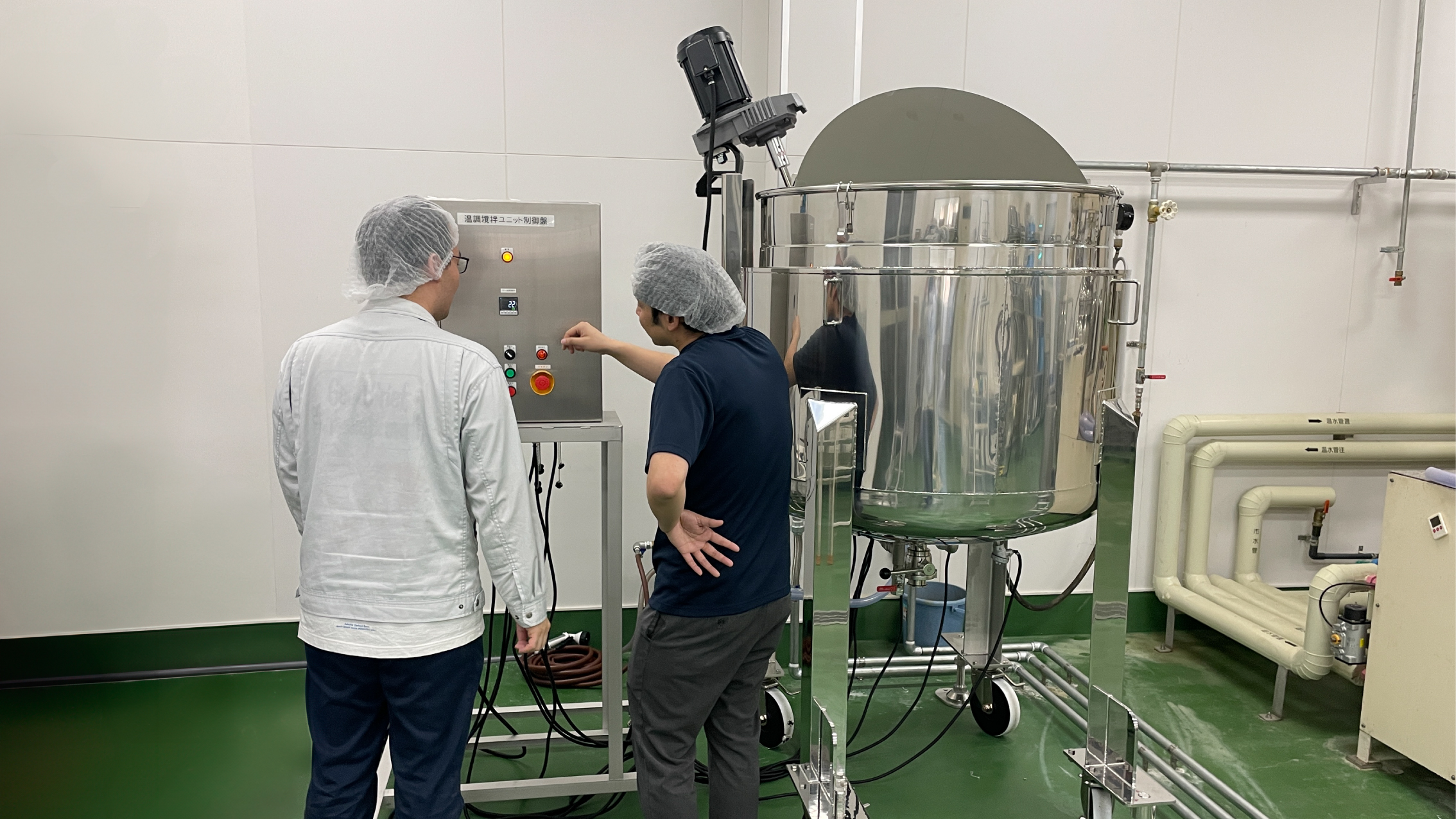
The company first came across MONOVATE at a trade show, where a load-cell unit tank with a control panel was on display — exactly the kind of control-panel-equipped tank they’d been looking for, which led directly to their inquiry.

Seeing that unit convinced them MONOVATE had genuine manufacturing expertise in control-panel jacketed tanks. What sealed the decision was MONOVATE’s ability to customize the equipment to their specific requirements, along with its technical capability in building automated control-panel systems.

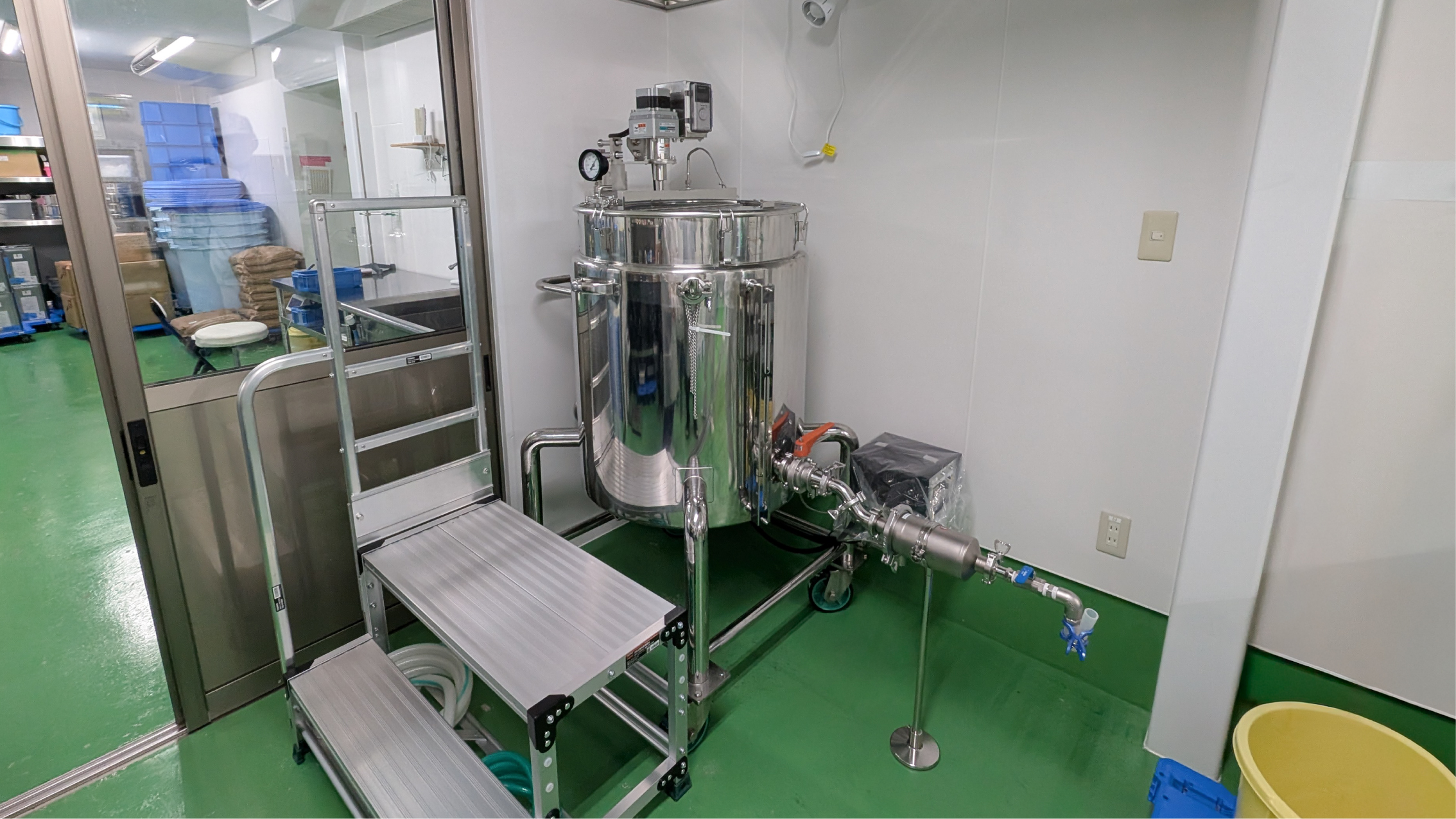
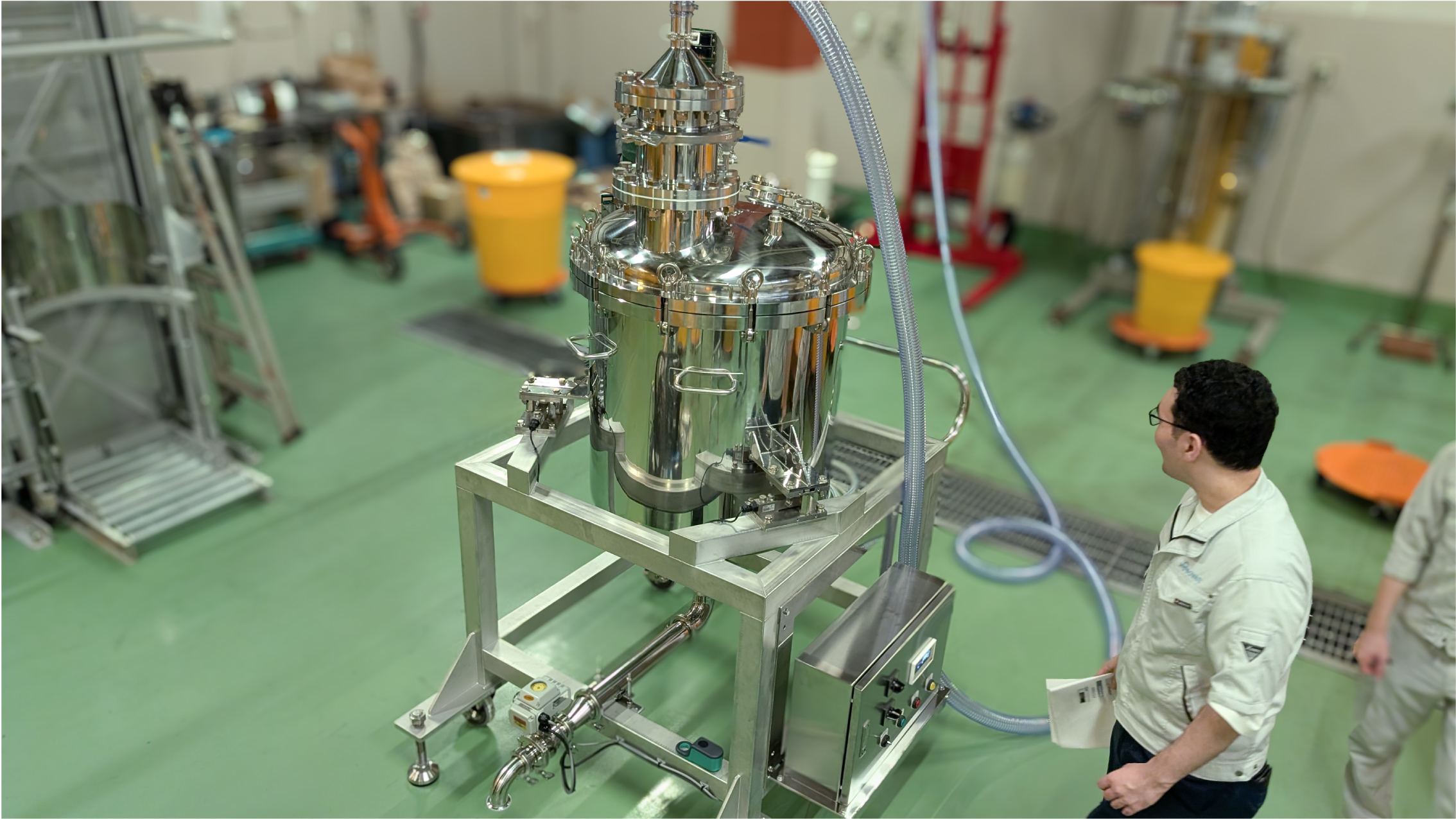
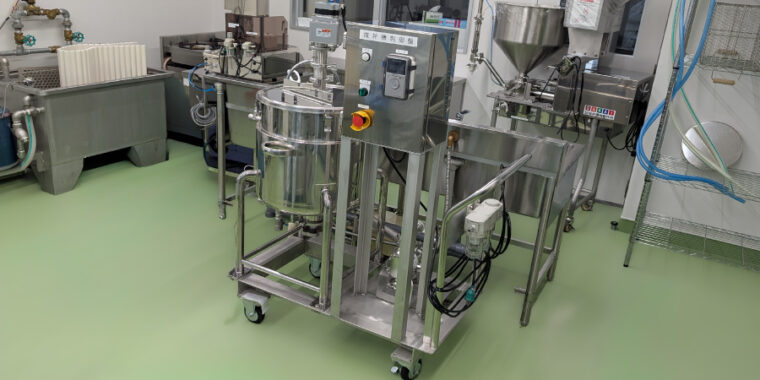
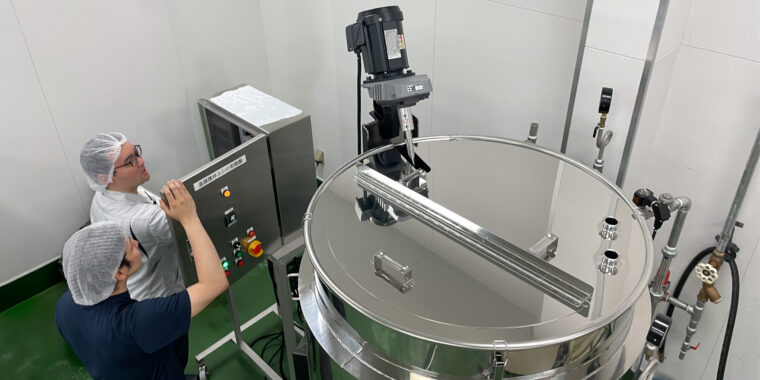
The 600L temperature-controlled mixing tank with control panel
The 600L hot-and-cold mixing tank with control panel

Moving From One High-Spec Tank to a Multi-Line Setup

Previously, the company had been manufacturing many of its products using a single high-spec tank capable of vacuum mixing. As production volume grew, it became clear that products not requiring vacuum mixing would be manufactured more efficiently in a larger-capacity tank — which is what led to installing this new equipment.

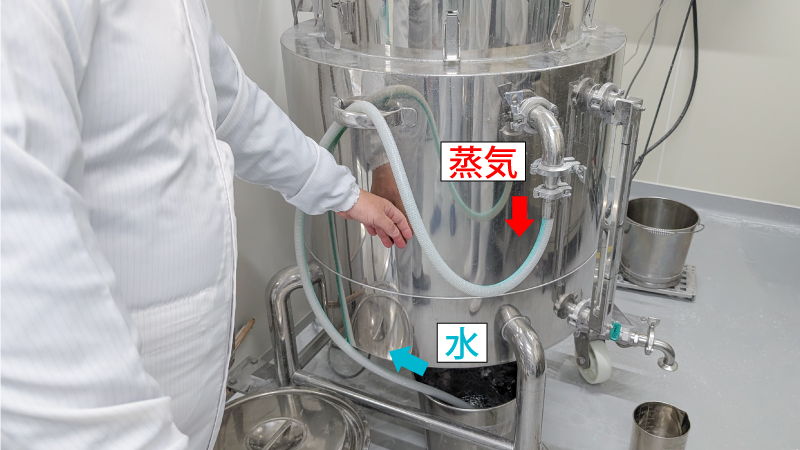
The new system automates temperature control by running steam or cooling water through the jacket, switching between them using solenoid valves managed by the control panel — steam to warm the contents, cooling water to cool them, with automated management throughout.

Since the company handles a large volume of OEM and private-brand manufacturing across many different formulas, relying on a single high-spec tank for essentially all of it had become inefficient. Many of those products don’t actually require that tank’s full capability, which is exactly why they wanted a second line running in parallel.

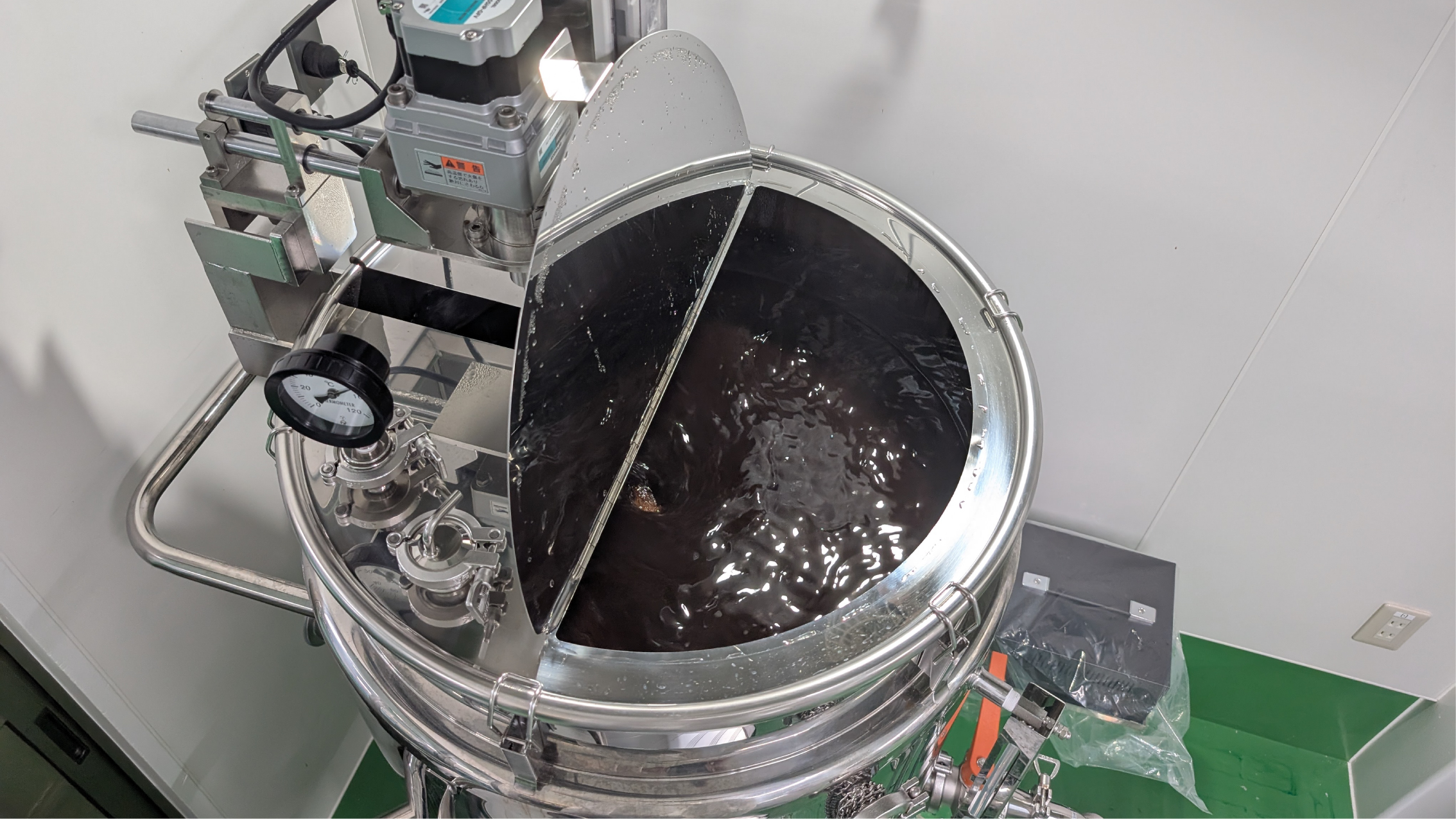
Temperature-control test inside the tank
Temperature-control testing inside the tank

What They’re Expecting From the Control-Panel Jacketed Tank

The new tank offers both large-capacity production and the efficiency gains that come with control-panel automation. As this is still an early-stage rollout, they expect further customization and updates may be needed down the line — something they’re already planning to bring back to MONOVATE.

Overall, they expect a production line tailored to each product’s characteristics to meaningfully raise their total manufacturing capacity.

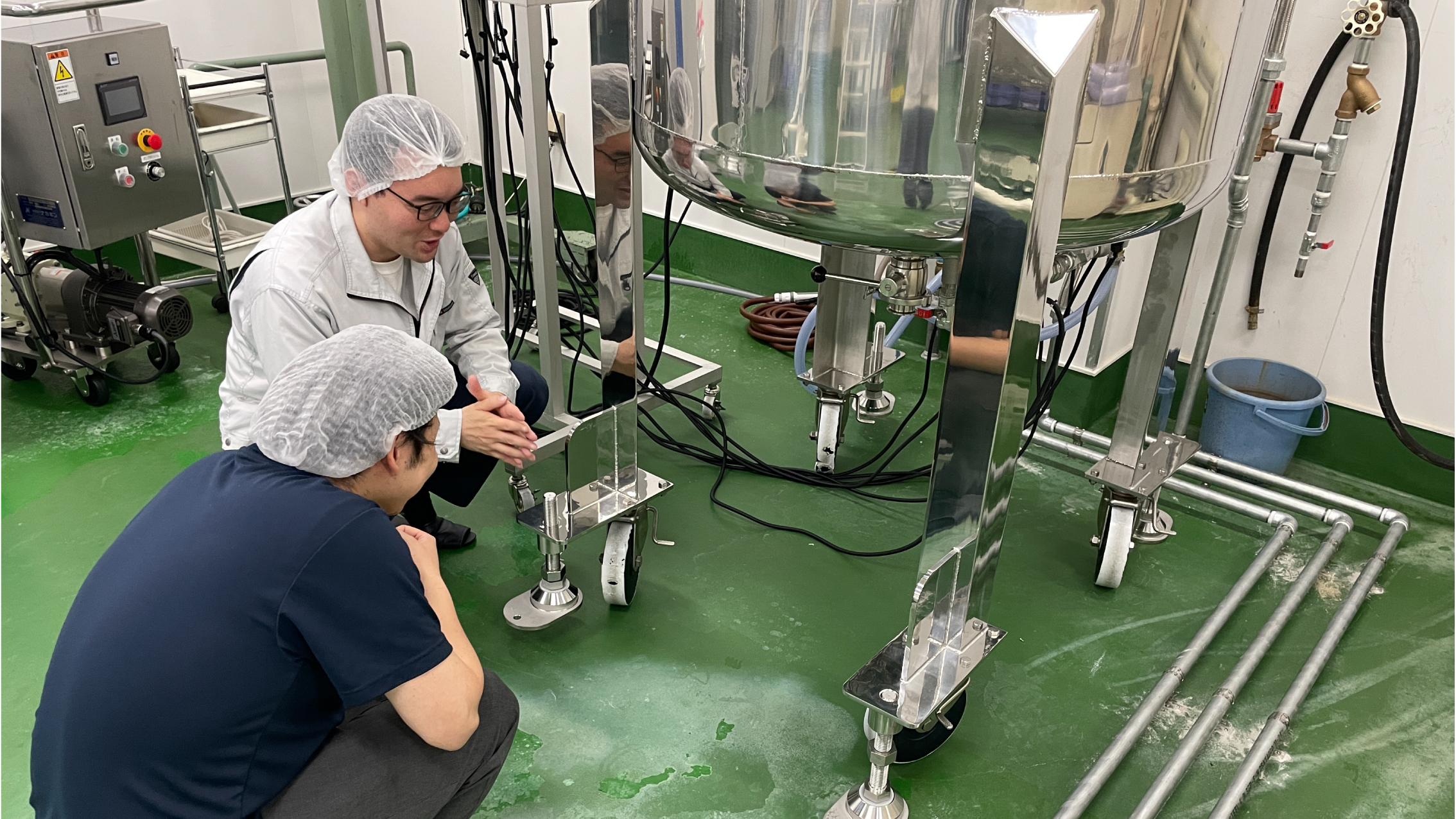
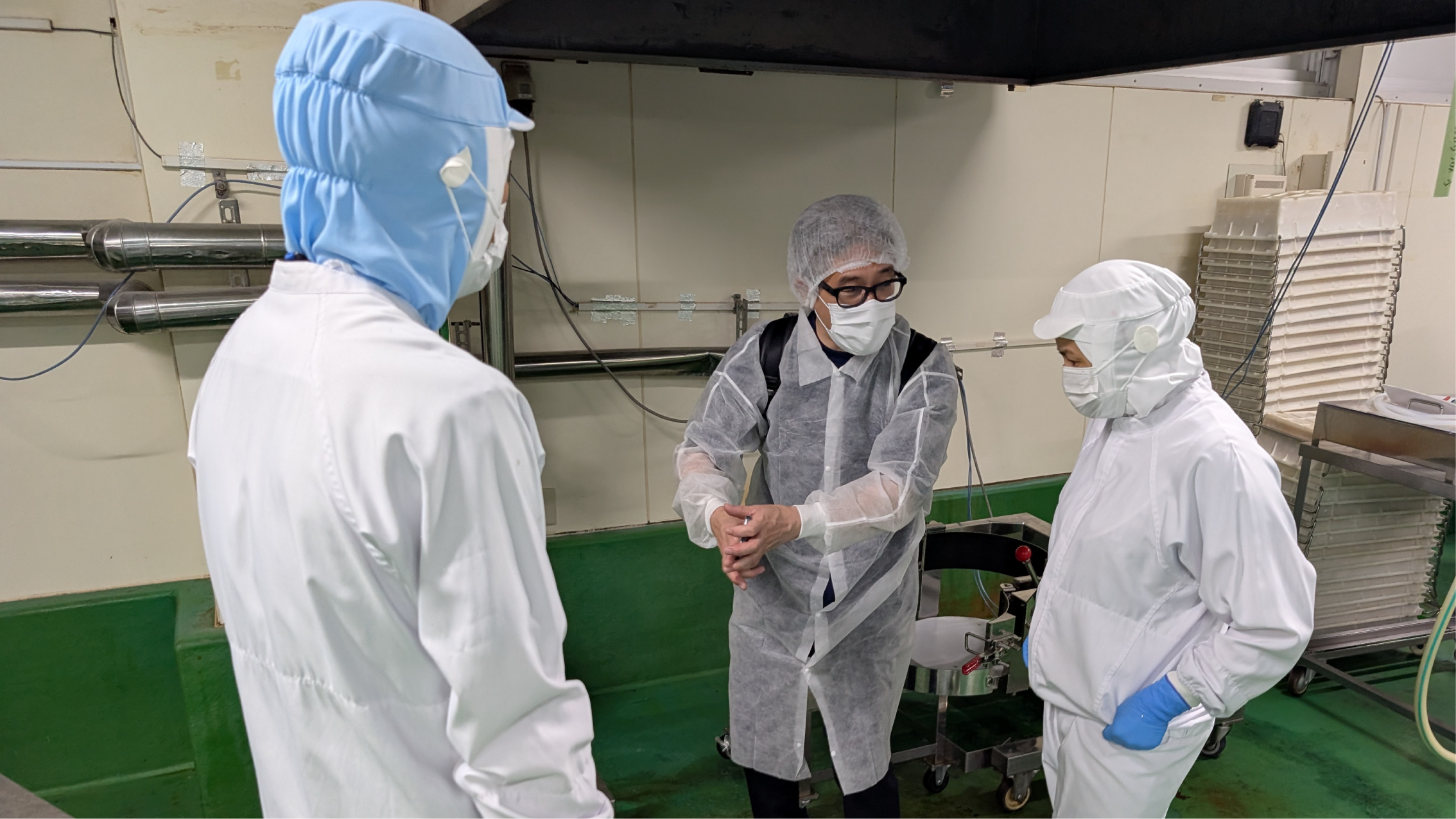
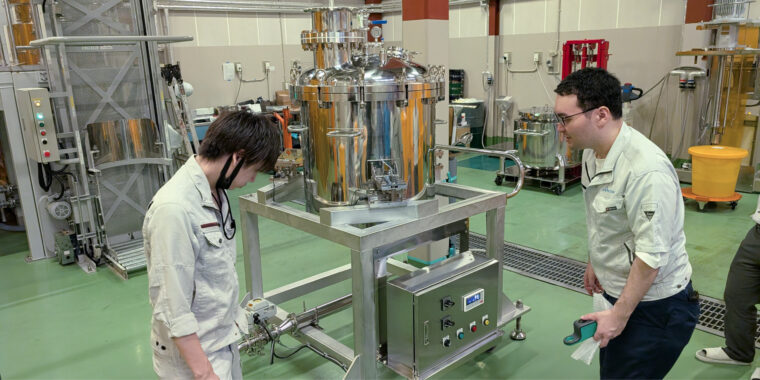
Discussing the operating procedure
Working through the operating procedure together

What’s Next

They anticipate further refinements — this larger-capacity tank, for instance, will likely need additional storage tanks to match it — and further updates are likely as they go. Since their planning so far focused mainly on getting the equipment installed, they’re looking forward to continuing to bring requests to MONOVATE, aiming for an ongoing partnership that keeps driving efficiency further.


From the sales team: This project began with an inquiry after the customer saw our control-panel-equipped tank at a trade show, and we’re glad we could help resolve a real bottleneck in Hadabiwa’s multi-product manufacturing through the right equipment specification. We were involved end-to-end — manufacturing, transport, handover, and installation — and got to see exactly where in the plant our equipment would be placed and used. Beyond consultations about accessory parts after installation, we plan to keep supporting them on any other issue a stainless steel solution might address. We’ll keep working to meet the improvement needs we find on our customers’ floors with our technology.

Editor’s note: For this interview, we spoke with the team during the tank’s installation itself, about the background behind the project and the results they’re hoping for. Hearing genuine, on-the-ground perspective, and picturing together how the equipment will actually help, made for a valuable conversation. Hadabiwa’s team stayed warm and attentive throughout, despite being in the middle of a busy installation — we’re truly grateful, and it made for a valuable time for us as well. We hope to keep being a useful manufacturing partner going forward.

A Filter That Broke One Time in Ten: How Custom Design Fixed a 30-Year-Old Pharma Tank’s Problems

Case study: Replacing a 30-year-old pharmaceutical mixing tank

Challenge

Thirty years of use had left the old tank with rust, raising real quality-risk concerns, and roughly one in ten uses ended with the glass ball filter breaking when it contacted the mixer — a recurring production problem.

Solution

MONOVATE’s custom design capability: an electropolished tank interior for better durability, and a purpose-built hanger for the glass ball filter that prevents breakage entirely.

Result

A major improvement in cleanability, along with a purpose-built hanger design that removed the inconsistency between different operators’ handling — clearing the high sanitary standards pharmaceutical manufacturing demands and meaningfully improving day-to-day efficiency.

Customer profile: A pharmaceutical manufacturer specializing in production requiring advanced technology, contributing to healthcare through precision manufacturing in a cleanroom environment under strict quality standards.

The Background Behind the Upgrade

The equipment in use had simply gotten old after many years of service, and a personnel change in the department became the occasion to finally replace it.

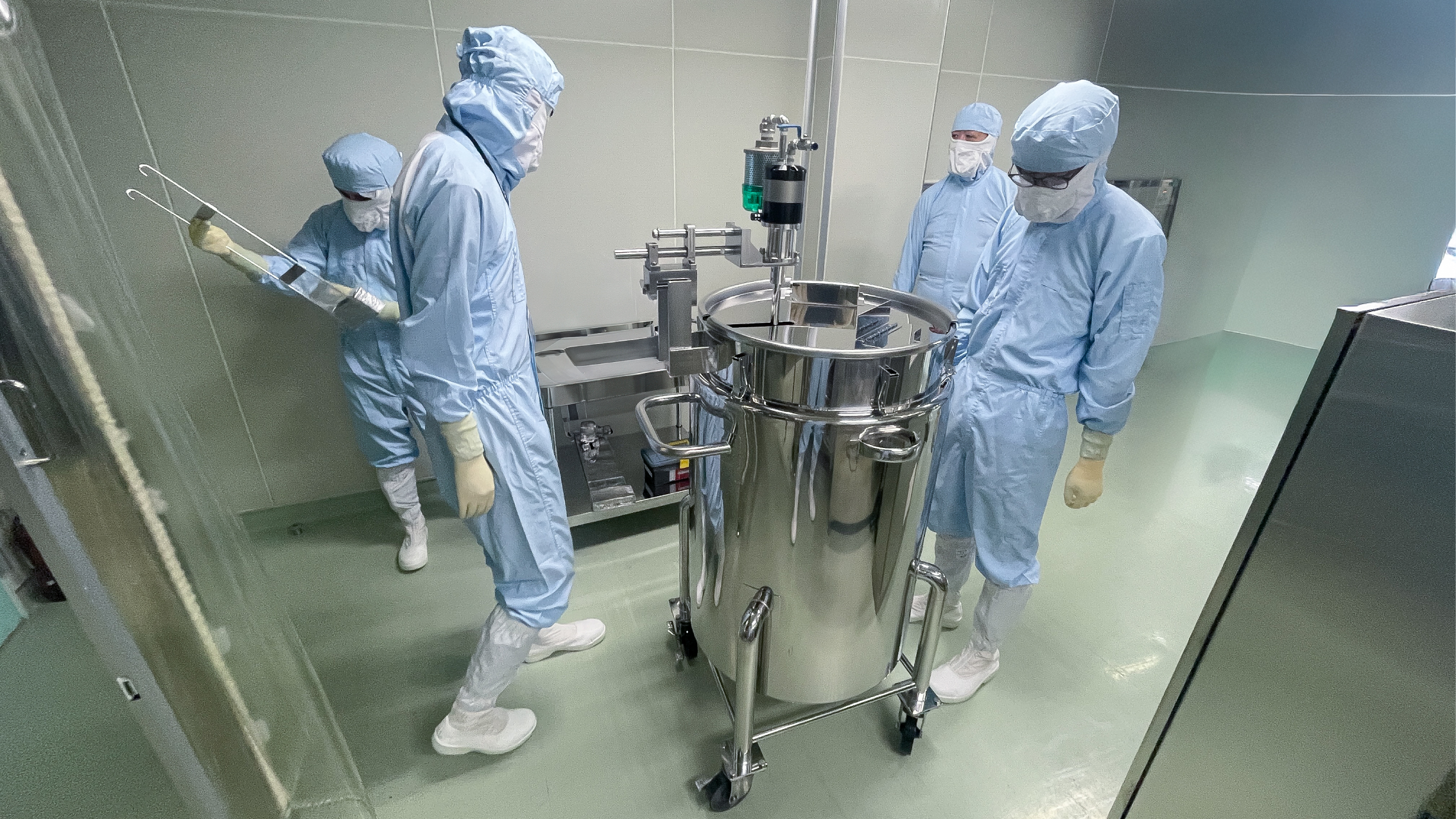
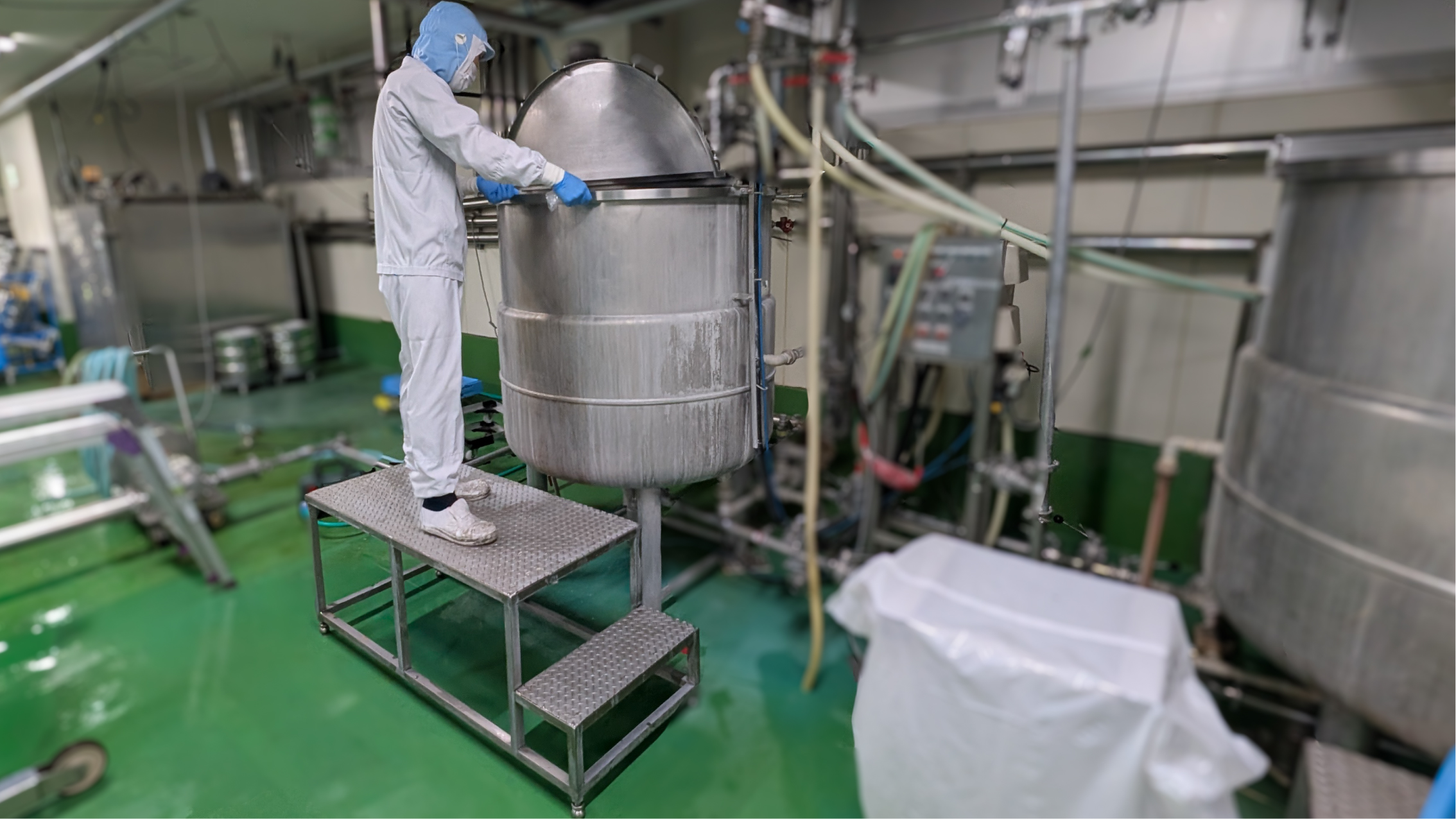
The newly installed mixing tank

A Long-Standing Problem on the Production Floor

The tank is used with saline solution as a raw material, and the existing tank had developed rust in several spots. Given how directly that could affect pharmaceutical product quality, it had become a real source of concern during product inspection.

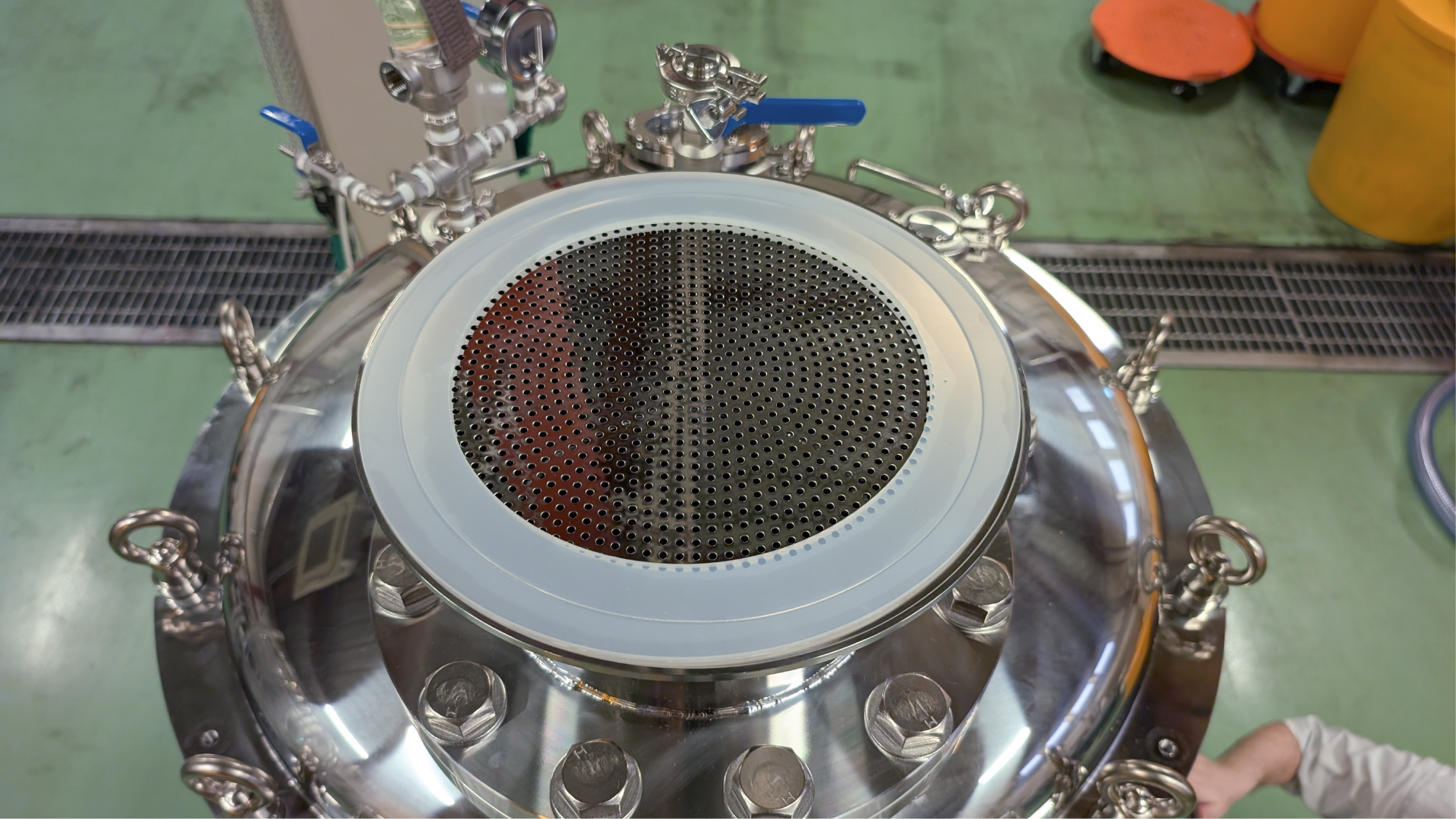
The manufacturing process also involves inserting a glass ball filter (a glass bubbling component used to increase gas concentration in the liquid) into the tank. Roughly one time in ten, running the mixer caused it to contact the glass ball filter and break it — a serious, recurring problem for both hygiene and raw material loss.

The tank used previously
The glass ball filter

Why They Chose MONOVATE

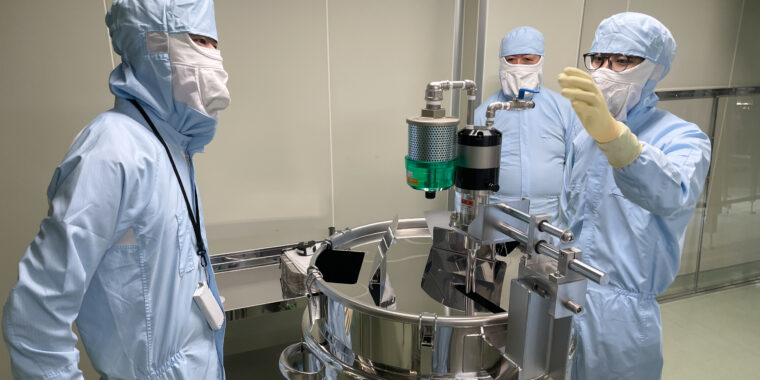
Among the manufacturers they considered, the deciding factor was MONOVATE’s strength in custom design built around a genuine understanding of the problems on the floor. Since they didn’t want to change the existing manufacturing process too drastically, MONOVATE proposed a refined version built on the same foundation. Taking the glass-filter breakage problem seriously, MONOVATE also proposed adjustments to the mixer’s shape and position, along with a dedicated hanger to support the glass ball filter — a proposal they found genuinely excellent.
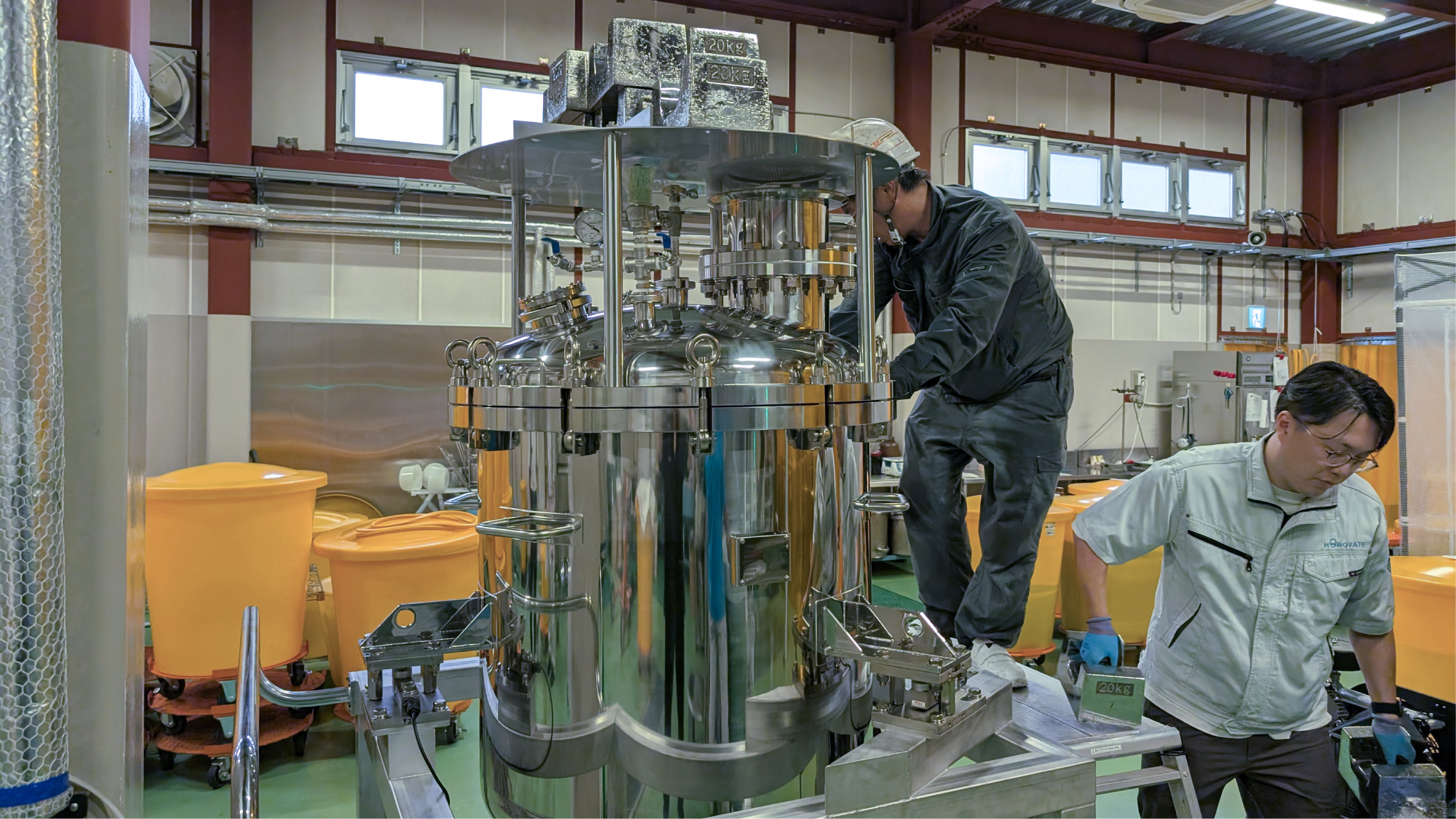
The custom hanger design solving the breakage problem
The custom hanger design that solved the breakage problem

What They’re Expecting From the New Equipment

As a pharmaceutical manufacturer, hygiene is an absolutely critical consideration. The new tank’s interior was electropolished, delivering a substantial improvement in corrosion and wear resistance compared with the old tank.

Previously, how the glass ball filter got inserted into the tank varied from operator to operator. Installing the dedicated glass-filter hanger removes much of that human-error risk, letting staff approach daily production with real peace of mind.

Looking ahead, this project became a clear demonstration of just how flexible MONOVATE’s custom equipment capability can be. With further equipment upgrades planned going forward, they’re hoping to bring future projects to MONOVATE as well — and overall, they’re genuinely satisfied with this tank.


From the sales team: Thank you sincerely for choosing MONOVATE for this project. Getting to the root of two very specific problems — rust on 30-year-old equipment and the risk of glass filter breakage — through custom design was a valuable learning experience for us as well. We’re confident that the improved hygiene and durability from electropolishing, combined with the human-error prevention built into the dedicated hanger, meet the high quality standards pharmaceutical manufacturing demands. We’ll keep working to build the technical capability to meet the pharmaceutical industry’s strict quality requirements as a trusted partner.

Editor’s note: We’re grateful for the time given to us amid a major cleanroom equipment renewal project. What stood out most was the customer’s genuine sincerity and strong sense of responsibility toward the project — a reminder for us to stay just as committed on our end. We’ll keep doing everything we can to be useful going forward.

From “Men Only” to “Anyone Can Do It”: How One Mixer Request Turned Into a Full Workflow Redesign

Case study: Rotary drum mixer paired with a mobile tilt lifter

Challenge

A combination of problems on the production floor: no dedicated mixer, making the process inefficient; powder scattering into the air during mixing, adding to the cleaning burden; and heavy powder-handling work that only male staff could do.

Solution

A sealed mixing system built around a rotary drum mixer, paired with a lifter to remove the heavy manual handling. A custom container was also built to fit their existing washing machine.

Result

Lower physical strain and a cleaner work environment together, transforming the production floor into a workplace anyone can work in safely, regardless of gender.

Customer profile: Narikoma Food Co., Ltd., providing food manufacturing and logistics services primarily for medical and long-term care facilities, guided by a mission of supporting everyone’s wellbeing through food, and a commitment to safe, high-quality food production.

A Trade Show Encounter — “This Looks Good” — and Where It Led

At a powder engineering trade show in Osaka, the moment the company saw MONOVATE’s rotary drum mixer on display, the reaction was immediate: “this looks good.” They reached out right away. A demo test confirmed it genuinely mixed well, and that result led directly to the decision to install it.

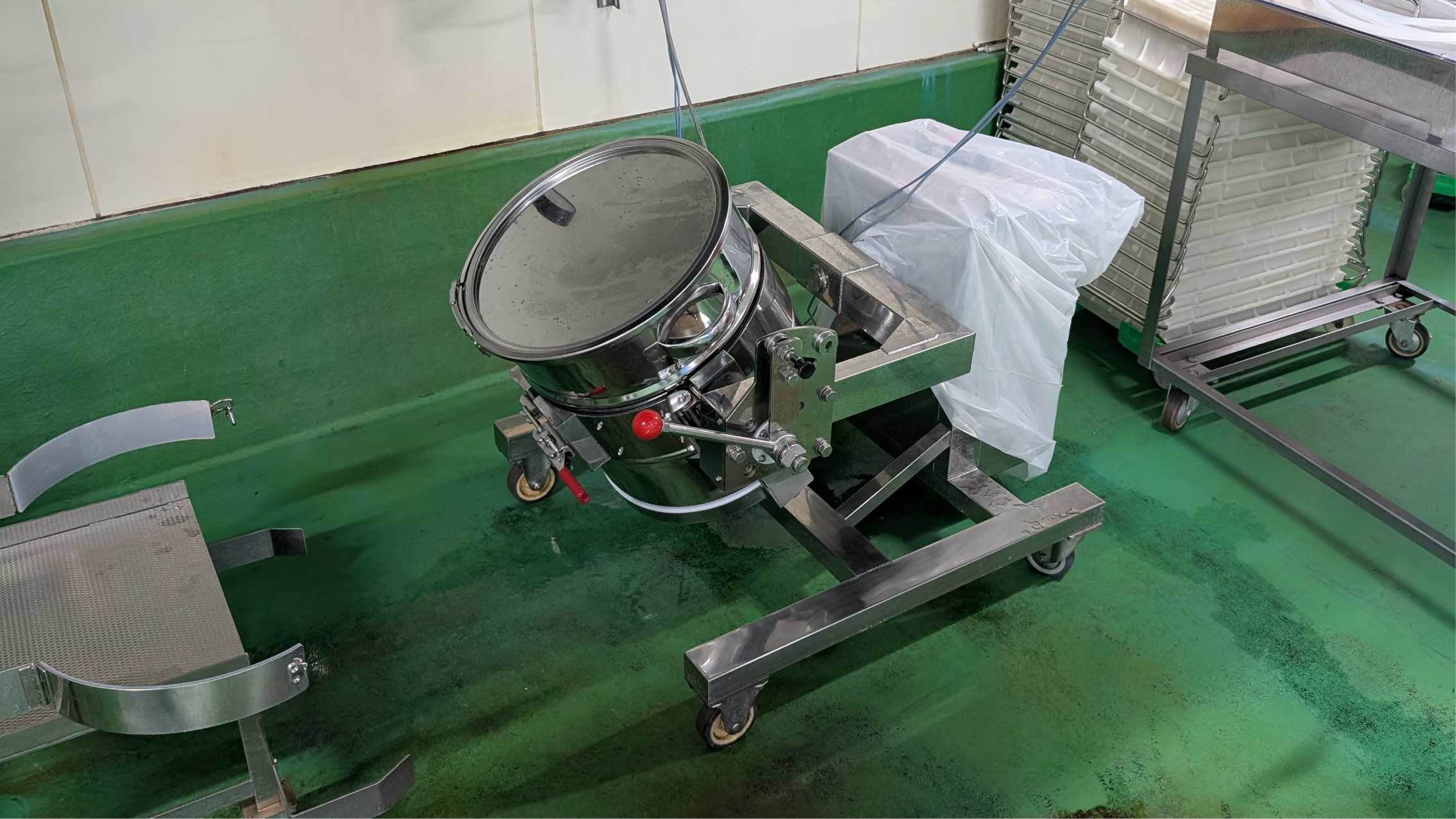
The rotary drum mixer

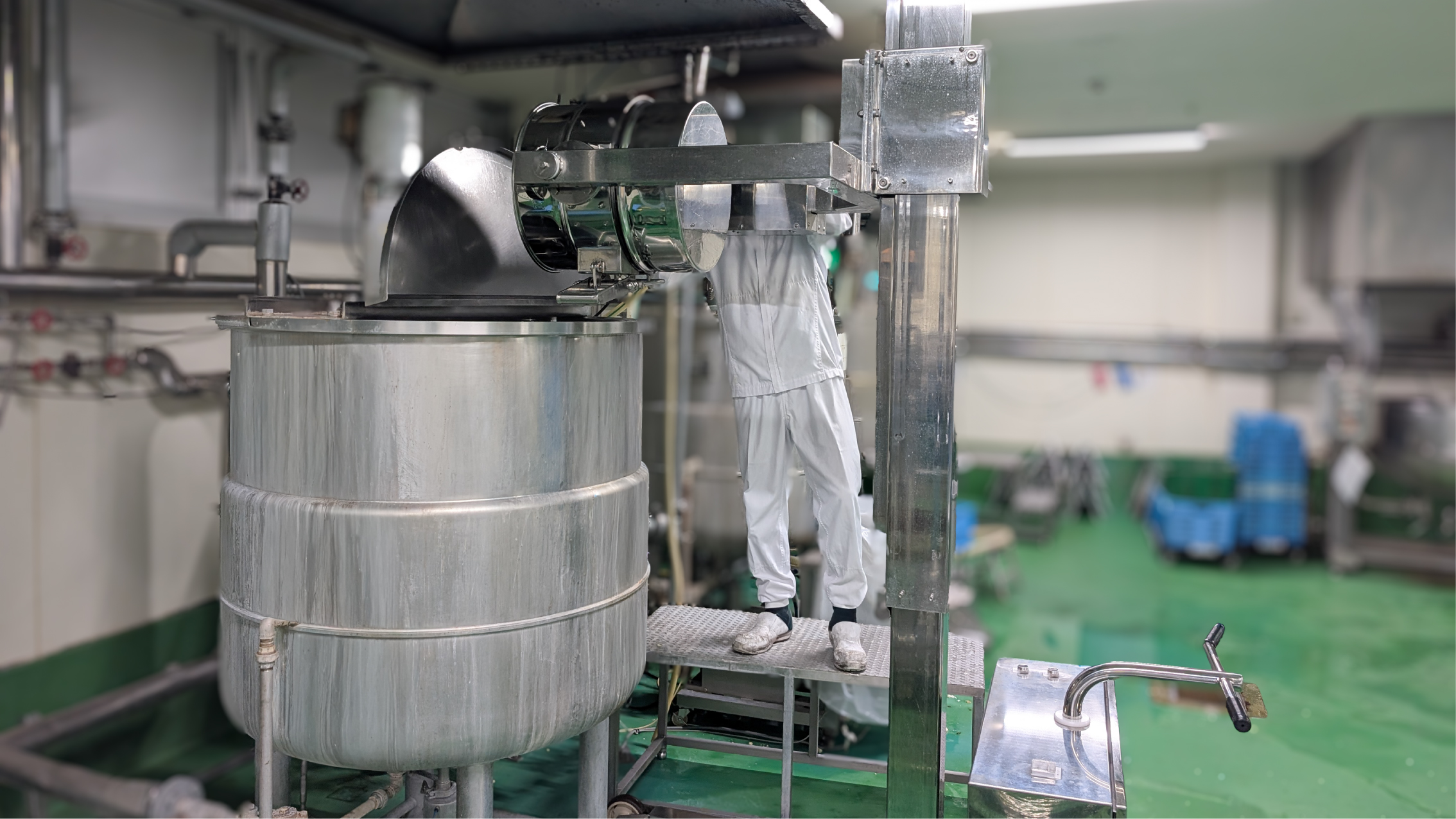
A rotary drum mixer works by rotating the entire sealed container to mix its contents, preventing contamination while keeping ingredients from being damaged. It mixes fully sealed, with no impeller to damage delicate ingredients, uses a detachable container so the next batch can start without a cleaning delay, and tilts roughly 30 degrees to achieve uniform mixing quickly.

Inefficiency and Physical Strain Without a Dedicated Mixer

Before installing the rotary drum mixer, the company had no dedicated powder mixer for jelly production. Powder mixing shared the same equipment used for making miso soup, so the two processes couldn’t run at the same time — a real drag on production efficiency. On top of that, the mixed powder still had to be transferred into a separate storage container afterward, adding yet another inefficient step to the process.

The mixer used previously

The old equipment mixed with its lid open, which sent powder billowing into the air. That made daily cleaning a real chore and even affected the ventilation system. After mixing, the powder then had to be loaded into the tank for the next process step — and because the powder was heavy, that task could only be handled by male staff.

The work environment before the improvement

From One Mixer to a Full Loading Solution

Internally, there had long been talk of wanting a single continuous flow from mixing powder to loading it into the next process step. V-shaped mixers are common enough, but they still require transferring the mixed material into another container afterward. What stood out about the rotary drum mixer was that the container itself doubles as storage after mixing — no transfer step needed.

That naturally led to the next question — “could the loading step be handled too?” — and MONOVATE proposed a lifter as well. After comparing quotes from other suppliers, MONOVATE’s price came in well below the alternatives, which settled the decision.

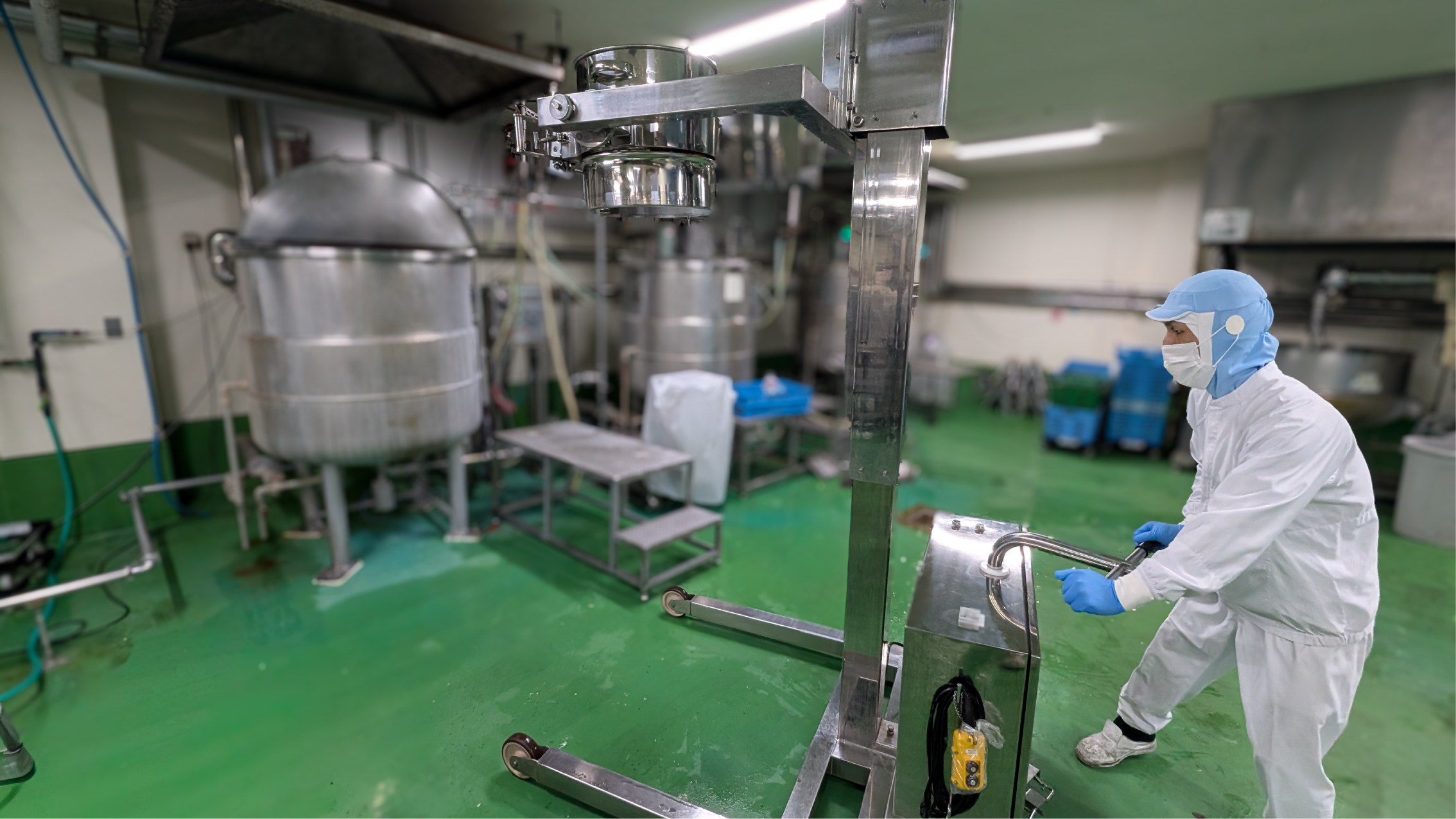
The mobile tilt lifter that was installed

A mobile tilt lifter is a labor-saving machine that grips a container and lifts and tilts it electrically. It works in four steps: manually clamping the container in place, electrically raising it, electrically tilting it to discharge the contents, and manually moving the machine itself into position.

A Sales Style Built on Repeated On-Site Visits, and Attention to Small Details

MONOVATE’s team visited the plant repeatedly, meeting in person for discussion after discussion. Issues that would have taken a full hour over a web conference often got settled in five or ten minutes face to face — a real reminder of the value of meeting in person. As those conversations continued, the scope of the project kept naturally expanding, eventually growing to cover the loading process as well.

A meeting between MONOVATE and the customer
One of many on-site meetings between MONOVATE and the customer’s team

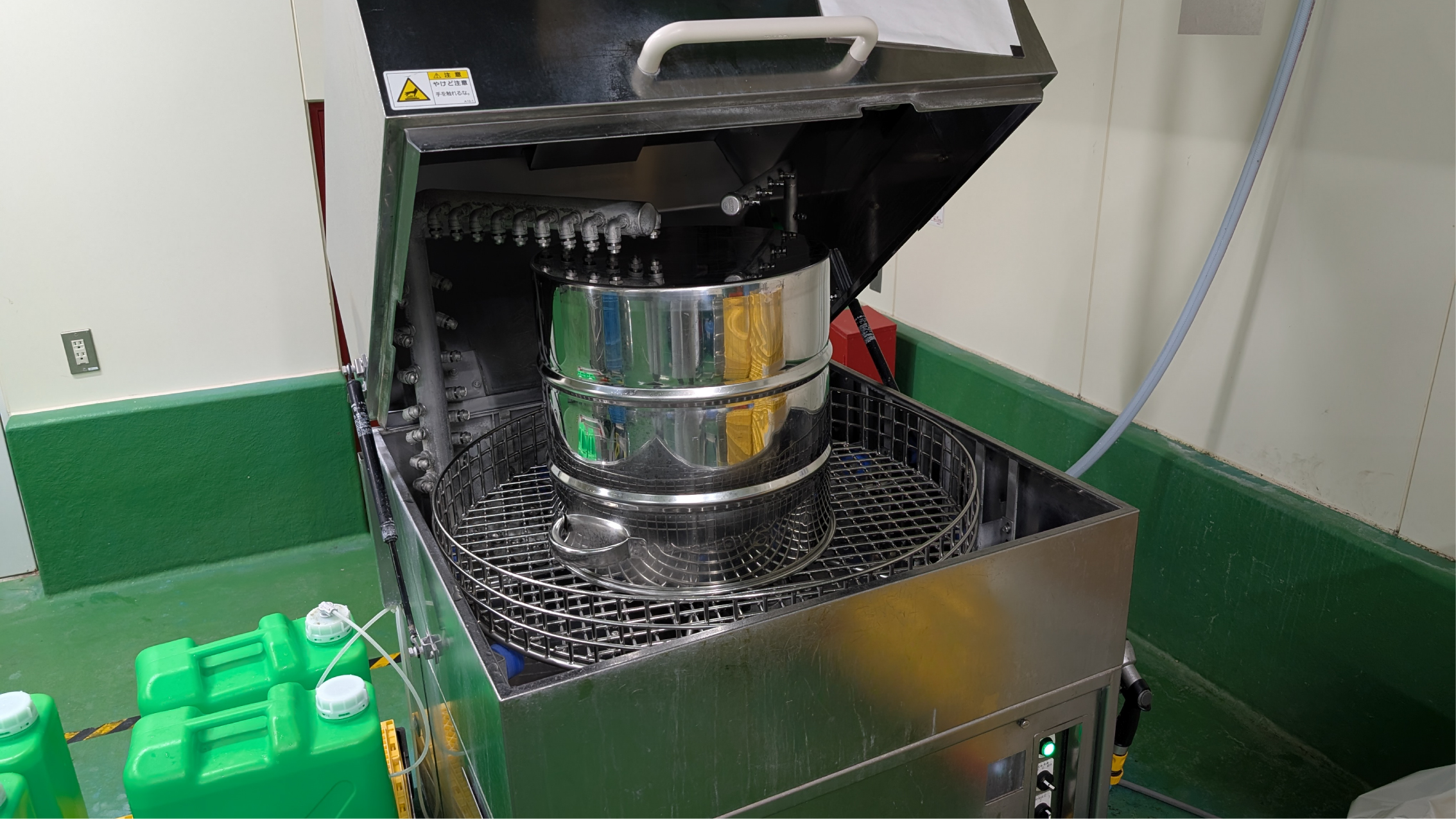
The stainless container used with the mixer needed to fit into their existing washing machine, but MONOVATE’s standard container turned out to be slightly too long to fit. MONOVATE built a custom version instead. Because MONOVATE had sent a single standard-sized container first, the fit issue was caught early — a level of attention to detail the customer genuinely appreciated, on top of a washing-process proposal that made the whole workflow better.

Custom container built to fit the existing washing machine
The custom container built to fit their existing washing machine

A Workplace Where Female Staff Can Work Safely

With the lifter in place, staff report a real drop in physical strain — before it arrived, containers still had to be lifted by hand, so the difference has been considerable. The rotary drum mixer has also largely solved the powder-scattering problem. In a food plant, where daily cleaning is essential, that alone has meaningfully reduced the overall workload.

Work that used to require male staff specifically can now be done by anyone, thanks to the rotary drum mixer and lifter working together.

Female staff working safely in the improved environment
Female staff now working safely in a cleaner, improved environment

Overall satisfaction with the project lands solidly at 90%, by the customer’s own estimate — if anything, a slightly smaller lifter would have been even better. But the back-strain issue and the powder-scattering problem are both genuinely solved, and the results matched what they’d hoped for. The rotary drum mixer’s simplicity is a real plus too — set the container at an angle, press start, and that’s it, simple enough for anyone to operate.

Looking ahead, one task still remains fully manual: lifting bags of raw powder to load into the mixer. They’d welcome a proposal from MONOVATE to make that step easier too — solving it would make the setup complete.


From the sales team: This customer’s production floor includes a number of staff, including women, who bring real ambition to their work, and we were glad to help deliver equipment that matches the equipment manager’s strong commitment to building a floor where everyone can contribute. When a production floor gains new capabilities, it also opens up new kinds of work people can take on — and we came away from this project having learned a great deal ourselves. The tilt lifter and rotary drum mixer we delivered are custom-built by hand, designed to hold up to years of use. We were involved in every part of this project, from planning through installation, and while working out the equipment layout took real effort, staying engaged with the customer on-site right up to the end let us deliver a proposal they were genuinely satisfied with.

Editor’s note: This interview reminded us that installing equipment can be about far more than the equipment itself — it can be genuine workplace reform. Watching work that “only men could do” become something “anyone can do,” and seeing how that reshaped the whole floor’s day-to-day experience — and, in turn, its productivity — taught us a great deal. Equipment isn’t just machinery; it has the power to change the daily lives of the people who use it, and this visit made that clear all over again. We’ll keep listening closely to what the floor actually needs, and keep bringing proposals that genuinely address it. Our sincere thanks to everyone who made time for this interview and walked us through their operation in such detail.

Two Weeks to Five Days: How One Heater Unit Transformed a Fermentation Producer’s Schedule

Case study: Heater unit with built-in mixing

Challenge

Rising production volume had pushed three small heating units (120L total capacity) to their limit. Splitting batches across them, along with manually transferring heavy containers and stirring by hand, stretched the production cycle to two full weeks.

Solution

Installing a MONOVATE heater unit enabled processing 200 liters in a single batch. A pre-installation test confirmed the unit could reach 90°C and verified the benefit of its built-in mixer, with customization worked in along the way.

Result

The production cycle dropped from two weeks to five days, batch capacity rose from 120L to 200L, and overall productivity improved dramatically.

Customer profile: Respect Co., Ltd., headquartered in Otsu City, Shiga Prefecture, a manufacturer of fermented plant extracts. The company holds Organic JAS certification and supplies high-quality organic fermented products.

The Process, and the Problem Before the Upgrade

Before installing the heater unit, the company warmed its product using commercial soup warmers — three units, each capable of handling only up to 40 liters. On top of that limited capacity, the process before installation involved manually transferring the warmed raw material into other containers, a genuinely demanding task. Every bit of stirring while the material was being warmed was also done entirely by hand.

As production volume grew, the company began looking for a tank with a built-in mixer that could process a larger volume in a single run.

The soup warmers used before the upgrade

Finding MONOVATE, and Why They Chose It

While searching online for a temperature-controlled tank with a built-in mixer, the company came across MONOVATE’s heater unit and immediately thought, “this could handle a lot more volume in one go.” After discussing it with the company president — who already had a track record buying stainless vessels from MONOVATE — they called to inquire directly.

Having that existing relationship of trust in place made it easy to move the conversation forward with confidence.

The heater unit that was installed

Testing Before Committing

Since MONOVATE offers pre-installation testing for the heater unit, they ran a real test at MONOVATE’s Yashio plant. By the time they arrived, the unit was already running, and they were able to confirm 150 liters heating up in about two hours — an immediately convincing result.

Some of their raw materials needed to reach as high as 90°C, and the test confirmed the unit could comfortably reach that temperature too. (Reaching 90°C depends on the specific application — always worth discussing directly.)

The heater unit running during the test
The heater unit running during the pre-installation test

What Sealed the Decision

Their three soup warmers together handled the equivalent of 120 liters; one heater unit could process 200 liters at once — a major jump in capacity on its own. Layered on top of that was the built-in mixer, replacing what had been entirely manual stirring and meaningfully cutting labor. Getting both a major capacity increase and reduced manual work from the same piece of equipment was what made the decision clear.

The Results After Installation

After installation, the work of lifting heavy containers off the soup warmers and transferring their contents elsewhere disappeared entirely — the tank now heats the material and staff can fill directly from it, sharply reducing physical workload.

What used to take two weeks now finishes in five days, a major reduction in overall production time. With that time freed up, staff can now put more attention into other tasks, and shifting from manual to mechanical mixing has also helped stabilize product quality.

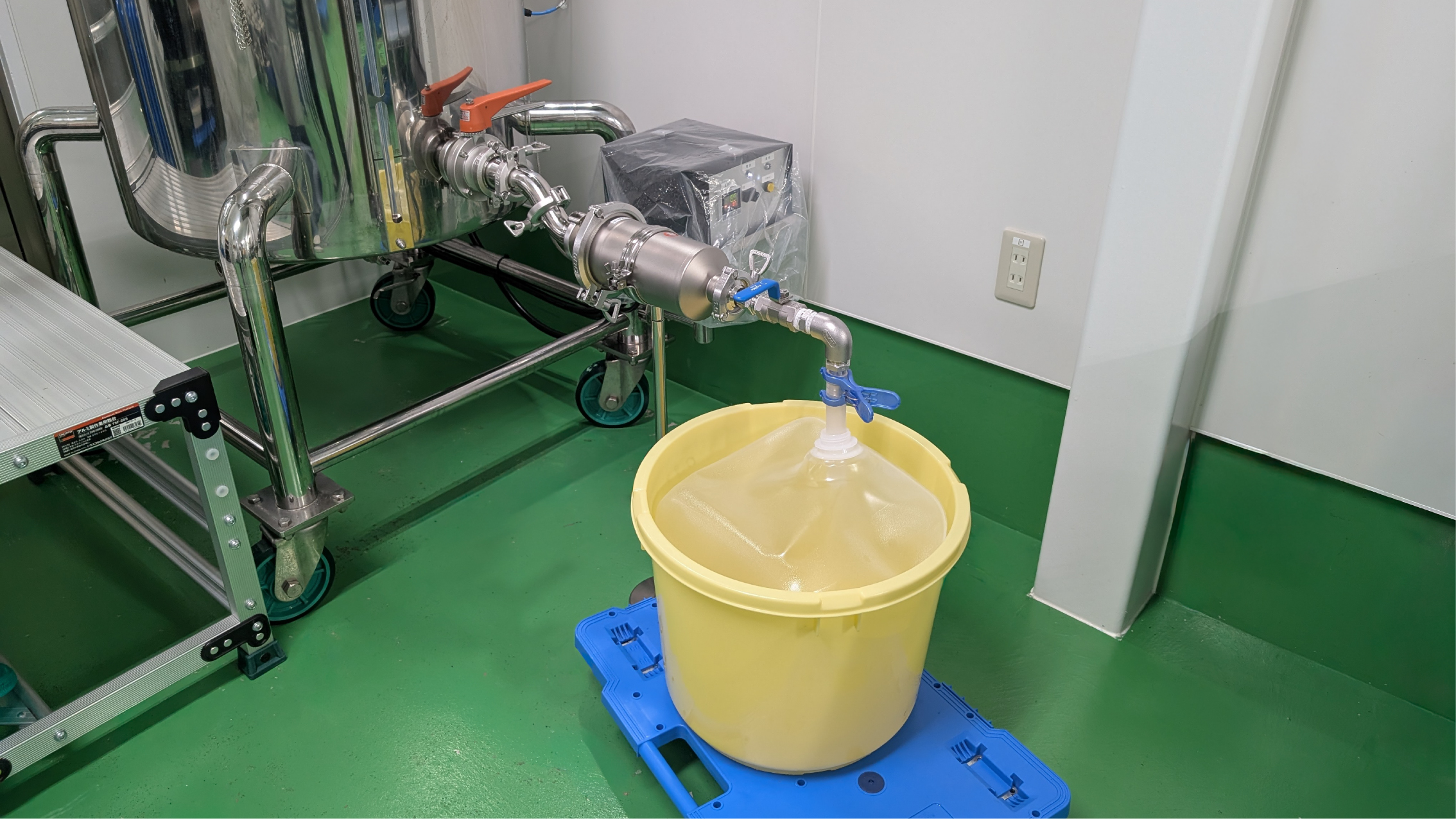
Filling directly from the heater unit
Filling directly from the heater unit after warming

Customization and Everyday Usability

Working with MONOVATE’s sales representative, the tank’s leg height was customized to match the size of the containers being filled, making the filling process easier. Once installed, it fit the available space perfectly, and casters mean it can be relocated to another room easily whenever that need comes up.

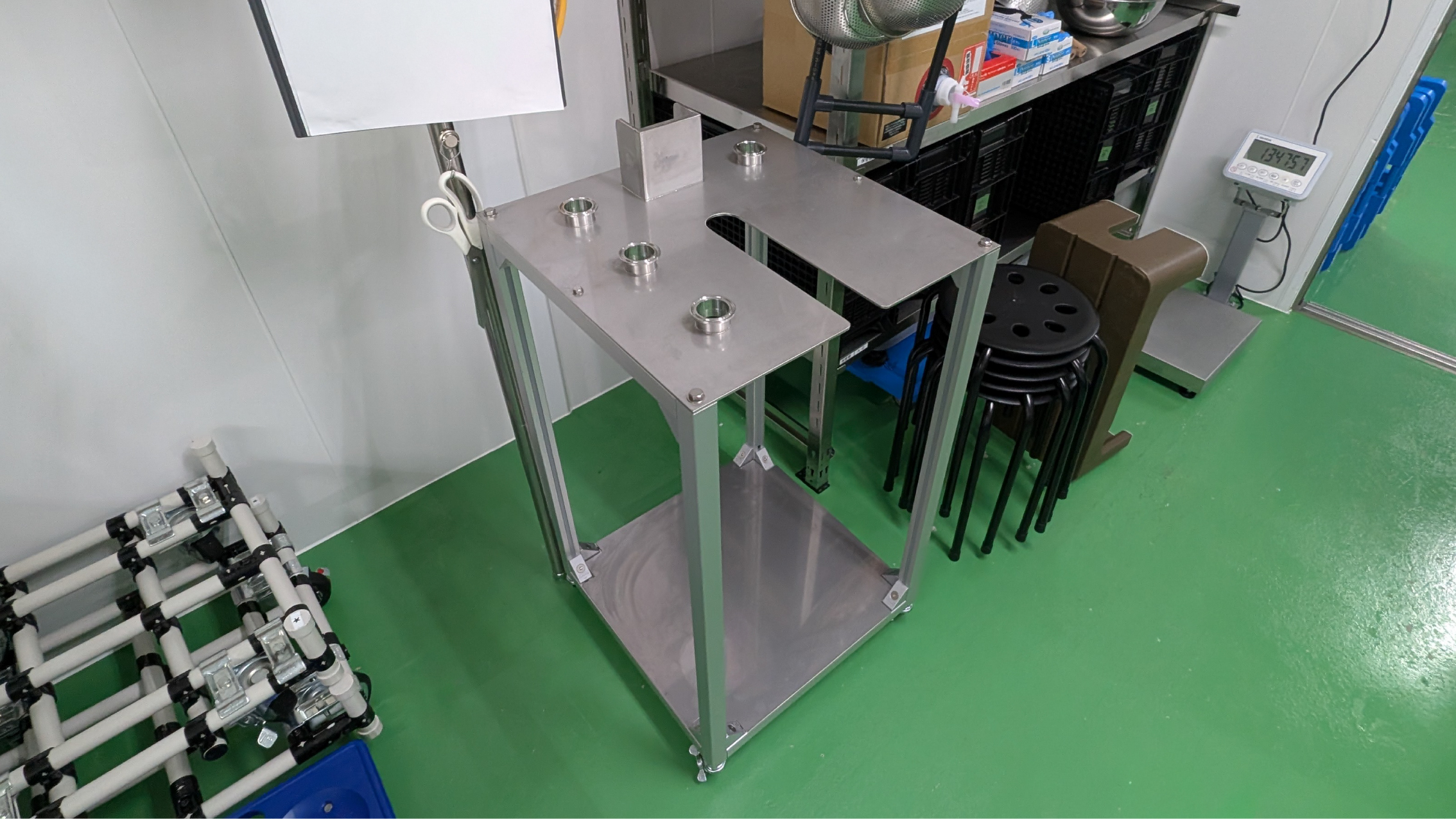
They also had a stand built for the mixer, baffle, and temperature sensor used during cleaning — a small addition that’s proven genuinely convenient in everyday use.

Stand for the mixer components
The stand built for the mixer components

One Year In: The Overall Evaluation

After roughly a year of use, the honest reaction is that things would have been genuinely difficult without it. MONOVATE’s sales representative was responsive throughout, with plenty of direct conversation that kept the process moving smoothly right up to installation. Delivery came together faster than expected, the cost never felt excessive, and considering the results, it’s been a genuinely good investment.

One request going forward: in a separate blending process using a disperser-type hand mixer, they’ve been running into foaming issues with certain raw materials. They plan to work with MONOVATE’s sales representative on a mixer design that also works with a hand mixer while keeping foaming under control.


From the sales team: On our first visit to the customer’s plant, the production floor was moving at a fast, busy pace, and everyone there clearly had their hands full. Wanting to genuinely help, we put together several proposals to fine-tune the heater unit’s specification. The equipment manager was deeply committed to improving efficiency, and we went through the specification — including the pre-installation test — multiple times together. That effort paid off: after delivery, we heard that the result matched exactly what they’d pictured, which meant a great deal to us. Everyone on the floor clearly took pride in what they were making, and we could feel real momentum behind the company. We look forward to continuing to support them closely.

Editor’s note: This interview gave us a real look at the plant, from raw organic plant fermentation extract all the way through the production process. The fermentation process itself was genuinely fascinating, and we found ourselves drawn into the appeal of the business itself. Hearing how the production cycle dropped from two weeks to five days, starting from that first pre-installation test, was something we were honestly thrilled to hear. Thank you sincerely for the generous time you gave us.

Thousands of Ladle Pours a Day: How One Custom Tank Ended a Chemical Maker’s Tendonitis Risk

Case study: Load-cell filling and filtration unit

Challenge

Filling bottles by hand with a ladle, thousands of times a day, had created a serious tendonitis risk — and because the work demanded real physical strength, it was limited to male staff only.

Solution

A custom-built tank consolidating filtration and filling into one unit. Two rounds of pre-installation testing confirmed it could handle their viscous liquid reliably before committing.

Result

Staff are now completely free of the tendonitis risk that came with the old process, and running filling, labeling, and packing in parallel has driven a major jump in production efficiency. The change has also opened this work to a much wider range of staff, and the company is now planning to expand the setup in stages.

Customer profile: Kurita Chemical Laboratory Co., Ltd., a specialist manufacturer of photosensitive chemicals for screen printing plates. Founded in 1951, the company produces high-quality photosensitive chemicals, supplying customers in Japan and overseas from its base in Itabashi, Tokyo, and holds ISO 9001 certification for its quality management system.

Three Years of Searching, and Finding MONOVATE

The physical toll of manual work had been a company-wide concern for some time, and the search for equipment that could automate it had been underway in earnest for three years. The company had previously purchased stainless vessels from MONOVATE, and knew from MONOVATE’s website and newsletter that custom, made-to-order equipment was also an option. Seeing an article in that newsletter about a load-cell unit — a device that automatically measures weight — sparked the thought: “this might actually work,” and they reached out.

The load-cell unit that was installed

Before committing, they ran two rounds of pre-installation testing. The first, using plain water, went well; the second used a liquid closer in viscosity to their actual material. That second test confirmed it would genuinely work, which brought real peace of mind. Working through additional customization requests along the way, and confirming there were no technical roadblocks, is what led to the final decision to install it.

Load cell calibration work
Calibrating the load cell

Thousands of Ladle Pours a Day, and the Tendonitis Risk Behind Them

Before installing this equipment, staff used a ladle to hand-fill bottles with photosensitive emulsion — a chemical used in screen printing plates — from larger containers. Weighing out the heavy raw material containers by hand was part of the job too, and it was genuinely tough physical work. Filtering the photosensitive emulsion was also done manually, so the company had been looking for equipment that could cover this entire sequence in one unit.

The installed load-cell unit with built-in filtration
The installed load-cell unit includes built-in filtration, drawing liquid in by creating a vacuum inside the tank

Ladling this liquid thousands of times a day, day after day, was genuinely hard on staff, and the tendonitis risk that came with it was the main reason they started looking for a better approach. Photosensitive emulsion has a viscosity similar to wood glue. It was poured straight from the ladle into containers with no funnel, a technique that took real skill — anyone less experienced would end up with the liquid running down the outside of the container.

Because of how physically demanding the work is, it had been handled exclusively by male staff. With this new equipment in place, female staff will be able to take on the work too — a change that should help further with both efficiency and consistency.

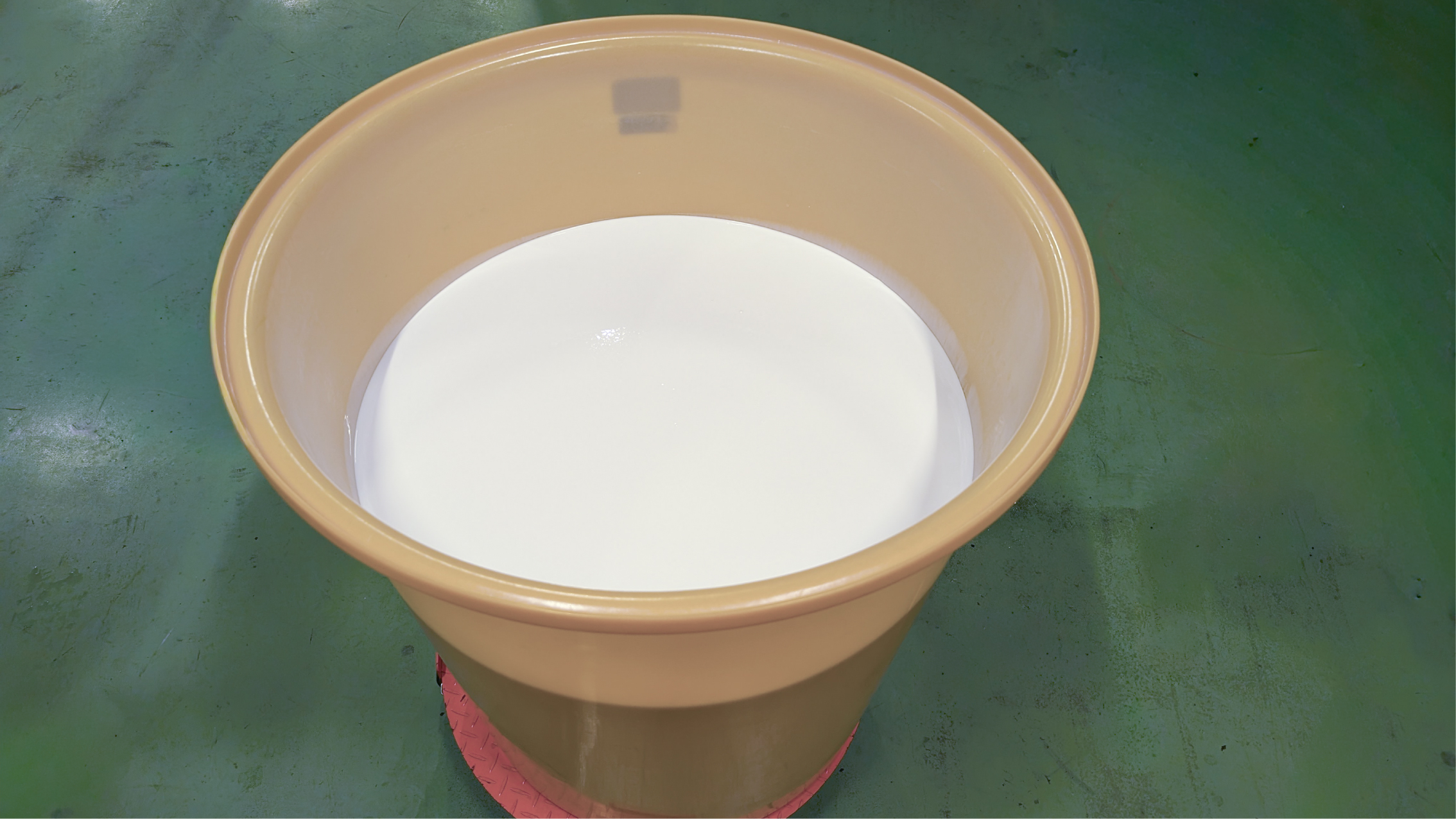
Photosensitive emulsion raw material
The photosensitive emulsion raw material

Parallel Workflows, and a Better Work Environment

A motorized two-way ball valve, controlled by preset weight targets, automatically stops filling once the target weight is reached, removing the need for a staff member to watch it constantly. The load cell detects weight in real time, and the valve closes automatically once the target is hit.

That frees staff to handle labeling and packing at the same time, which should meaningfully improve overall efficiency. Currently, the process runs sequentially — filling, then labeling, then packing, one step fully finishing before the next begins. With this equipment, staff can instead set up bottles for filling, label the ones that just finished, and set up the next round of bottles, all running in parallel.

Pump-based filling was considered too, but pump cleaning is a real hassle — so the final design instead uses gravity for natural filling, with pressure inside the tank raised as needed to push the liquid through.

Filling with the motorized two-way ball valve
Filling controlled automatically by the motorized two-way ball valve

Expanding in Stages

One unit alone doesn’t cover everything yet — if this one performs well, a second unit is already planned. Because different products still need to run in parallel, some manual work remains under the current setup, but success here would lead directly to adding another unit.

This is very much a first-generation model. The plan is to watch how it performs, then refine and improve on it with a second-generation version down the line.

A note on measurement regulations: Under Japan’s Measurement Act, the load-cell unit installed in this case cannot be used as final filling equipment. This equipment was installed specifically to reduce the manual labor involved in sub-dividing product, and Kurita Chemical Laboratory separately confirms final weight using certified weighing equipment after filling. Confirming final product weight always requires the appropriate certified measurement equipment.


From the sales team: From the initial inquiry a few years back, through an introduction to the load-cell unit at a trade show, we spent real time working through the specification together to arrive at the right product. Combining load-cell weighing with vacuum filtration in one unit made this a technically demanding build, and we’re glad we could deliver something the customer is genuinely satisfied with.

Editor’s note: This interview left us genuinely impressed by how seriously the team approached improving their own floor. Hearing about three years of searching for the right equipment, and a perspective that puts worker health first, was a reminder to keep bringing our best proposals forward. Our sincere thanks to Kurita Chemical Laboratory for the time and the detailed look at their operation.

From Six Workers to Two: How a Rotary Drum Mixer Solved a Soup Maker’s Labor Shortage

Case study: Rotary drum mixer replacing manual mixing

Challenge

Soup ingredients and similar materials were mixed entirely by hand, capping production efficiency at a hard limit.

Solution

Discovering MONOVATE’s rotary drum mixer at the FOOMA JAPAN trade show, and confirming its performance through a pre-installation test — enough to move to a leaner operating structure with confidence.

Result

Work that once required six people now takes just two — raising output while easing the workload, and driving a genuine efficiency gain on the floor.
Customer profile: Yamane Foods Co., Ltd., founded in 1946. A food manufacturer centered on kelp-based products — dashi kelp, shredded kelp, furikake, and soups — built on decades of processing know-how and quality control, with a mission of safe, reliable, delicious food.

The Process, and the Problem Before the Upgrade

Before this upgrade, the various ingredients for instant soup were simply spread out on a worktable and mixed entirely by hand. The manual process placed real strain on staff, and it put a hard ceiling on production efficiency. The company had been searching for a way to keep production going smoothly with fewer people.

The core issue was that manual mixing fixed the upper limit on efficiency. Work speed also depended heavily on each worker’s skill level, making the process unavoidably dependent on specific individuals. Finding a way to maintain the same output with a smaller team had been an ongoing challenge.

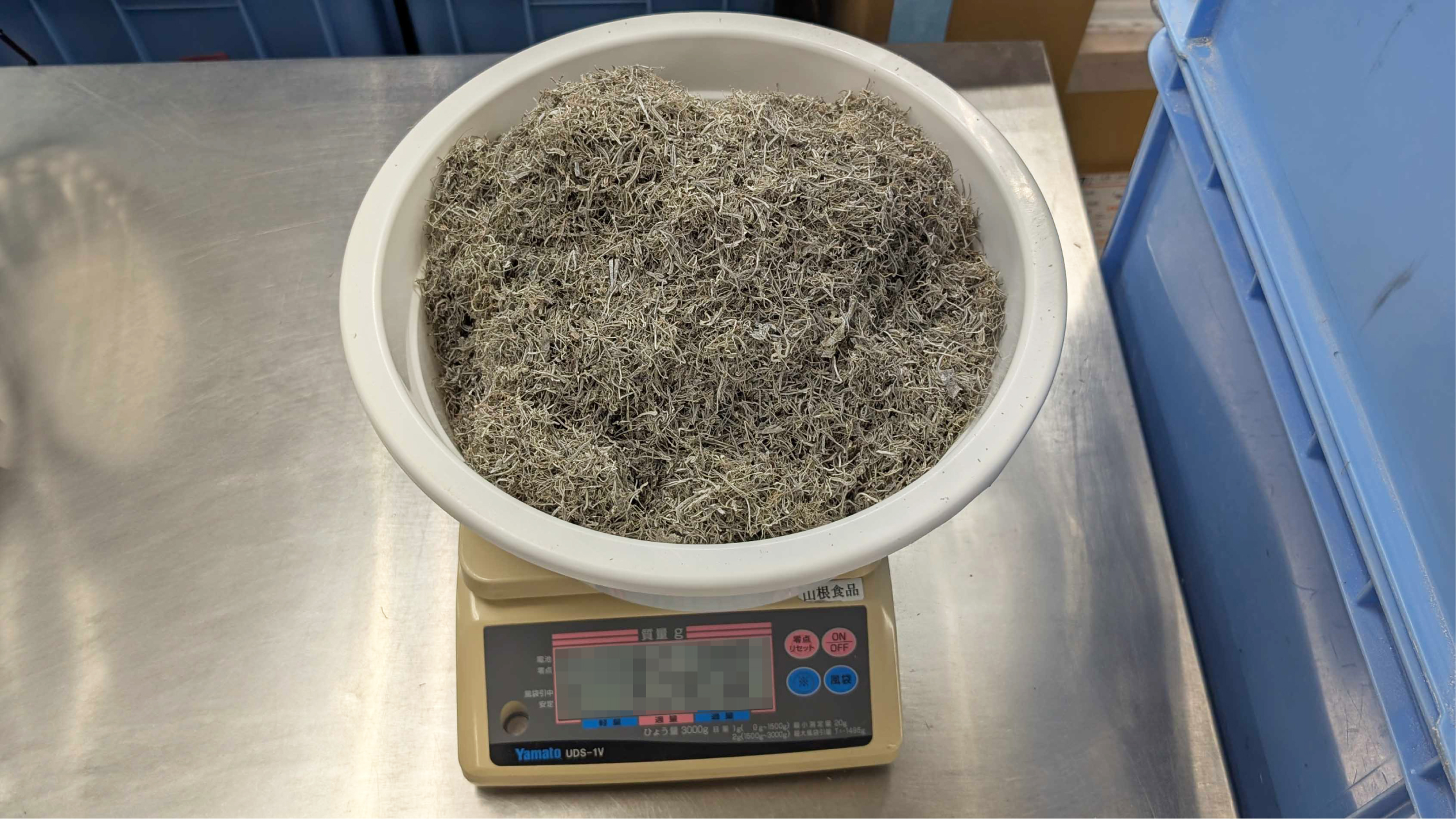
Soup ingredients before mixing

Finding the Product, and the Deciding Factor

The company first saw the rotary drum mixer at FOOMA JAPAN, a food machinery trade show. MONOVATE’s booth had one on display, and it immediately struck them as something that could work for their own mixing process. Seeing the actual unit up close, and getting a thorough, attentive explanation on the spot, left a strong impression.

A rotary drum mixer works by rotating the entire sealed container to mix its contents, preventing contamination while keeping ingredients from being damaged during mixing. It mixes fully sealed, with no impeller to damage delicate ingredients, uses a detachable container so the next batch can start without a cleaning delay, and tilts the drum roughly 30 degrees to achieve uniform mixing quickly.

What ultimately sealed the decision was running an actual pre-installation test with their own ingredients. Seeing the finished result with their own eyes convinced the whole team internally that the same quality could be reproduced with fewer people. Large mixers are common enough, but the rotary drum mixer’s compact footprint was also a real draw. Compared to other manufacturers’ products, they felt it offered strong value for the price — and that confidence in raising floor efficiency is what settled the decision.

The Results After Installation

The clearest improvement is the drop in both time and headcount. Mixing that used to take six people more than two hours now takes just two people about two and a half hours.

Some ingredient combinations still call for manual mixing as before, but overall, the equipment has driven a major efficiency gain. Because staff are freed up to handle other tasks while mixing runs, overall production volume has increased as well. With labor shortages a serious concern industry-wide, the rotary drum mixer has proven genuinely valuable for reducing both headcount and manual workload.

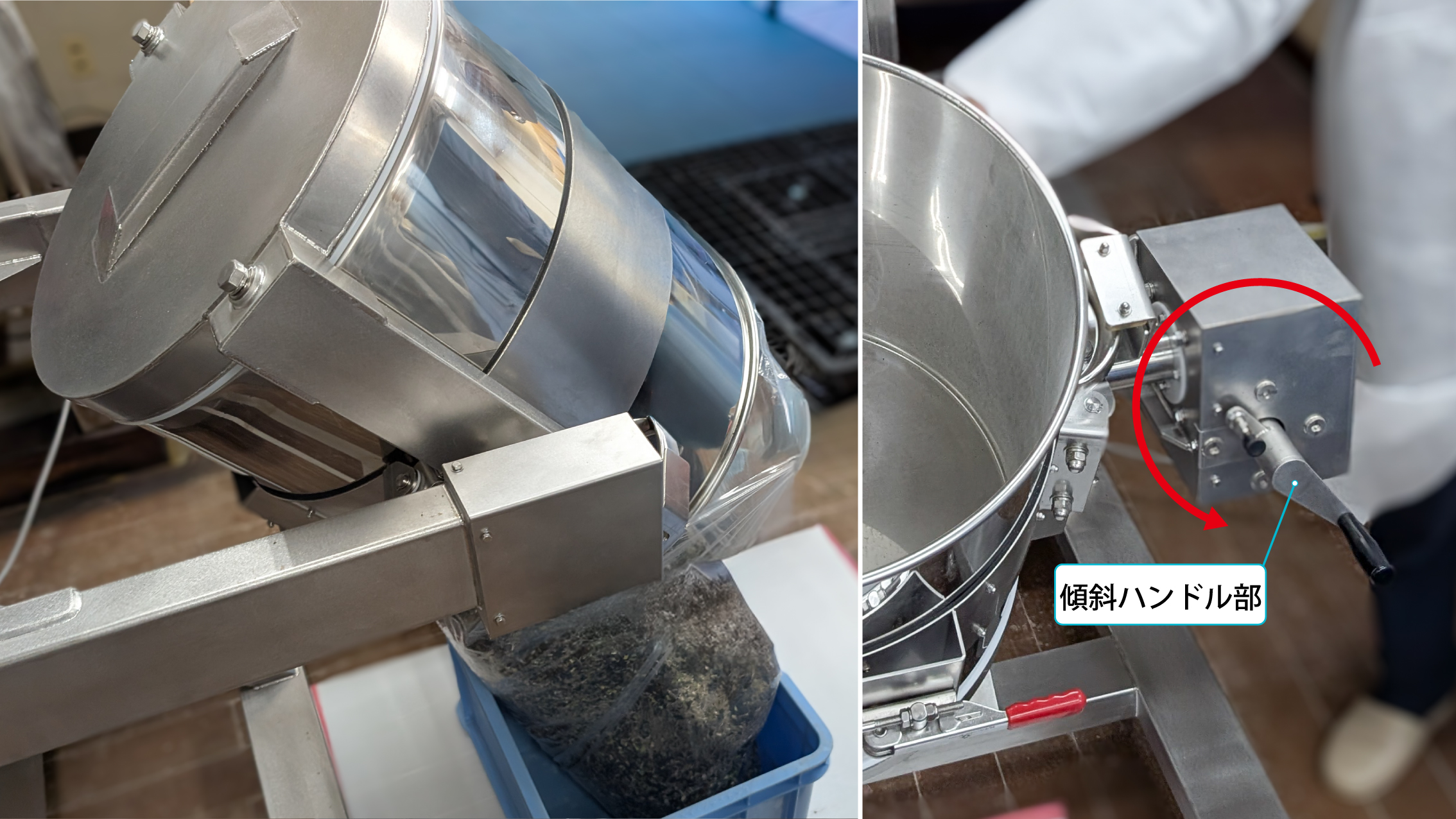
Custom handle mechanism tilting the drum 180 degrees for discharge
A custom handle mechanism tilts the drum 180 degrees for smooth, easy discharge

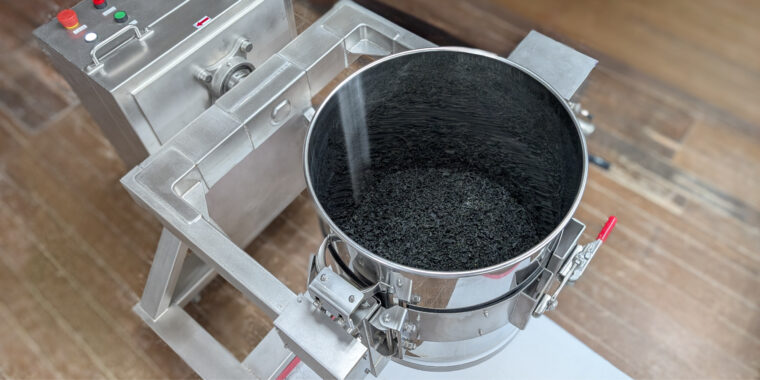
The moment that stands out most is simply seeing output rise while production stays stable with fewer people. Where the process once demanded a large crew, a limited team can now run production exactly to plan. Maintaining efficiency without relying on manual labor, they say, is a real achievement — and having made this change, going back to mixing this volume entirely by hand with this few people isn’t something they’d consider anymore.

Ingredients after mixing

Looking Back, and What’s Next

One small point of friction has been the lid gasket, which comes loose a bit more easily than they’d like. During a recent after-sales visit, though, a technical discussion on site cleared things up — the gasket’s tendency to come off easily turned out to be intentional, designed to make cleaning easier — and MONOVATE offered to propose an alternative lid style as well, reinforcing just how valuable an in-person conversation can be.

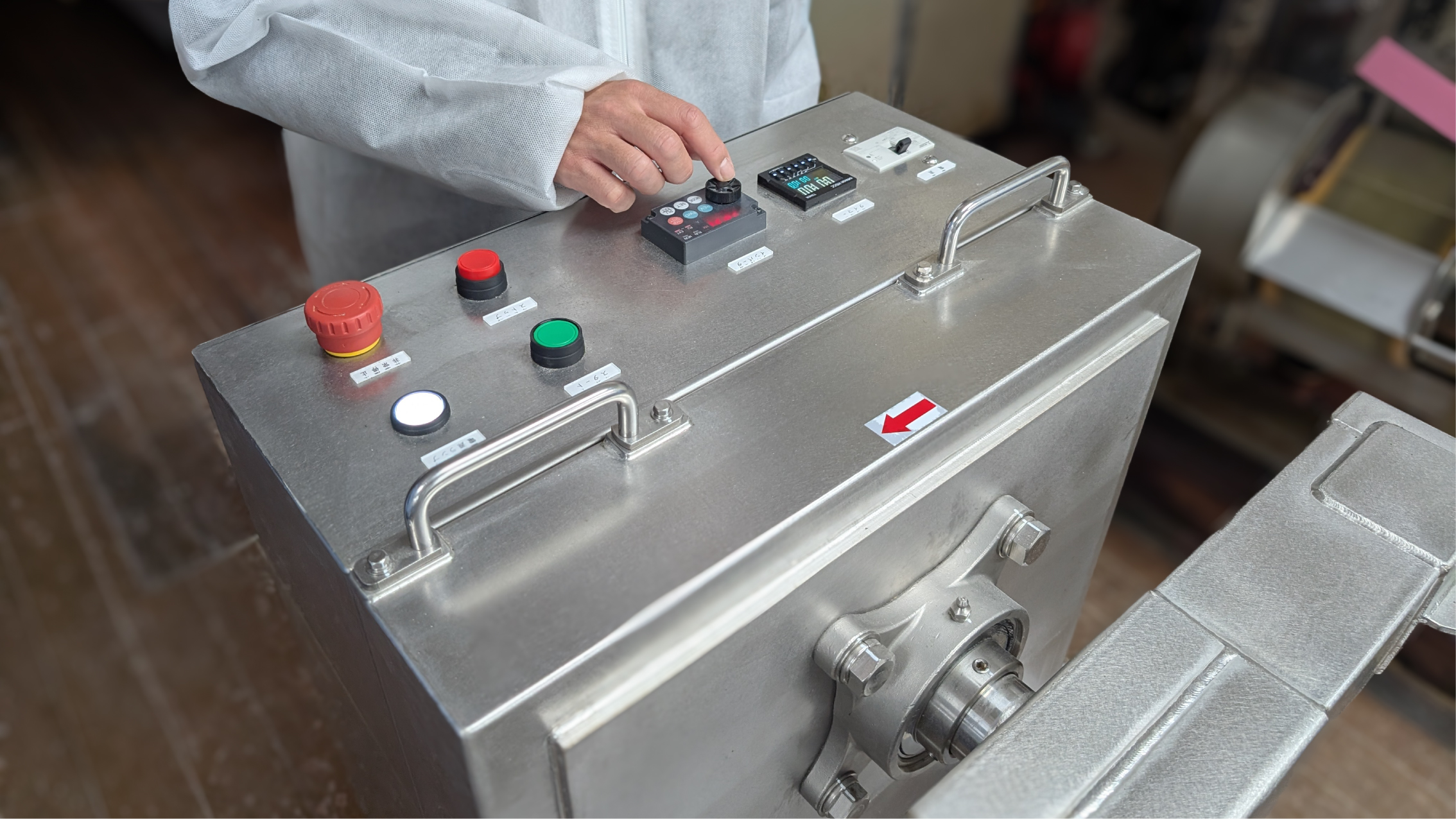
Control panel for starting and stopping the mixer
The control panel makes starting and stopping the mixer simple

Looking back on the whole project, operations on the floor have gotten noticeably smoother, and production can now continue confidently with a smaller team. Overall, they’re glad they made the switch.


From the sales team: We first met this customer’s president directly at our booth at FOOMA JAPAN — a leader clearly focused on easing the burden on staff wherever possible, and genuinely enthusiastic about the idea from the start. Given the distance between the customer’s location and our Saitama plant, we ran the demo over a live video call, and the results were strong enough that they decided to move forward right away. This particular unit was custom-sized larger than standard, based on a request to increase mixing volume. Visiting after delivery and hearing that “efficiency has improved dramatically” was genuinely rewarding. Out of personal curiosity, we also bought some of Yamane Foods’ soup ourselves — and, with no exaggeration, it was excellent. We’ve been repeat customers ever since.

Editor’s note: We got to see, firsthand, a manual mixing process this company had kept going for years — and in some cases, depending on the ingredients and conditions, still relies on today, a real testament to hard-earned skill. At the same time, it was genuinely encouraging to see the rotary drum mixer running effectively on the floor, refined through the team’s own trial and error into a real efficiency gain. Getting a close look at how equipment and human skill can be combined to improve a production floor was a valuable experience. Our sincere thanks to Yamane Foods for supporting this interview.

From 18 Liters to 60 on a Single Cart: How a Rice Specialist Scaled Up Amazake Production

Case study: Cart-mounted tank, mixer, pump, and chiller unit

Challenge

  • A batch-size ceiling: amazake and similar products were made in 18-liter pots, capping how much could be produced at once.
  • Heavy physical work: lifting and carrying containers to the filling machine after saccharification was a real strain.
  • Hygiene concerns: mixing in an open container raised sanitary concerns as well.

Solution

  • Scaling up: a 60-liter tank combined with a mixer, pump, and control panel into one cart-mounted unit.
  • Stabilizing saccharification temperature: connecting a chiller to hold saccharification temperature steady.
  • Testing beforehand: verifying mixing performance, temperature control, and ease of operation using their own raw materials.

Result

  • Larger batches: batch size grew from about 18L to 60L, boosting production efficiency.
  • Less physical strain: pump-based transfer eliminated the need to lift and carry containers.
  • More consistent quality: chiller-based temperature control paired with anchor mixing delivers stable temperatures and thorough mixing.
  • Better hygiene: a sealed structure lowers contamination risk, and the cart-mounted design makes cleaning far easier.

Customer profile: Ask Co., Ltd., based in Yamagata Prefecture — a rice specialist supporting Japan’s rice-based food culture. The company offers everything from staple and sake rice to sake, koji, fermented foods, and regional specialty products, managing quality from its own rice-polishing plant through to retail and mail order, all to deliver safety and great taste to its customers.

The Process, and the Problem Before the Upgrade

The trigger for this project was a hard ceiling on batch size: production using a sterilizing bath topped out at around 18 liters per batch, limiting overall efficiency. As demand for amazake and koji-based products kept growing, the company needed a new production method that could increase batch size without compromising quality — on top of the physical strain that came from lifting and carrying heavy containers. What they were looking for was a compact, electrically driven, temperature-controlled saccharification tank.

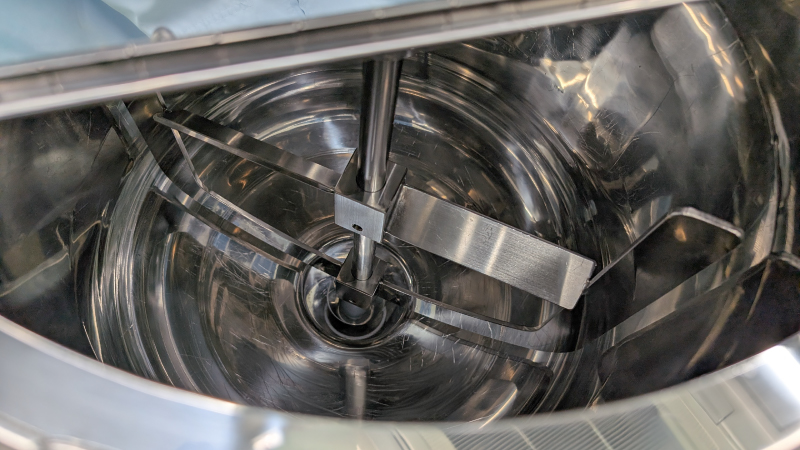
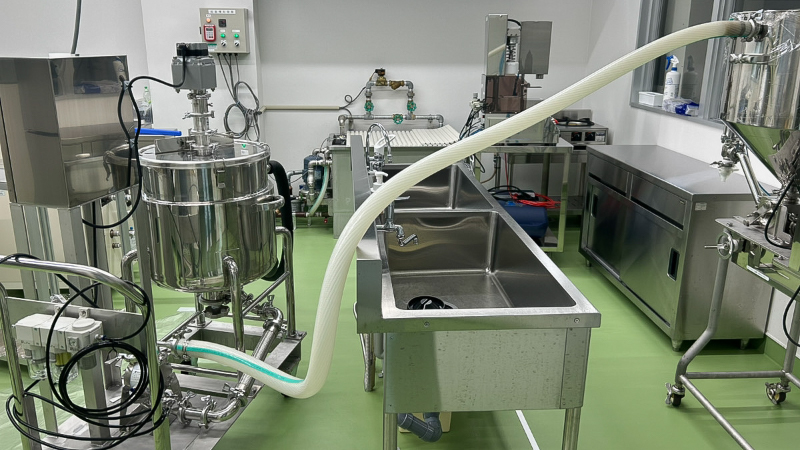
Production using the previous sterilizing bath

Before this upgrade, a pot was placed inside a sterilizing bath filled with water held at a set temperature, and water and rice koji were mixed at 50–60°C using a separate, freestanding mixer stand. The mixture was then heated to 85°C and manually loaded into the filling machine, before being pouched and sterilized in the bath to finish. This process kept batch sizes small, involved a lot of manual steps, and depended heavily on manual labor — making both production efficiency and workload real, ongoing concerns.

Products manufactured using this equipment
An example of the products manufactured using this equipment

Deciding to Upgrade, and Testing Beforehand

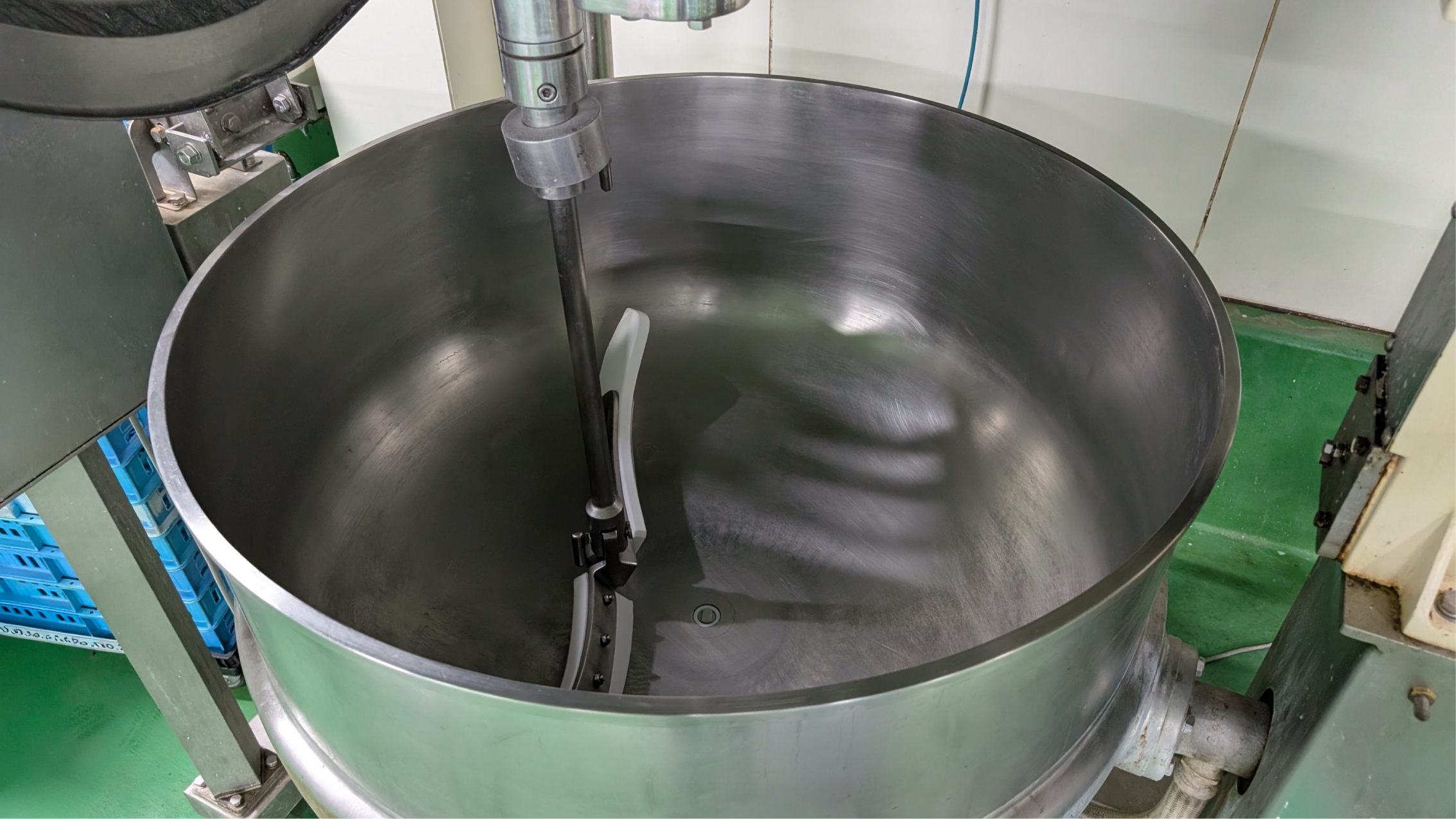
What stood out during the pre-installation test was running it with their own raw materials. With the propeller-type mixer they’d used before, mixing rice, water, and koji mold never fully evened out — the material was simply too heavy. Switching to an anchor-type impeller, the heavy mixture came together evenly and consistently, giving them real confidence that they could raise efficiency without sacrificing quality.

They also appreciated MONOVATE’s flexibility in customizing tank capacity to fit their production line and in helping select the right mixer — a point they felt spoke well of the company overall.

Anchor-type mixer
The anchor-type mixer

The Results After a Year

A year into operation, batch size has nearly doubled, meaningfully improving production efficiency. Containers that once had to be lifted and carried by hand to the filling machine are now moved by pump instead, sharply cutting physical workload.

Because production now happens inside a sealed, lidded tank, contamination risk has dropped to almost nothing — a real improvement for both safety and hygiene.

The tank’s temperature is now managed through a connected chiller, which holds the target temperature precisely — keeping the 50–60°C saccharification range stable with no temperature unevenness, which in turn keeps the finished product consistent.

Pump-based liquid transfer
Pump-based transfer, replacing manual carrying

Usability and Changes on the Floor

Because the tank, mixer, pump, and control panel are all mounted on a single cart, the whole unit takes up minimal space and moves smoothly whenever the layout needs to change. Being able to roll the entire unit out of the way also makes cleaning the surrounding area and floor far easier — a real help for hygiene management.

The mixer stand also comes in handy when checking on saccharification progress, letting staff monitor the process safely.

Cart-mounted unit making cleaning easier
Being able to roll the whole unit aside makes cleaning the tank surroundings and floor much easier

Editor’s note: What struck us first during this visit was how thoroughly clean the production room was. In an environment that handles koji mold, that commitment to daily hygiene management said a great deal — and it’s clearly part of what underpins the quality Ask is known for. We didn’t get to observe production directly, but the team walked us through exactly what the work involved, where the strain used to be, and how this equipment has helped — with a level of care that made their commitment to improving the floor very clear. We’ll keep doing everything we can to support the equipment side of the business going forward. Thank you sincerely for making time for this interview during such a busy schedule.
The Outsourcing Bill That Vanished: How a Honey Producer Cut Processing Time to a Third

Case study: Integrated water-bath, mixing, and transfer line for honey production

Challenge

  • Couldn’t process drum-barrel raw material: no water-bath equipment sized for 200L drums, so decanting had to be outsourced.
  • A real cost burden: outsourcing that decanting into smaller containers added up to a significant annual expense.
  • Low operating efficiency: manual mixing and transferring was physically demanding and capped how much they could process.

Solution

  • A large-capacity water bath: a rectangular tank sized for two 200L drums, or eight smaller 18L containers, at once.
  • One integrated line: water bath → transfer → temperature-controlled mixing → pre-filling, built as a single continuous process.
  • Specification tuned to honey’s behavior: flange heaters and pump specs adjusted specifically for honey’s properties.

Result

  • Pre-processing brought in-house: no more dependence on outsourced decanting, for major cost savings.
  • Sharply higher efficiency: the integrated line cut processing time to roughly a third of before.
  • Less physical strain: manual mixing is gone, with stable, consistent production and no compromise on quality.
  • Investment paid off: five years in, the equipment cost has been fully recovered.

Customer profile: B-Skep Co., Ltd., operating as “Yama no Hachimitsuya” (Mountain Honey Shop), a honey specialist built on its own beekeeping operations, handling production, processing, and sales. The company maintains a production system capable of handling both domestic and imported raw honey, pursuing high quality that reflects each material’s individual character.

The Process, and the Problem Before the Upgrade

The company produces honey at a scale of roughly 40–50 tons a year. Imported honey typically arrives in 200-liter drums, domestic honey in smaller 18-liter containers. This equipment now handles the full process: melting the raw material in a water bath, pumping it into a temperature-controlled mixing tank, and finally sending it on to the filling tank.

Main equipment delivered for this project
The main equipment delivered for this project: water bath tank, transfer pump, 250L temperature-controlled mixing tank, and transfer piping

Before installing this line, the company used two hot-air circulation melters, each holding only two 18-liter containers, to melt honey in small batches. Because that equipment could only handle 18-liter containers — not 200-liter drums — the volume they could process at any one time was tightly limited.

Once melted, the thick, viscous honey then had to be mixed by hand and manually transferred to another container for the next step — a process that severely limited both batch size and overall efficiency.

The previous hot-air circulation honey melter
The hot-air circulation melter used previously

The biggest problems were poor operating efficiency and the outsourcing costs that came with it. Imported honey arrived in 200-liter drums, but with no equipment able to water-bath and melt a full drum directly — and no way to pump such viscous honey — the company couldn’t process drum-barrel material in-house at all. The only option was to pay an outside contractor to decant it into smaller containers first, which became a significant recurring cost.

On top of that, all post-melt mixing was done entirely by hand, putting real strain on staff — to the point that some developed tendonitis or tennis elbow. As production volume grew, these inefficiencies only became more pronounced, making a more efficient approach increasingly necessary.

Behind the Decision, and the Specification Details

The project began with a simple realization: the company couldn’t process 200-liter drums in-house, and the outsourced pre-processing fee was becoming a real burden. That led to a direct question — wouldn’t it make more sense to invest in equipment that could handle the drums as-is, rather than keep paying that fee indefinitely?

They found MONOVATE while touring other companies’ plants and gathering information at FOOMA JAPAN, a food machinery trade show, and worked through the specification together with MONOVATE checking the site directly. Running the numbers and finding that the investment could pay for itself within a few years was a major factor in the decision.

To handle both 200-liter drums of imported honey and 18-liter containers of domestic honey, MONOVATE designed a rectangular water-bath tank sized for two drums, or eight small containers, at once. Because honey loses nutritional value above 60°C, both the water bath and the temperature-controlled mixing tank were fitted with flange heaters and a control panel for precise temperature management.

Honey’s viscosity also changes drastically with temperature, so pump specifications and mixer motor selection were worked out jointly with MONOVATE to ensure clog-free transfer after the water bath. Because the factory’s ceiling height was limited, the floor itself had to be excavated to fit the water-bath tank and still leave enough clearance to load the drums — and the equipment’s height and layout around the tank and water bath were then adjusted to match that finished floor level.

Flange heater installed on the below-grade water bath tank
The flange heater installed on the below-grade water-bath tank, enabling stable, temperature-controlled melting

The Results After Installation

The biggest win was the ability to process 200-liter drums entirely in-house. That eliminated the need for outsourced pre-processing altogether, translating directly into major cost savings.

Connecting water bath, transfer, mixing, and filling into a single continuous line also raised overall efficiency, cutting processing time to roughly a third of what it was before.

The mixing that used to be done by hand is now handled reliably by an anchor-type mixer, significantly easing the physical burden on staff. Between the eliminated outsourcing fees and the improved process efficiency, the equipment investment has been fully paid back in the five years since installation.

Anchor-type mixer working thick honey evenly
An anchor-type mixer keeps thick, viscous honey mixing evenly

Five Years In: The Overall Evaluation

Throughout the project, MONOVATE was available exactly when needed — for site surveys, installation, and every point where specification decisions had to reflect honey’s viscosity and how staff actually move through the workspace. Careful adjustment of details like flange heater and pump selection, tailored to their specific production flow, built a relationship they felt comfortable consulting throughout.

Five years on, the equipment continues to run reliably, and the savings from eliminated outsourcing and improved efficiency have held steady. All things considered — including the return on investment — they’re glad they made the decision to install it.

250L temperature-controlled mixing tank
The 250-liter temperature-controlled mixing tank

Editor’s note: For this interview, five years after delivery, we heard directly from the company’s president about how the equipment has been running and the results they’ve seen from actually using it. Touring the honey production floor in person, we could feel, at every turn, both the thinking behind the original decision to install this equipment and the quiet care taken toward the staff who work with it daily. As the conversation went on, we found ourselves in a genuinely constructive exchange about ways things could be improved even further — a forward-looking attitude toward the floor that left a real impression. After the interview, we had the chance to taste the honey being produced, and having just seen the process firsthand made it taste even better than usual. We’ll keep doing everything we can to support the equipment side of the business going forward. Thank you sincerely for so generously supporting this interview.

Everyone Else Said 80°C Was the Limit: How a Pharma Manufacturer Hit 90°C Without a Boiler

Case study: Converting a pharmaceutical heating tank from steam to electric

Challenge

  • Boiler upkeep was a burden: daily inspections, standby operation, and a trip to the boiler room every time an error occurred.
  • An organization-wide phase-out: an environmental decision to eliminate factory boilers made finding an alternative heating method mandatory.
  • An overly complex setup: managing the heating process involved more moving parts than it needed to.

Solution

  • Switching to an electric temperature-controlled tank: replacing the boiler with electric heater-based heating.
  • Pre-installation testing to fine-tune the spec: running heat-up tests and adjusting heater output and tank design accordingly.
  • A structure balancing insulation and cleanability: an added insulating jacket paired with an easy-to-clean design.

Result

  • Lighter operational load: no more boiler startup or inspection routine, simplifying pre-production setup.
  • A consolidated process: heating now runs through a single temperature-controlled tank, simplifying the overall equipment layout.
  • Genuine buy-in from the floor: after roughly a year in operation, the equipment has earned real confidence on-site.

Customer profile: Daiichi Pharmaceutical Industry Co., Ltd., founded in 1947. A pharmaceutical company with proprietary expertise spanning two specialized fields — iodine and olfactory science — contributing to public health and quality of life through stable drug supply and research into the mechanisms of smell.

The Process, and the Problem Before the Upgrade

This temperature-controlled tank is used mainly to produce sugar-coating solution for coated tablets — a step where precise temperature control matters a great deal.

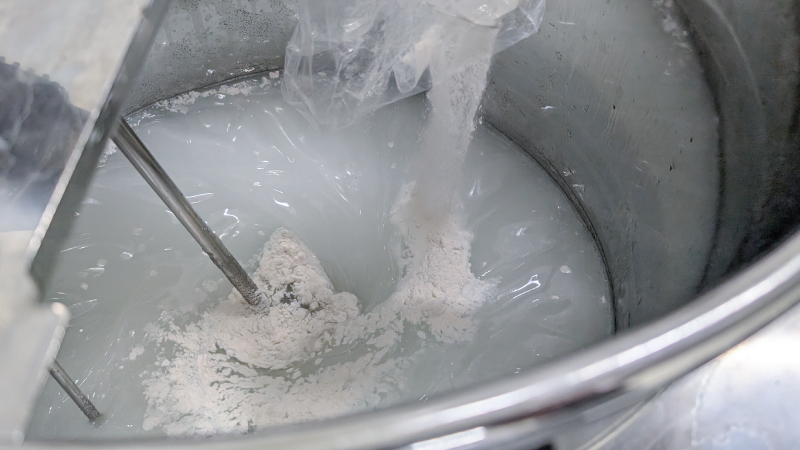
Mixing raw materials inside the temperature-controlled tank

Before the upgrade, heating relied on a boiler that sent steam into the tank’s outer jacket to warm the contents. There was nothing fundamentally wrong with steam heating itself — the real difficulty was in running the boiler day to day. It needed daily inspection and standby operation, and any error meant someone had to physically walk over to the boiler room to deal with it.

The trigger for considering an electric alternative was broader than this one tank: across the whole plant, boiler-based equipment was already becoming rare, and a company-wide decision had been made to phase boilers out entirely. That policy shift is what set off the search for a tank that could be heated electrically instead.

What Mattered Most in Choosing the Replacement

The top priority was operating the new setup just like the old steam system — meaning heat-up time needed to match steam heating with no real compromise, and the tank still had to reach 90°C.

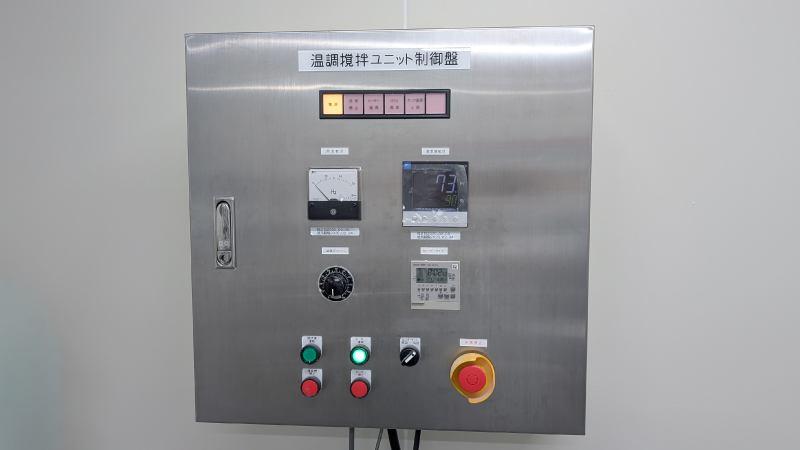
Control panel for the temperature-controlled mixing unit
The control panel for the temperature-controlled mixing unit

Other manufacturers they consulted often said the same thing: 80°C was achievable, but 90°C was a stretch. Some proposed immersion heaters, but for pharmaceutical use, having a heater in direct contact with the raw material wasn’t acceptable.

MONOVATE’s response was different: based on past experience, 90°C might be achievable with the right design choices — and rather than promise it outright, MONOVATE proposed testing the actual performance first. (Reaching 90°C depends on the specific application — always worth discussing directly.)

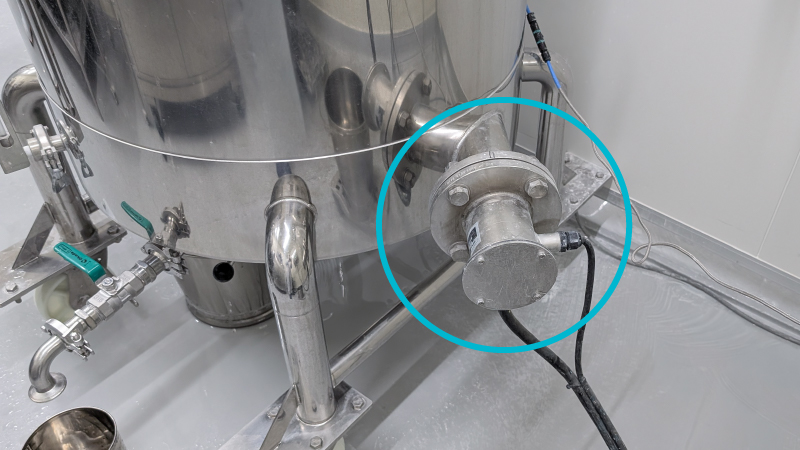
Flange heater warming the water inside the jacket without touching the contents
A flange heater warms the water inside the jacket — never touching the tank’s contents directly

Testing Before Committing

Honestly, the pre-installation test left them a little uneasy at first — heat-up seemed somewhat slower than expected. But MONOVATE responded with concrete fixes: adding insulation and increasing heater output. Seeing a clear, credible answer to the problem the test revealed is what ultimately made the decision to move forward.

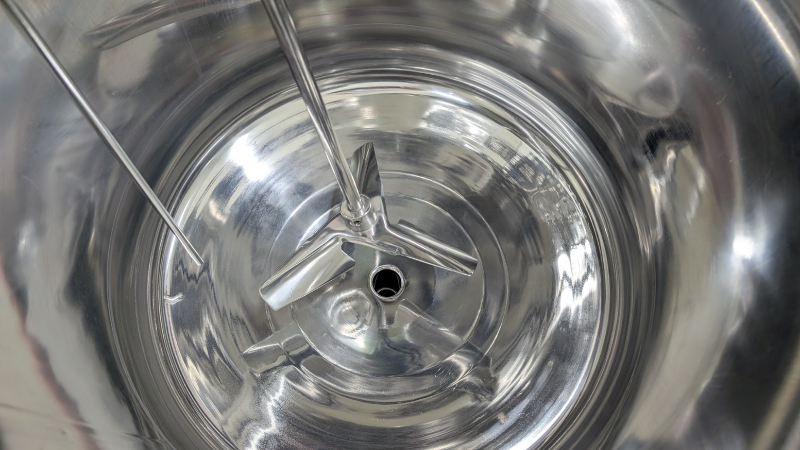
Electropolished tank interior
The tank’s electropolished interior finish

The Results After Installation

In actual use, heat-up performance turned out to be genuinely close to the old steam system — a real relief. The pre-test flange heater was rated at 7.5kW; the production unit was upgraded to 10kW, which made a noticeable difference. An additional insulating jacket layer also kept the design easy to clean. Touching the tank’s outer surface now feels only slightly warm, with no burn risk at all.

Production using the temperature-controlled tank
Production in progress using the temperature-controlled tank

Small Adjustments on the Floor

To keep steam from escaping into the room, staff submerge a hose from underneath the tank into a bucket of water, venting steam through it. That setup also cleverly exploits a bit of physics: when the heater switches off, steam inside the jacket cools and condenses, dropping the internal pressure. That drop in pressure automatically draws water from the bucket back into the jacket — maintaining the jacket’s water level without any manual refilling, and preventing the heater from ever running dry.

Bucket and hose using negative pressure for automatic refilling
A simple bucket-and-hose setup that uses negative pressure for automatic refilling — solving both steam venting and dry-running risk at once

One recent point of friction has been the lid gasket coming loose more often than they’d like. Raising it with MONOVATE brought a quick on-site check and a proposal for an alternative gasket. More recently, they’ve also asked about extending the wiring to the control panel so the tank can be relocated. It’s this kind of ongoing support after delivery — not disappearing once the sale is done — that they say has made a real difference.

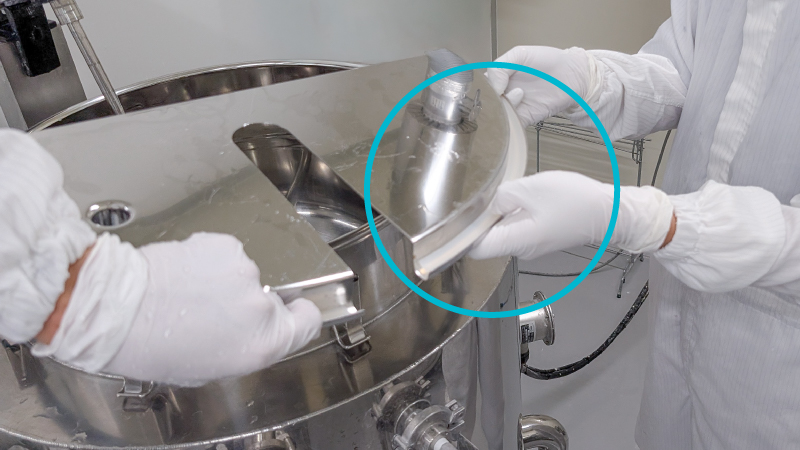
Lid gasket
The tank’s lid gasket

One Year In: The Overall Verdict

Not everything was perfect from day one, but using the test results to optimize heater output and insulation got them to equipment the pharmaceutical floor is genuinely satisfied with. About a year into operation, they feel this single unit now completes the process on its own, simplifying overall operations — a strong outcome for what was a major shift away from boiler-based heating.

They’ve also kept a backup heater on hand just in case. For a pharmaceutical manufacturer, never interrupting supply is a non-negotiable baseline.


Editor’s note: It was genuinely encouraging to see a major undertaking like decommissioning a boiler proceed with this level of confidence in such a quality-sensitive pharmaceutical environment. The clever use of basic physics for automatic refilling, and the thoroughness of keeping a backup heater on hand against the risk of a supply interruption, left us more than a little impressed. Hearing them say, a year later and with a smile, that this was the right call was the best possible outcome for us. We look forward to continuing to support a stable production environment, drawing on the knowledge built on the floor along the way. Our sincere thanks to everyone at Daiichi Pharmaceutical Industry for so generously supporting this interview.