
Case study: Converting a pharmaceutical heating tank from steam to electric
Challenge
- Boiler upkeep was a burden: daily inspections, standby operation, and a trip to the boiler room every time an error occurred.
- An organization-wide phase-out: an environmental decision to eliminate factory boilers made finding an alternative heating method mandatory.
- An overly complex setup: managing the heating process involved more moving parts than it needed to.
Solution
- Switching to an electric temperature-controlled tank: replacing the boiler with electric heater-based heating.
- Pre-installation testing to fine-tune the spec: running heat-up tests and adjusting heater output and tank design accordingly.
- A structure balancing insulation and cleanability: an added insulating jacket paired with an easy-to-clean design.
Result
- Lighter operational load: no more boiler startup or inspection routine, simplifying pre-production setup.
- A consolidated process: heating now runs through a single temperature-controlled tank, simplifying the overall equipment layout.
- Genuine buy-in from the floor: after roughly a year in operation, the equipment has earned real confidence on-site.
Customer profile: Daiichi Pharmaceutical Industry Co., Ltd., founded in 1947. A pharmaceutical company with proprietary expertise spanning two specialized fields — iodine and olfactory science — contributing to public health and quality of life through stable drug supply and research into the mechanisms of smell.
The Process, and the Problem Before the Upgrade
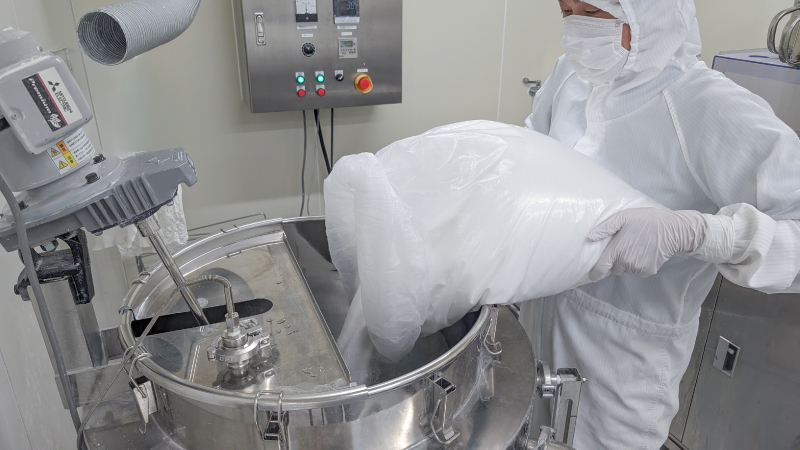
This temperature-controlled tank is used mainly to produce sugar-coating solution for coated tablets — a step where precise temperature control matters a great deal.
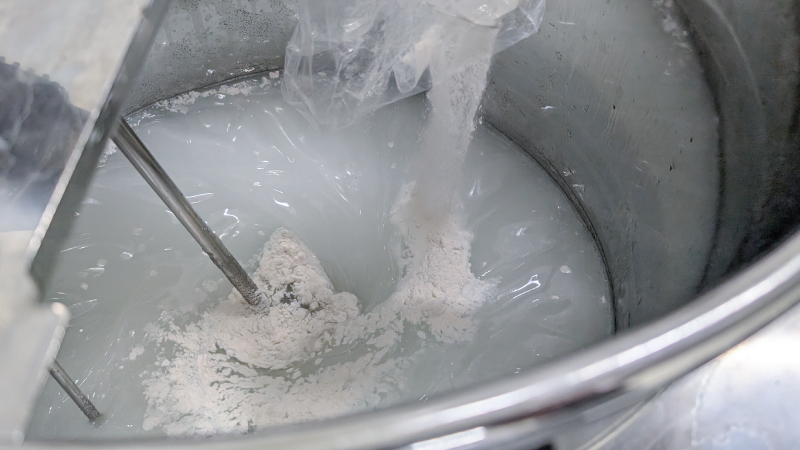
Before the upgrade, heating relied on a boiler that sent steam into the tank’s outer jacket to warm the contents. There was nothing fundamentally wrong with steam heating itself — the real difficulty was in running the boiler day to day. It needed daily inspection and standby operation, and any error meant someone had to physically walk over to the boiler room to deal with it.
The trigger for considering an electric alternative was broader than this one tank: across the whole plant, boiler-based equipment was already becoming rare, and a company-wide decision had been made to phase boilers out entirely. That policy shift is what set off the search for a tank that could be heated electrically instead.
What Mattered Most in Choosing the Replacement
The top priority was operating the new setup just like the old steam system — meaning heat-up time needed to match steam heating with no real compromise, and the tank still had to reach 90°C.
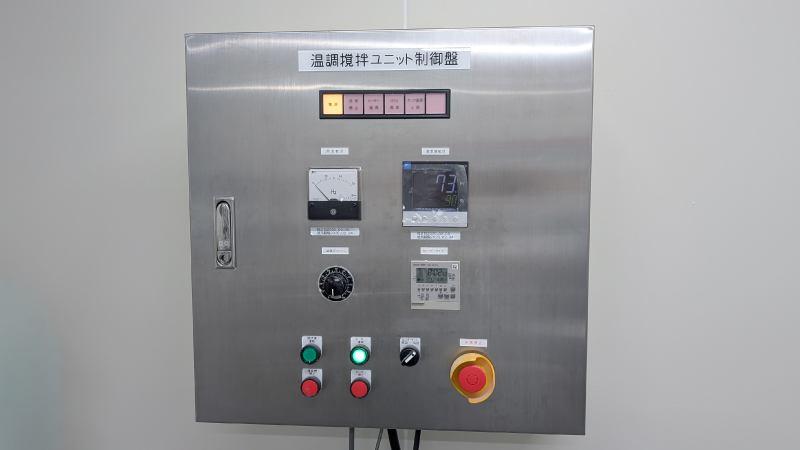
Other manufacturers they consulted often said the same thing: 80°C was achievable, but 90°C was a stretch. Some proposed immersion heaters, but for pharmaceutical use, having a heater in direct contact with the raw material wasn’t acceptable.
MONOVATE’s response was different: based on past experience, 90°C might be achievable with the right design choices — and rather than promise it outright, MONOVATE proposed testing the actual performance first. (Reaching 90°C depends on the specific application — always worth discussing directly.)
Testing Before Committing
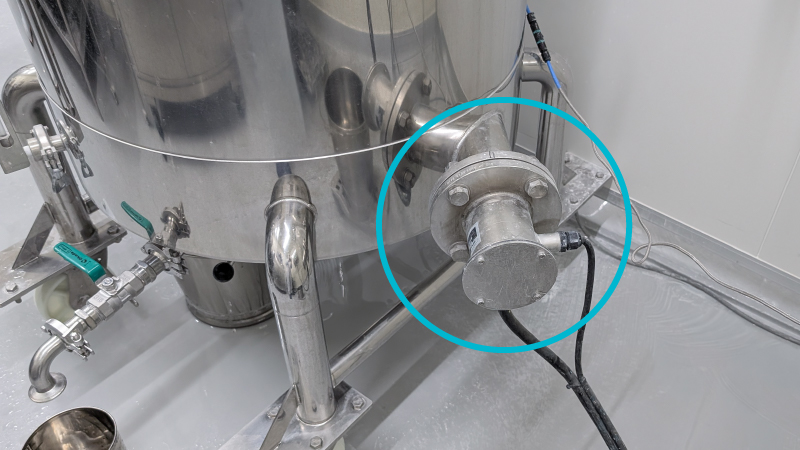
Honestly, the pre-installation test left them a little uneasy at first — heat-up seemed somewhat slower than expected. But MONOVATE responded with concrete fixes: adding insulation and increasing heater output. Seeing a clear, credible answer to the problem the test revealed is what ultimately made the decision to move forward.
The Results After Installation
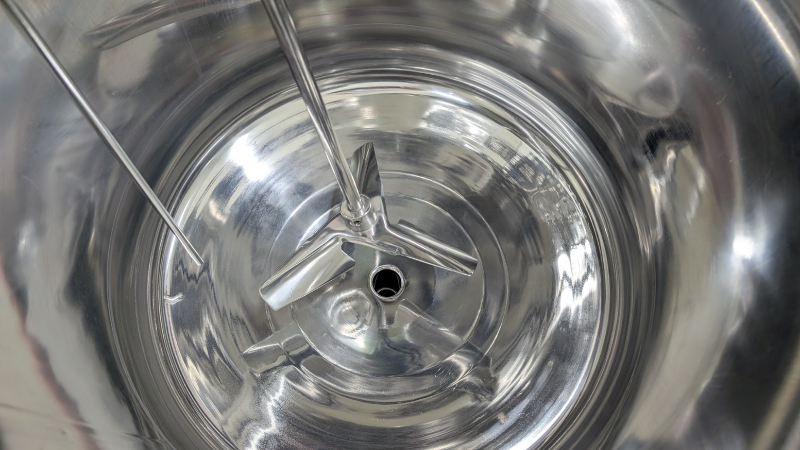
In actual use, heat-up performance turned out to be genuinely close to the old steam system — a real relief. The pre-test flange heater was rated at 7.5kW; the production unit was upgraded to 10kW, which made a noticeable difference. An additional insulating jacket layer also kept the design easy to clean. Touching the tank’s outer surface now feels only slightly warm, with no burn risk at all.
Small Adjustments on the Floor
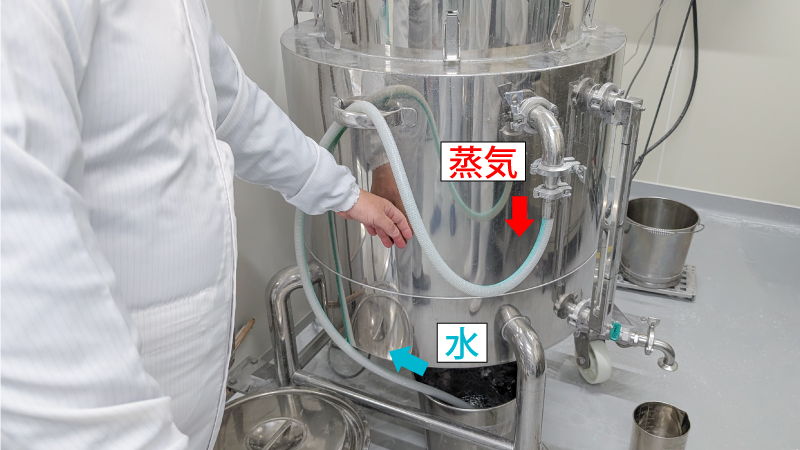
To keep steam from escaping into the room, staff submerge a hose from underneath the tank into a bucket of water, venting steam through it. That setup also cleverly exploits a bit of physics: when the heater switches off, steam inside the jacket cools and condenses, dropping the internal pressure. That drop in pressure automatically draws water from the bucket back into the jacket — maintaining the jacket’s water level without any manual refilling, and preventing the heater from ever running dry.
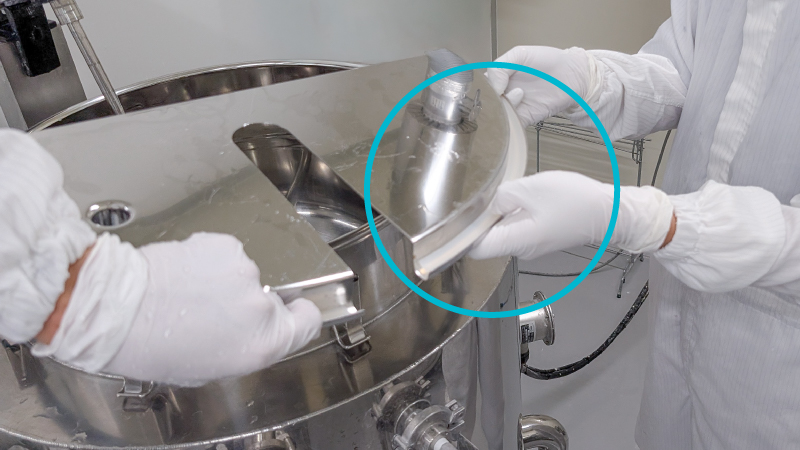
One recent point of friction has been the lid gasket coming loose more often than they’d like. Raising it with MONOVATE brought a quick on-site check and a proposal for an alternative gasket. More recently, they’ve also asked about extending the wiring to the control panel so the tank can be relocated. It’s this kind of ongoing support after delivery — not disappearing once the sale is done — that they say has made a real difference.
One Year In: The Overall Verdict
Not everything was perfect from day one, but using the test results to optimize heater output and insulation got them to equipment the pharmaceutical floor is genuinely satisfied with. About a year into operation, they feel this single unit now completes the process on its own, simplifying overall operations — a strong outcome for what was a major shift away from boiler-based heating.
They’ve also kept a backup heater on hand just in case. For a pharmaceutical manufacturer, never interrupting supply is a non-negotiable baseline.
Editor’s note: It was genuinely encouraging to see a major undertaking like decommissioning a boiler proceed with this level of confidence in such a quality-sensitive pharmaceutical environment. The clever use of basic physics for automatic refilling, and the thoroughness of keeping a backup heater on hand against the risk of a supply interruption, left us more than a little impressed. Hearing them say, a year later and with a smile, that this was the right call was the best possible outcome for us. We look forward to continuing to support a stable production environment, drawing on the knowledge built on the floor along the way. Our sincere thanks to everyone at Daiichi Pharmaceutical Industry for so generously supporting this interview.
No tags for this post.