
Case study: Temperature-controlled tank, five years of after-sales support
Challenge
- Manual mixing was exhausting: staff had to heat and stir each product by hand, staying with it the whole time.
- Batches were small: only a limited volume could be made at once.
Solution
- Discovering MONOVATE at a trade show: found a temperature-controlled tank (heater unit) at FOOMA JAPAN.
- Testing before committing: verified the results with their own miso before installing.
Result
- Manual work dropped sharply: temperature control became semi-automatic, freeing staff from constant attention.
- Batch sizes grew significantly: far more product per run than before.
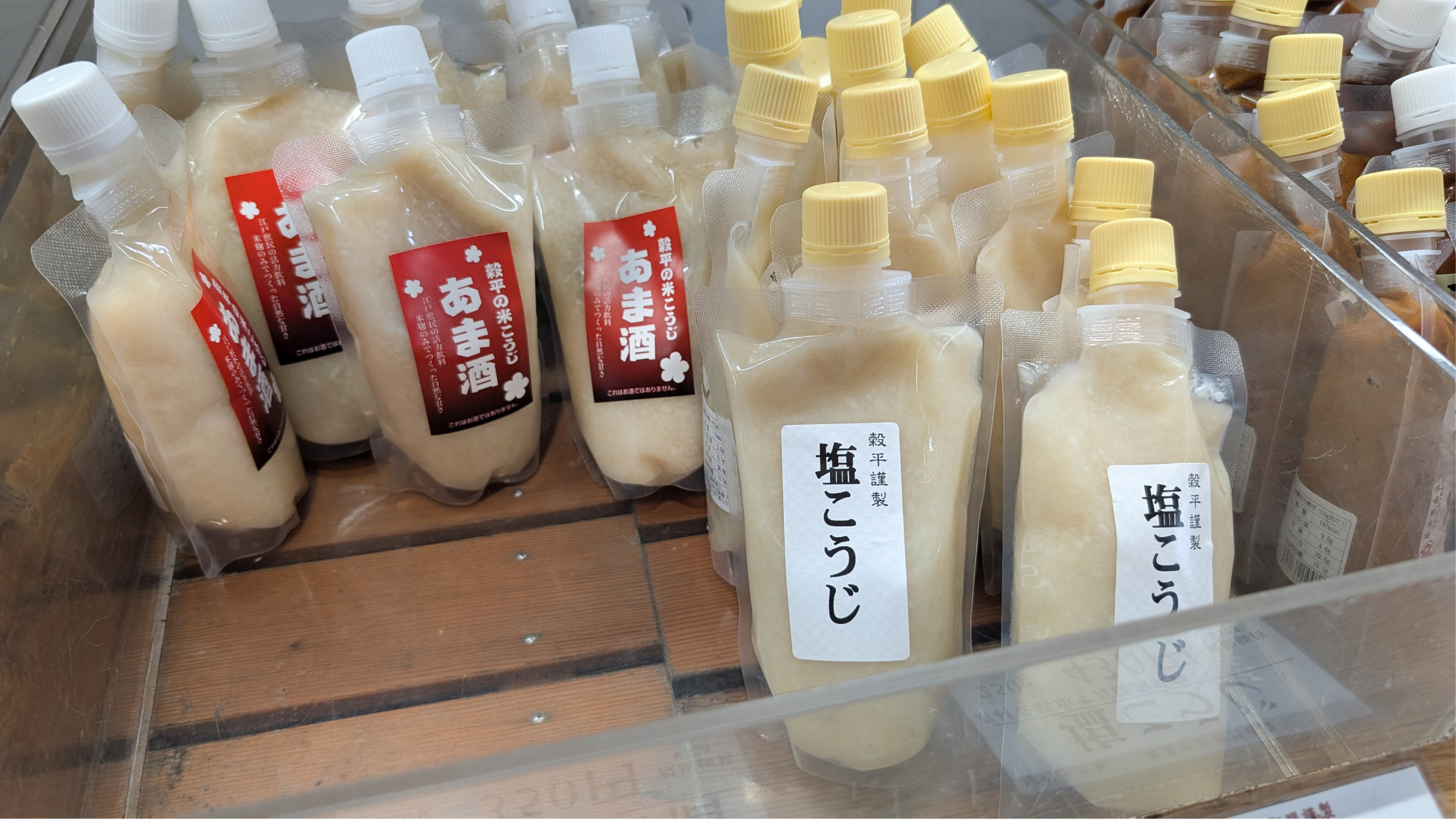
Customer profile: Kokuhira Miso Brewery, founded in 1784 in Obuse, Nagano Prefecture. For more than 240 years, the company has continued naturally brewed miso production, alongside koji-based products such as amazake, salt koji, and roasted miso.
On the Production Floor, Before the Upgrade
This tank is used to make amazake, salt koji, and roasted-miso products — all koji-based foods. Amazake is heated to around 50–60°C, roasted miso to around 90°C. Because both involve a saccharification process, precise temperature control matters a great deal.
Before installing this equipment, the heating method changed depending on the product. Lower-temperature items like amazake (50–60°C) were heated in roughly 30-liter pots with immersion heaters, essentially a water bath. Higher-temperature items like roasted miso, closer to 90°C, were heated directly over an open flame. Either way, staff had to stir by hand while watching a thermometer — exhausting work, and the batch size stayed small no matter what.
Discovering the Tank, and the Decision to Install It
They first came across MONOVATE’s temperature-controlled tank at the FOOMA JAPAN trade show, and thought it might actually work for them — enough to make a special trip to MONOVATE’s Yashio plant to see it in person.
Before committing, they sent about 20kg of their own miso for a mixing test. It went well, and that result was what gave them the confidence to move forward with the purchase.
A Problem That Lingered for Years, and a Visit in Year Five
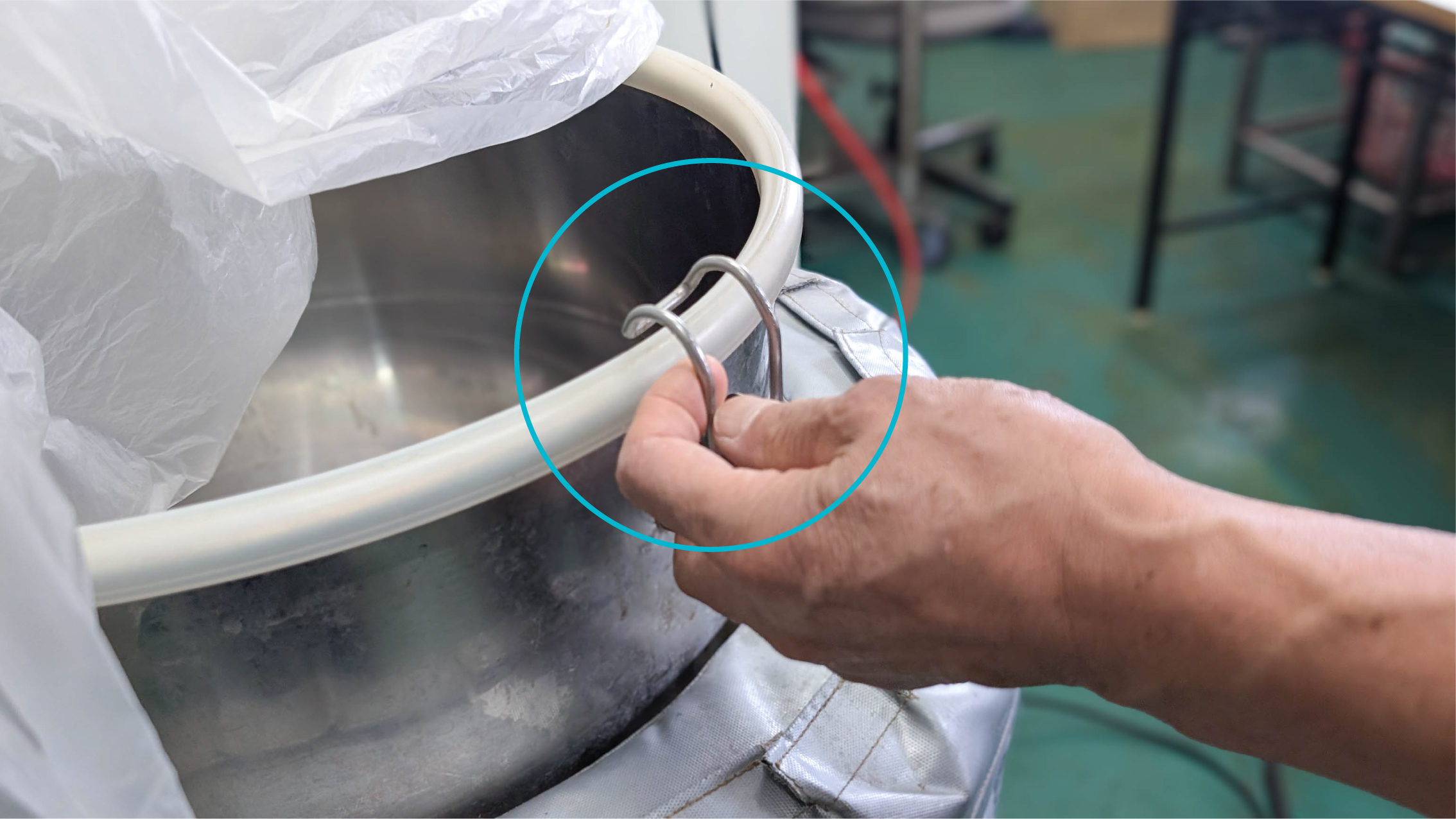
Asked candidly, five years in, whether anything had been less than ideal: yes — the lid would spin. The anchor-type impeller (designed to scrape thick contents off the walls and bottom while mixing) worked fine in the pre-purchase test, which used miso in paste form. But early in amazake production, the mixture is still mostly rice koji and water — high in solids and high in resistance. Turning it required strong torque, and the catch clips holding the tank lid in place couldn’t withstand that force. They’d deform, and the lid would spin right along with the impeller.
When that happened, staff had to physically hold the lid down, or stop mixing altogether and stir by hand while the temperature gradually softened the mixture through saccharification — sometimes staying with it for two to three hours at a stretch. Every time a clip deformed, they’d hammer it back into shape, worried it would eventually give out for good. It had been an inconvenience from almost the moment the tank was installed.
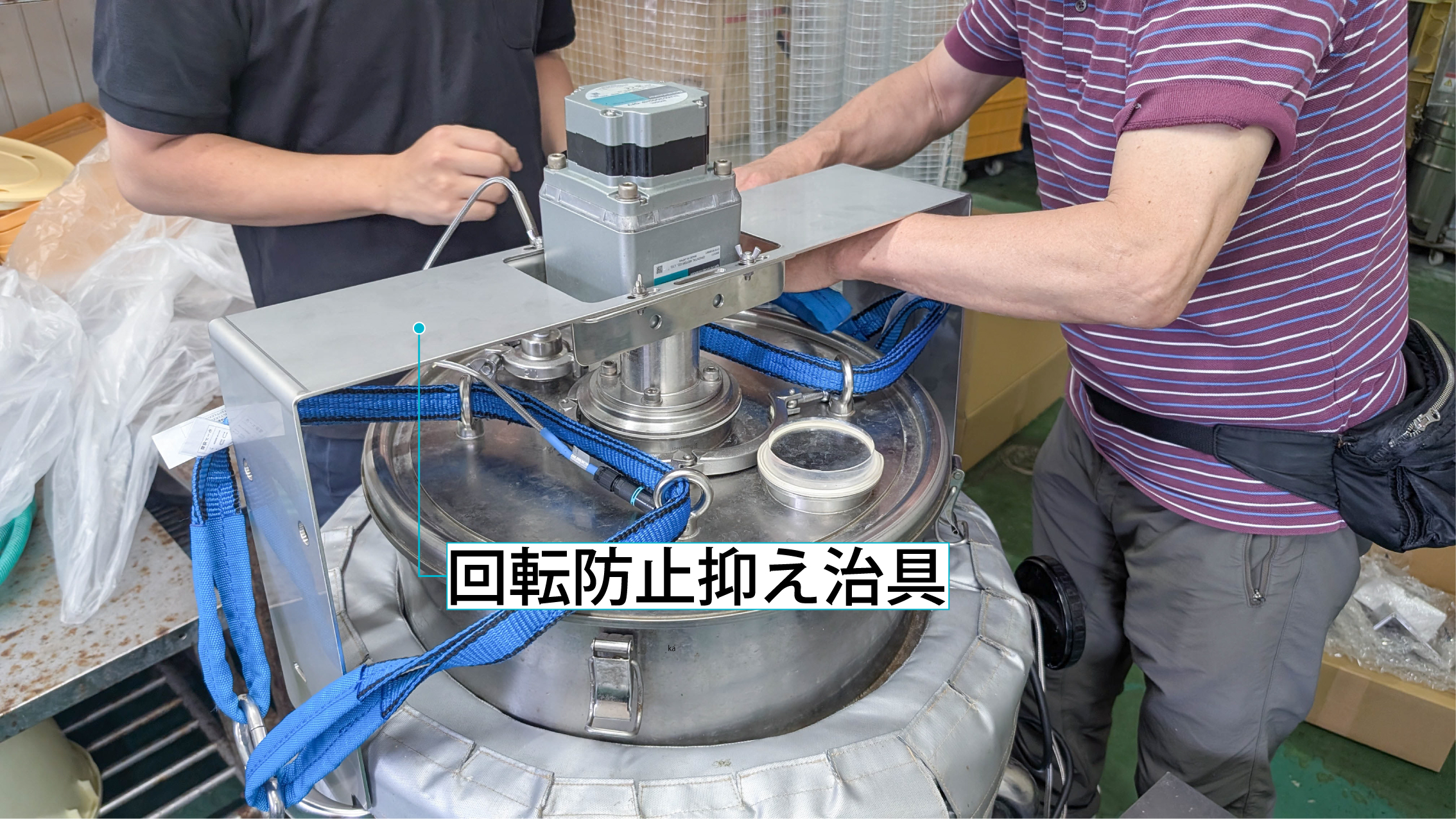
The issue surfaced through a customer satisfaction survey, which brought MONOVATE’s sales representative out to the site in person to hear about it directly. Having someone actually show up and listen, they said, was in itself a relief — even though it had taken far too long to get there.
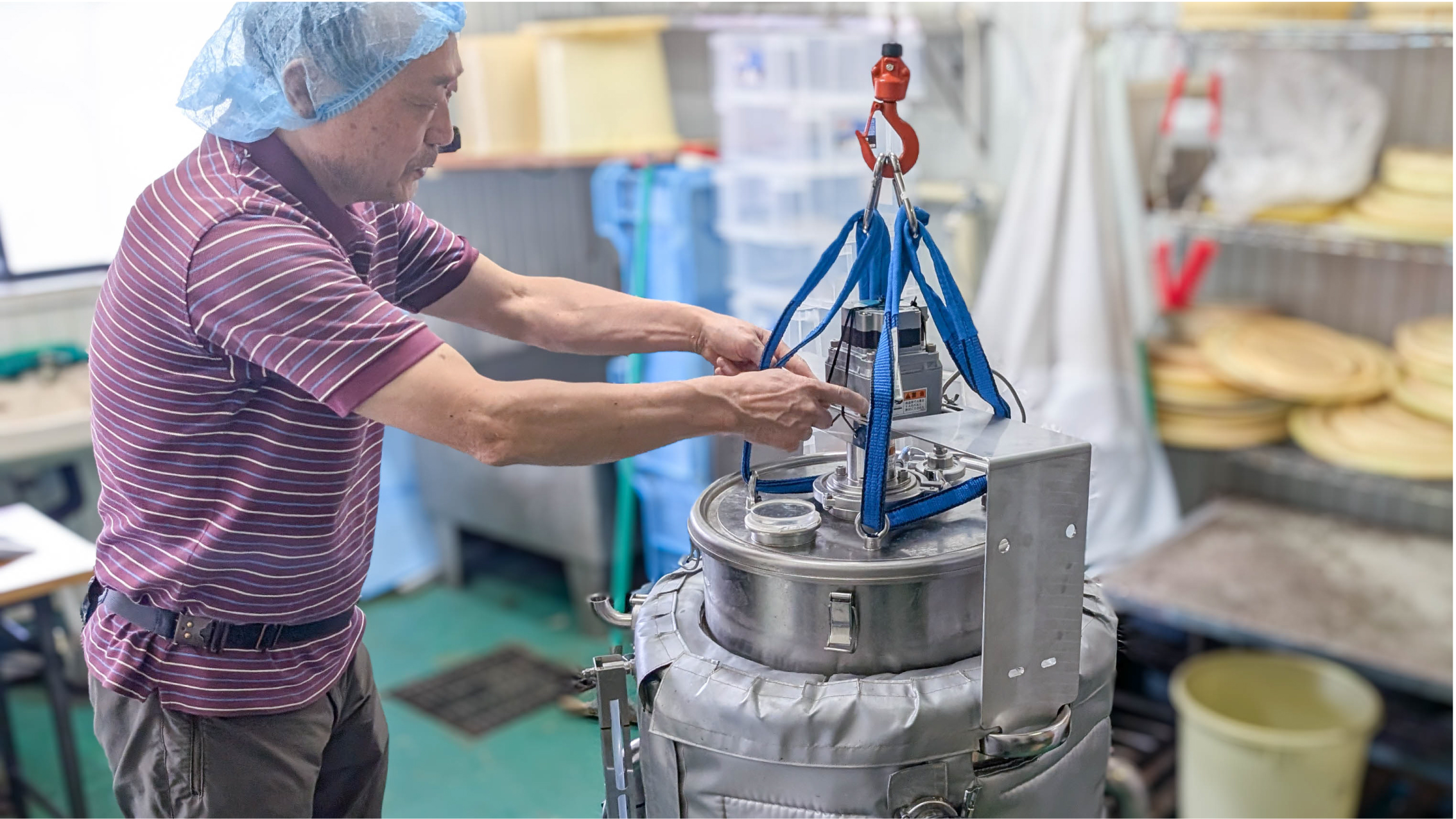
MONOVATE then built a jig to keep the lid from spinning and returned to install it. Trying it out for the first time, the response was simple: hopefully this keeps it from spinning — and thank you. Anything better than before would be welcome.
Day-to-Day Operation, and What’s Next
Given how much temperature precision matters, day-to-day operation still takes a practiced hand. Left running automatically, the heater can overshoot the target temperature and keep climbing. So staff watch the jacket temperature (the heating layer around the outside of the tank) and switch the heater off just before the target — say, at 60°C — letting residual heat carry the mixture the rest of the way. Because the saccharification stage is temperature-sensitive, that judgment call still requires close attention, even now.
Looking back at how much has changed: it’s a completely different operation from the manual days, when staff were constantly stopping to stir by hand while watching a thermometer. Now, heating and mixing run semi-automatically, and day-to-day work is far easier. Batch sizes have grown substantially too. Five years in, the tank has run with no major problems — and, they add, when a manufacturer genuinely listens to feedback from the floor and acts on it, the equipment only gets better from there.
Editor’s note: Hearing this story five years after delivery, we couldn’t help but reflect honestly on how long it took us to respond. The lid-spinning issue had been an ongoing inconvenience for a long time, and we’re grateful the customer didn’t give up on us and instead shared that feedback directly. Equipment isn’t finished the day it’s delivered — if anything, the feedback that surfaces after years of real use is exactly what’s worth taking seriously. We’ll be watching closely to make sure the new jig keeps doing its job. Thank you for such a warm welcome during a busy time.
No tags for this post.