
Case study: Cart-mounted tank, mixer, pump, and chiller unit
Challenge
- A batch-size ceiling: amazake and similar products were made in 18-liter pots, capping how much could be produced at once.
- Heavy physical work: lifting and carrying containers to the filling machine after saccharification was a real strain.
- Hygiene concerns: mixing in an open container raised sanitary concerns as well.
Solution
- Scaling up: a 60-liter tank combined with a mixer, pump, and control panel into one cart-mounted unit.
- Stabilizing saccharification temperature: connecting a chiller to hold saccharification temperature steady.
- Testing beforehand: verifying mixing performance, temperature control, and ease of operation using their own raw materials.
Result
- Larger batches: batch size grew from about 18L to 60L, boosting production efficiency.
- Less physical strain: pump-based transfer eliminated the need to lift and carry containers.
- More consistent quality: chiller-based temperature control paired with anchor mixing delivers stable temperatures and thorough mixing.
- Better hygiene: a sealed structure lowers contamination risk, and the cart-mounted design makes cleaning far easier.
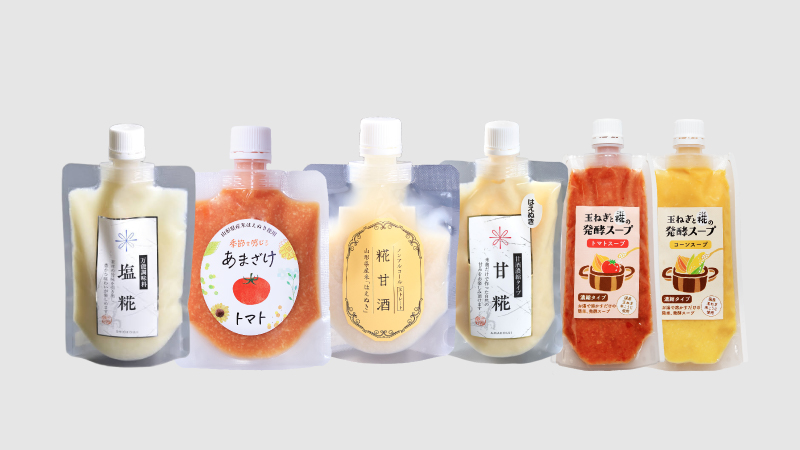
Customer profile: Ask Co., Ltd., based in Yamagata Prefecture — a rice specialist supporting Japan’s rice-based food culture. The company offers everything from staple and sake rice to sake, koji, fermented foods, and regional specialty products, managing quality from its own rice-polishing plant through to retail and mail order, all to deliver safety and great taste to its customers.
The Process, and the Problem Before the Upgrade
The trigger for this project was a hard ceiling on batch size: production using a sterilizing bath topped out at around 18 liters per batch, limiting overall efficiency. As demand for amazake and koji-based products kept growing, the company needed a new production method that could increase batch size without compromising quality — on top of the physical strain that came from lifting and carrying heavy containers. What they were looking for was a compact, electrically driven, temperature-controlled saccharification tank.
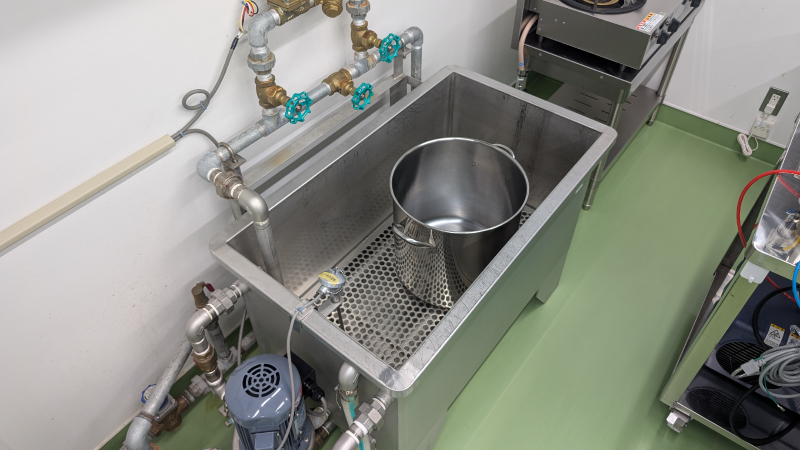
Before this upgrade, a pot was placed inside a sterilizing bath filled with water held at a set temperature, and water and rice koji were mixed at 50–60°C using a separate, freestanding mixer stand. The mixture was then heated to 85°C and manually loaded into the filling machine, before being pouched and sterilized in the bath to finish. This process kept batch sizes small, involved a lot of manual steps, and depended heavily on manual labor — making both production efficiency and workload real, ongoing concerns.
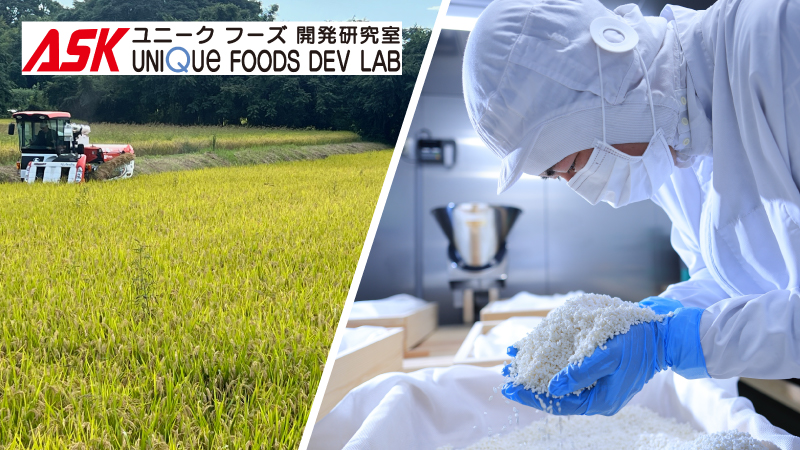
Deciding to Upgrade, and Testing Beforehand
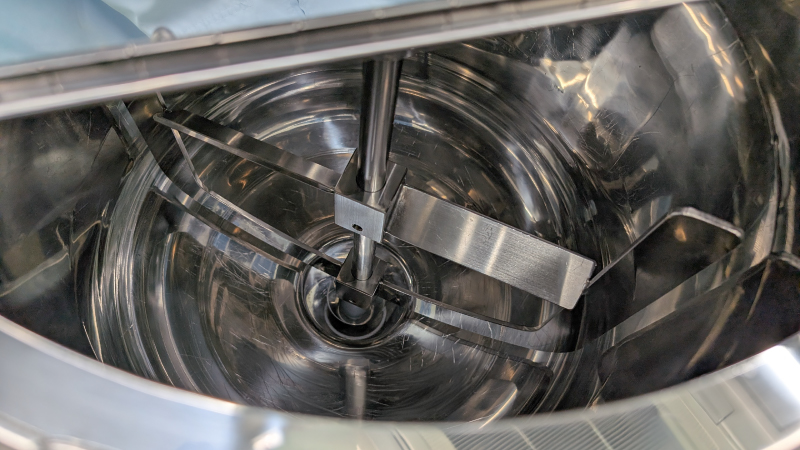
What stood out during the pre-installation test was running it with their own raw materials. With the propeller-type mixer they’d used before, mixing rice, water, and koji mold never fully evened out — the material was simply too heavy. Switching to an anchor-type impeller, the heavy mixture came together evenly and consistently, giving them real confidence that they could raise efficiency without sacrificing quality.
They also appreciated MONOVATE’s flexibility in customizing tank capacity to fit their production line and in helping select the right mixer — a point they felt spoke well of the company overall.
The Results After a Year
A year into operation, batch size has nearly doubled, meaningfully improving production efficiency. Containers that once had to be lifted and carried by hand to the filling machine are now moved by pump instead, sharply cutting physical workload.
Because production now happens inside a sealed, lidded tank, contamination risk has dropped to almost nothing — a real improvement for both safety and hygiene.
The tank’s temperature is now managed through a connected chiller, which holds the target temperature precisely — keeping the 50–60°C saccharification range stable with no temperature unevenness, which in turn keeps the finished product consistent.
Usability and Changes on the Floor
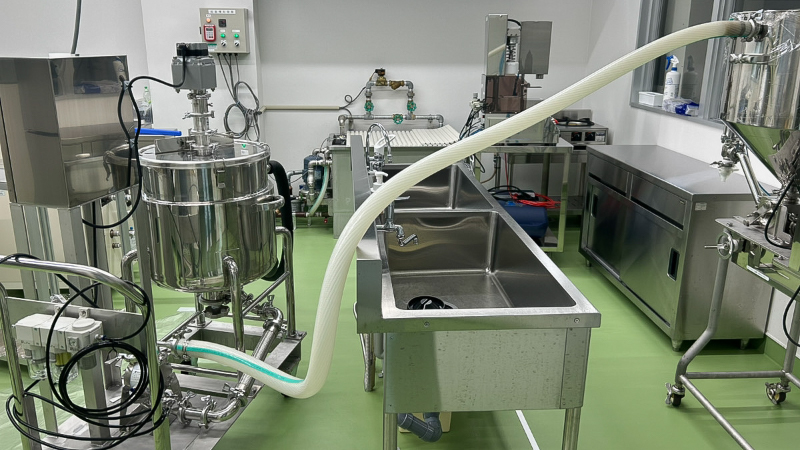
Because the tank, mixer, pump, and control panel are all mounted on a single cart, the whole unit takes up minimal space and moves smoothly whenever the layout needs to change. Being able to roll the entire unit out of the way also makes cleaning the surrounding area and floor far easier — a real help for hygiene management.
The mixer stand also comes in handy when checking on saccharification progress, letting staff monitor the process safely.
Editor’s note: What struck us first during this visit was how thoroughly clean the production room was. In an environment that handles koji mold, that commitment to daily hygiene management said a great deal — and it’s clearly part of what underpins the quality Ask is known for. We didn’t get to observe production directly, but the team walked us through exactly what the work involved, where the strain used to be, and how this equipment has helped — with a level of care that made their commitment to improving the floor very clear. We’ll keep doing everything we can to support the equipment side of the business going forward. Thank you sincerely for making time for this interview during such a busy schedule.
No tags for this post.