
Case study: Automated matcha transport with an aeration hopper
Challenge
- Collection hit a physical wall: expanding from two grinding mills to five doubled overnight output to 70kg, making manual collection and hauling physically impossible.
- Matcha’s difficult physical properties: an extremely sticky, rathole-prone powder that resisted moving smoothly into the next process step.
Solution
- A new pneumatic powder transport system: automating the flow from grinding mills through the sieving machine to the filling hopper, fully unattended overnight.
- An aeration hopper: injects air at the discharge point to stop matcha from sticking, ensuring it empties out completely every time.
Result
- Production capacity maximized: 70kg transported overnight, fully unattended, meeting the plant’s full increased-output target.
- Workload dramatically reduced: manual collection, once heavy physical labor, is gone — and the clogging and ratholing that plagued next-morning discharge is resolved, sharply improving overall efficiency.
Customer profile: Suisouen Honpo Co., Ltd., founded in 1959. A tea manufacturer handling everything from processing to sales of tea leaves sourced directly from tea-growing regions, built around a philosophy of safe, reliable, delicious products — and a hardworking, hands-on approach to manufacturing that continues to embrace new technology, including advanced matcha production equipment, to meet the demands of the times.
The Process, and the Problem Before the Upgrade
It all started with a decision to increase matcha output by adding more fine-grinding mills. More mills naturally means more powder produced — and that powder had been collected in stainless drums. Once the plan called for running the expanded output overnight, unattended, manual collection simply couldn’t keep up, making some kind of holding vessel essential.
At first, the idea was simply to add a large tank to hold the powder. But that raised a harder question: not just how to store it, but how to move it smoothly into the next process and discharge it cleanly — which is what sent them looking for a real solution.
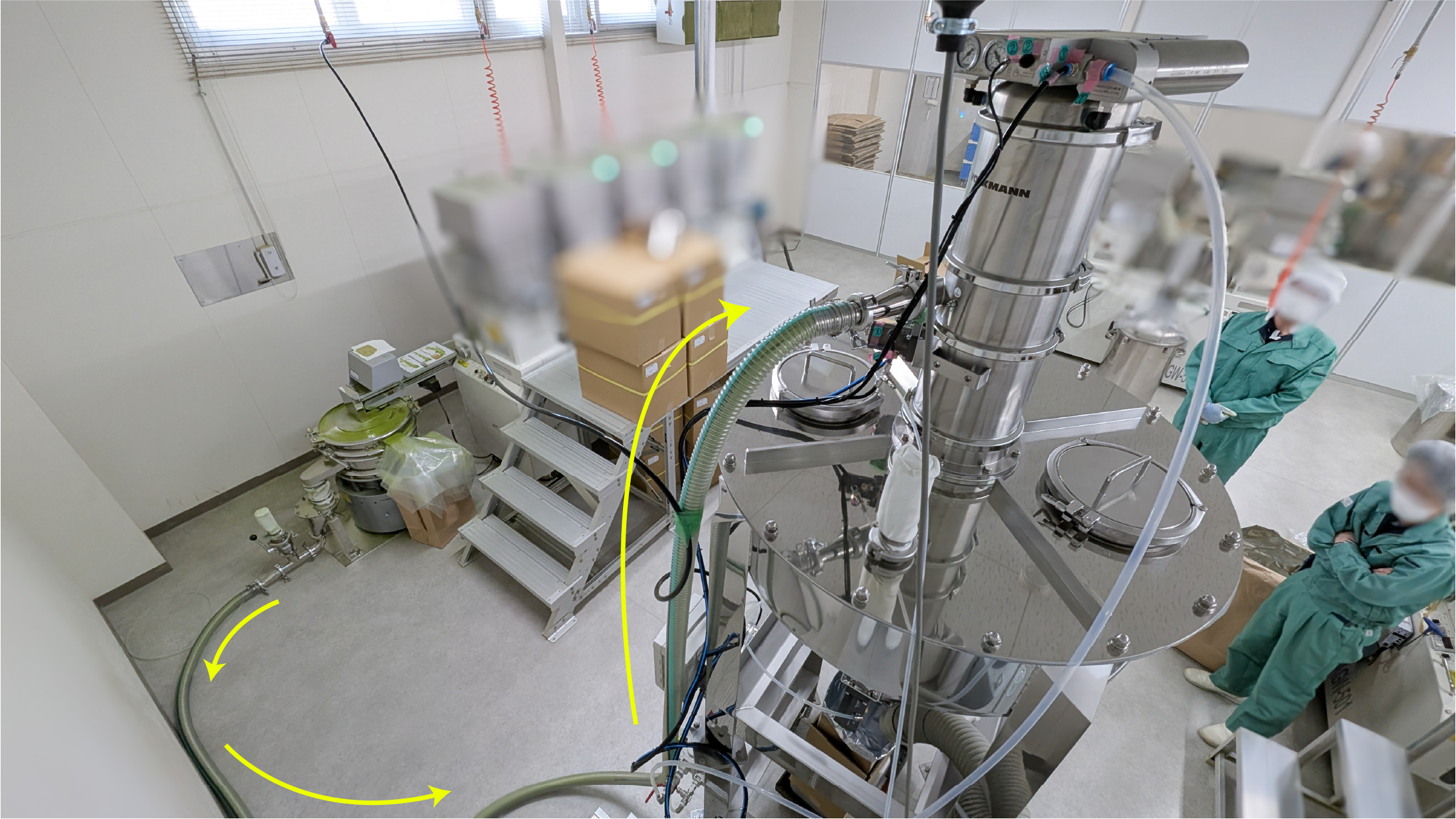
Previously, with two grinding mills running, a single night’s output was around 20kg — manageable with one collection vessel. The real burden was in what came after: pulling a heavy 20kg bag of powder out of the vessel and lifting it required physical strength, work that inevitably fell to male staff and wasn’t something everyone on the floor could do.
Expanding to five mills, with an overnight target of 70kg, made it clear that the old method was approaching a hard physical limit.
Finding MONOVATE, and Building Confidence in the Approach
While researching matcha transport on YouTube, a MONOVATE video demonstrating an aeration hopper discharging matcha stood out immediately — the customer was struck by how cleanly the matcha emptied out, and intuitively thought, “this looks promising.”
The demo that followed used their actual matcha, under conditions matching real production. Seeing the same smooth motion from the video reproduced with their own material gave them real confidence to move forward.
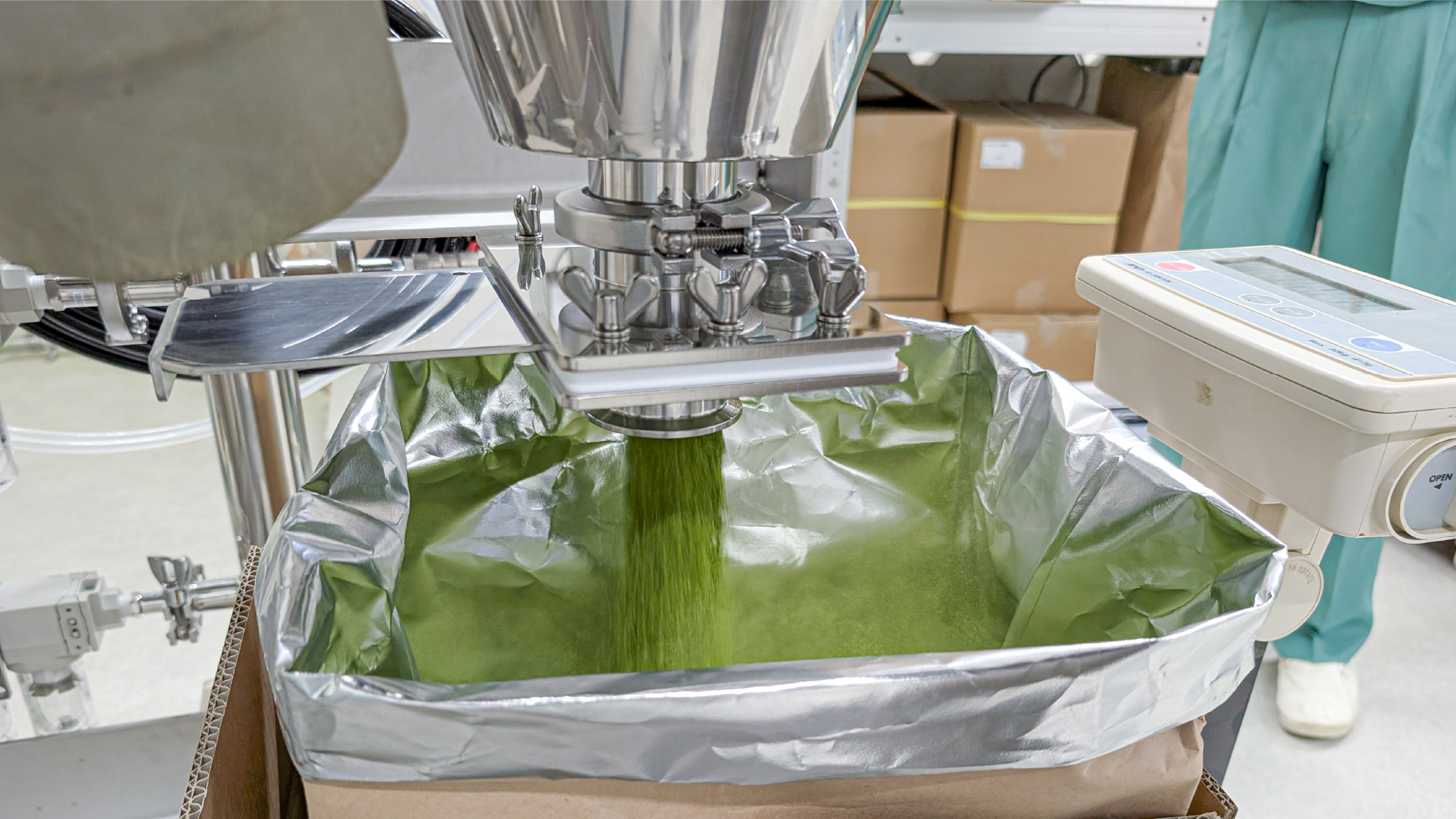
Asked what tipped the decision toward MONOVATE among the manufacturers they considered, the answer was straightforward: the aeration hopper itself. It’s a MONOVATE-original product built specifically to solve matcha’s discharge problem, and nothing else compared. From the moment they saw that YouTube video, it was effectively MONOVATE or nothing.
Getting to a Confident Decision
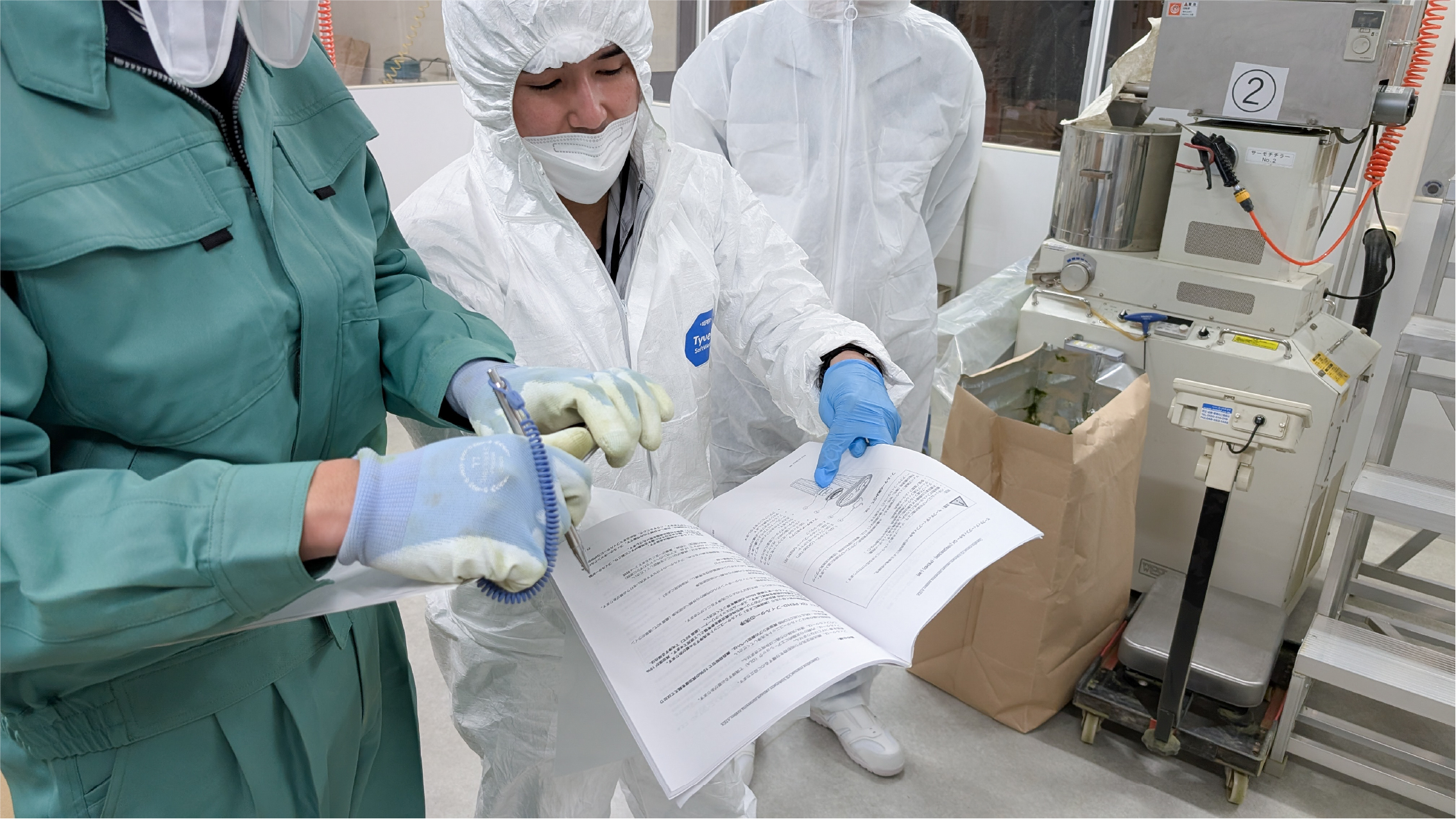
Custom equipment like this is apparently rare in the tea industry, so this installation was a genuine first for the customer as well. They were careful throughout the demo testing and operator training process, making sure their own requirements came across clearly to MONOVATE’s sales and engineering teams — and by their own account, the project ultimately unfolded exactly the way they’d hoped.
The Results So Far
The biggest win is that unattended overnight operation with five grinding mills running is now a reality — hitting a production target of 70kg a night, 3.5x the previous output.
The hygiene benefits are significant too. Because the powder’s entire path through the system is fully enclosed, with no open points anywhere along the route, the risk of outside contamination is kept extremely low.
And with the heavy lifting of 20kg powder bags gone, the work is no longer dependent on specific staff members. Everyone on the floor can now work safely, in a cleaner environment, and more efficiently — a change the customer considers highly valuable in its own right.
Lessons From Running It in Practice
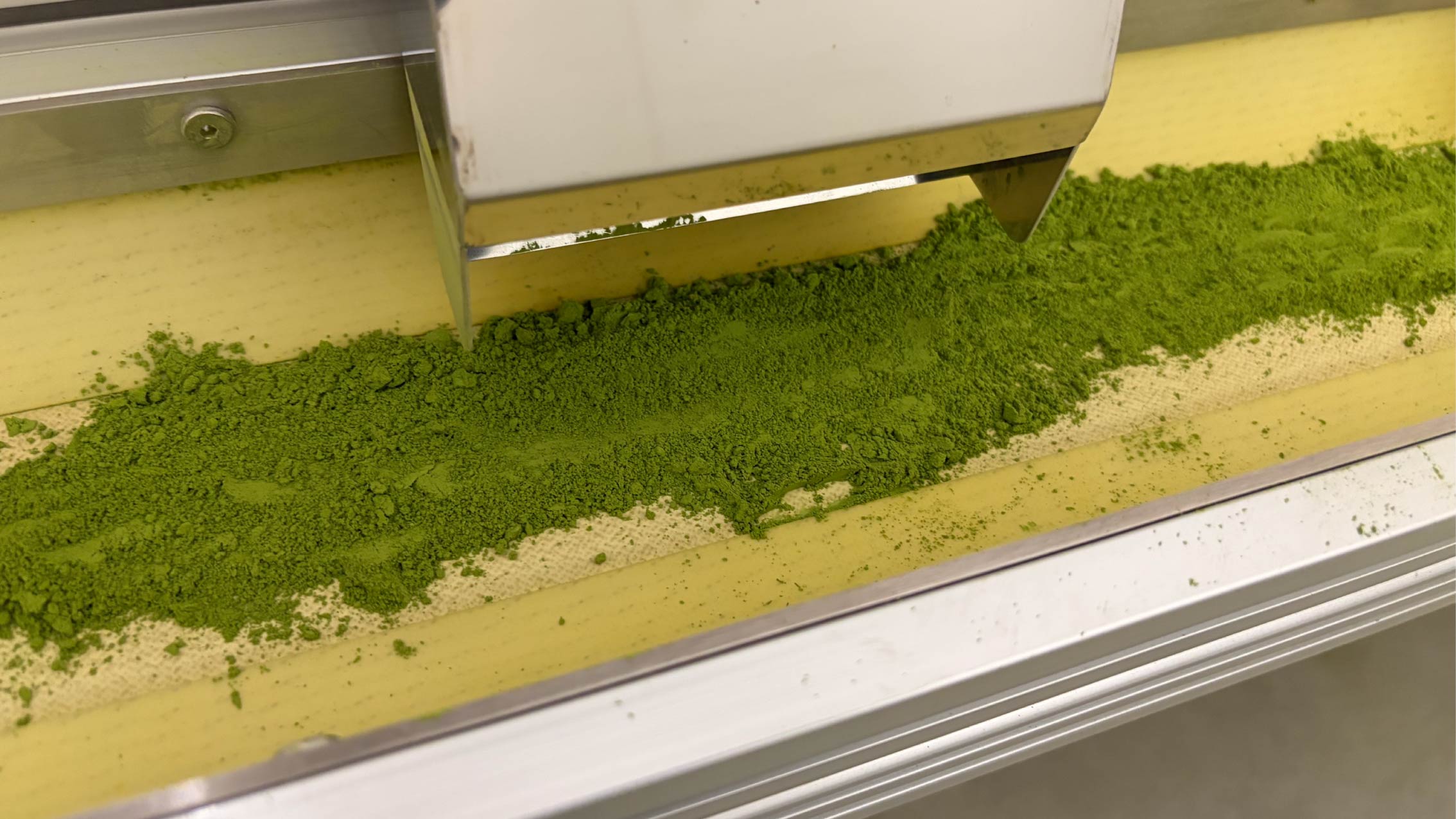
The automated transport performed as expected, but running it in practice also surfaced matcha’s well-known tendency to stick to surfaces. More powder than expected was left behind inside the hoses and parts of the transport equipment — a finding they’re now taking seriously for ongoing operation.
Matcha varies in color from vivid to deep green depending on the grade, and any leftover powder mixing into the next batch affects that color. To address it, they’re testing their own maintenance approaches — trimming hoses to an optimal length and removing sharp bends to reduce buildup, and vacuuming the inside of the hoses with a tethered cloth.
What Could Have Gone Better
Looking back, they would have liked a single, unified proposal covering the upstream sieving machine as well — with direct coordination between equipment manufacturers and MONOVATE overseeing the delivery on-site as one package. Without CAD design software of their own, whether the different pieces of equipment would actually line up correctly on-site was their biggest source of uncertainty.
Having manufacturers coordinate directly and consolidate everything into a single drawing would have helped considerably. They’d also have appreciated having the manufacturer take full responsibility for safety management during delivery itself, given the forklift work involved in moving heavy equipment into place.
Would They Recommend It to Others?
Without hesitation. The entire tea industry is currently investing heavily in matcha — once the domain of a limited number of specialized tea shops, matcha production has opened up to a much wider range of producers thanks to technology like the fine-grinding mills used here. As more companies enter that space, the exact wall this customer hit — how to automatically collect a sharply increased output — is one many others will run into as well. They see this project, shaped by MONOVATE’s technology, as a strong potential solution for the industry as a whole.
Editor’s note: We’re told custom equipment installations are rare in the tea industry, which makes it all the more meaningful that our product was chosen for this kind of first-of-its-kind challenge. Facing a genuinely positive problem — the need to scale up — with a willingness to bring in the latest automation technology, rather than relying on tradition alone, was inspiring to see as fellow manufacturers. We’re especially glad that our aeration hopper became the key to solving matcha’s notoriously difficult discharge behavior. We hope this installation supports Suisouen Honpo’s continued growth, and opens up new possibilities for the tea industry more broadly. Thank you sincerely for your cooperation with this interview during such a busy time.
No tags for this post.