
Case study: Rotary drum mixer replacing manual mixing
Challenge
Soup ingredients and similar materials were mixed entirely by hand, capping production efficiency at a hard limit.
Solution
Discovering MONOVATE’s rotary drum mixer at the FOOMA JAPAN trade show, and confirming its performance through a pre-installation test — enough to move to a leaner operating structure with confidence.
Result
Work that once required six people now takes just two — raising output while easing the workload, and driving a genuine efficiency gain on the floor.
Customer profile: Yamane Foods Co., Ltd., founded in 1946. A food manufacturer centered on kelp-based products — dashi kelp, shredded kelp, furikake, and soups — built on decades of processing know-how and quality control, with a mission of safe, reliable, delicious food.
The Process, and the Problem Before the Upgrade
Before this upgrade, the various ingredients for instant soup were simply spread out on a worktable and mixed entirely by hand. The manual process placed real strain on staff, and it put a hard ceiling on production efficiency. The company had been searching for a way to keep production going smoothly with fewer people.
The core issue was that manual mixing fixed the upper limit on efficiency. Work speed also depended heavily on each worker’s skill level, making the process unavoidably dependent on specific individuals. Finding a way to maintain the same output with a smaller team had been an ongoing challenge.
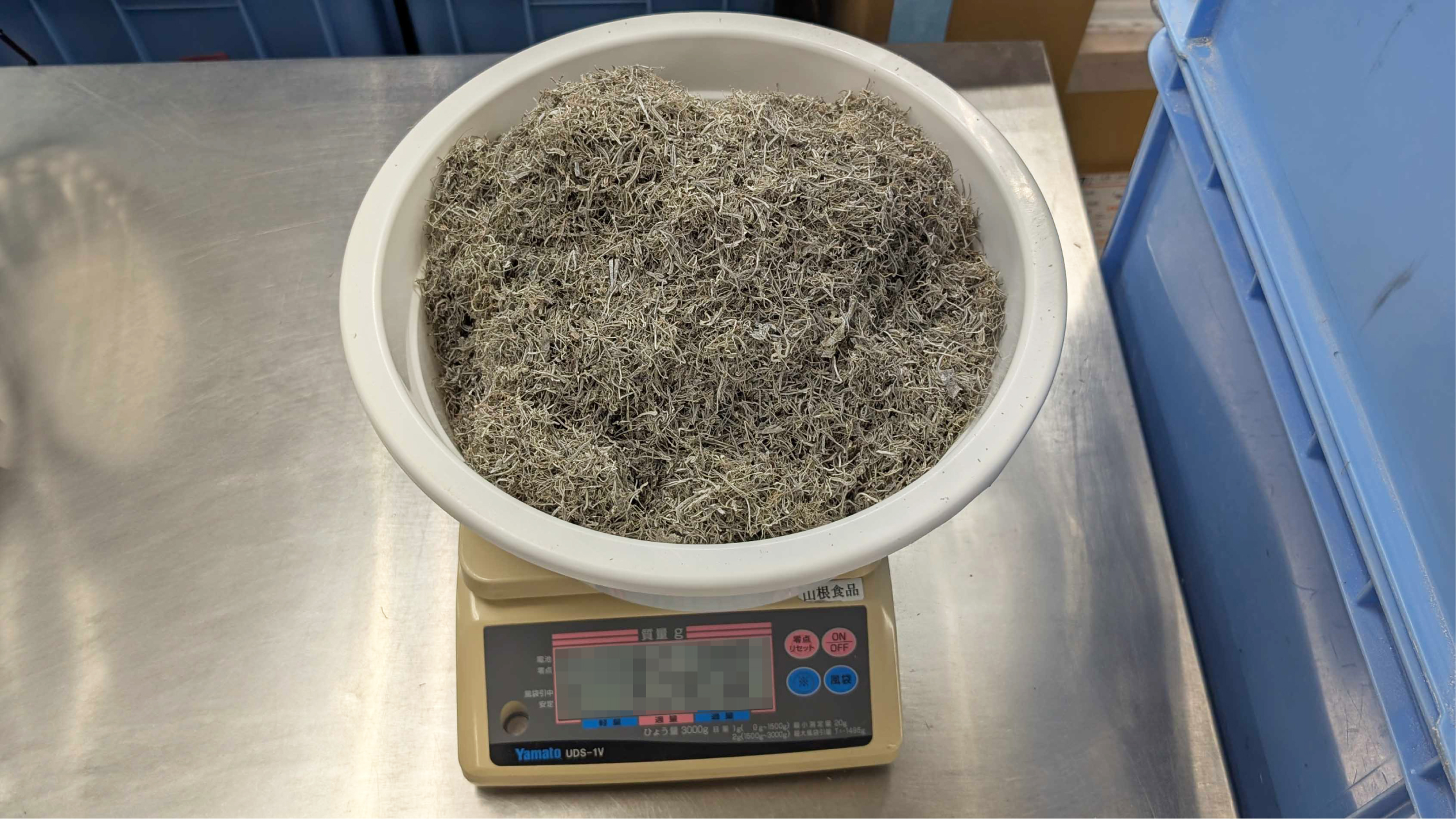
Finding the Product, and the Deciding Factor
The company first saw the rotary drum mixer at FOOMA JAPAN, a food machinery trade show. MONOVATE’s booth had one on display, and it immediately struck them as something that could work for their own mixing process. Seeing the actual unit up close, and getting a thorough, attentive explanation on the spot, left a strong impression.
A rotary drum mixer works by rotating the entire sealed container to mix its contents, preventing contamination while keeping ingredients from being damaged during mixing. It mixes fully sealed, with no impeller to damage delicate ingredients, uses a detachable container so the next batch can start without a cleaning delay, and tilts the drum roughly 30 degrees to achieve uniform mixing quickly.
What ultimately sealed the decision was running an actual pre-installation test with their own ingredients. Seeing the finished result with their own eyes convinced the whole team internally that the same quality could be reproduced with fewer people. Large mixers are common enough, but the rotary drum mixer’s compact footprint was also a real draw. Compared to other manufacturers’ products, they felt it offered strong value for the price — and that confidence in raising floor efficiency is what settled the decision.
The Results After Installation
The clearest improvement is the drop in both time and headcount. Mixing that used to take six people more than two hours now takes just two people about two and a half hours.
Some ingredient combinations still call for manual mixing as before, but overall, the equipment has driven a major efficiency gain. Because staff are freed up to handle other tasks while mixing runs, overall production volume has increased as well. With labor shortages a serious concern industry-wide, the rotary drum mixer has proven genuinely valuable for reducing both headcount and manual workload.
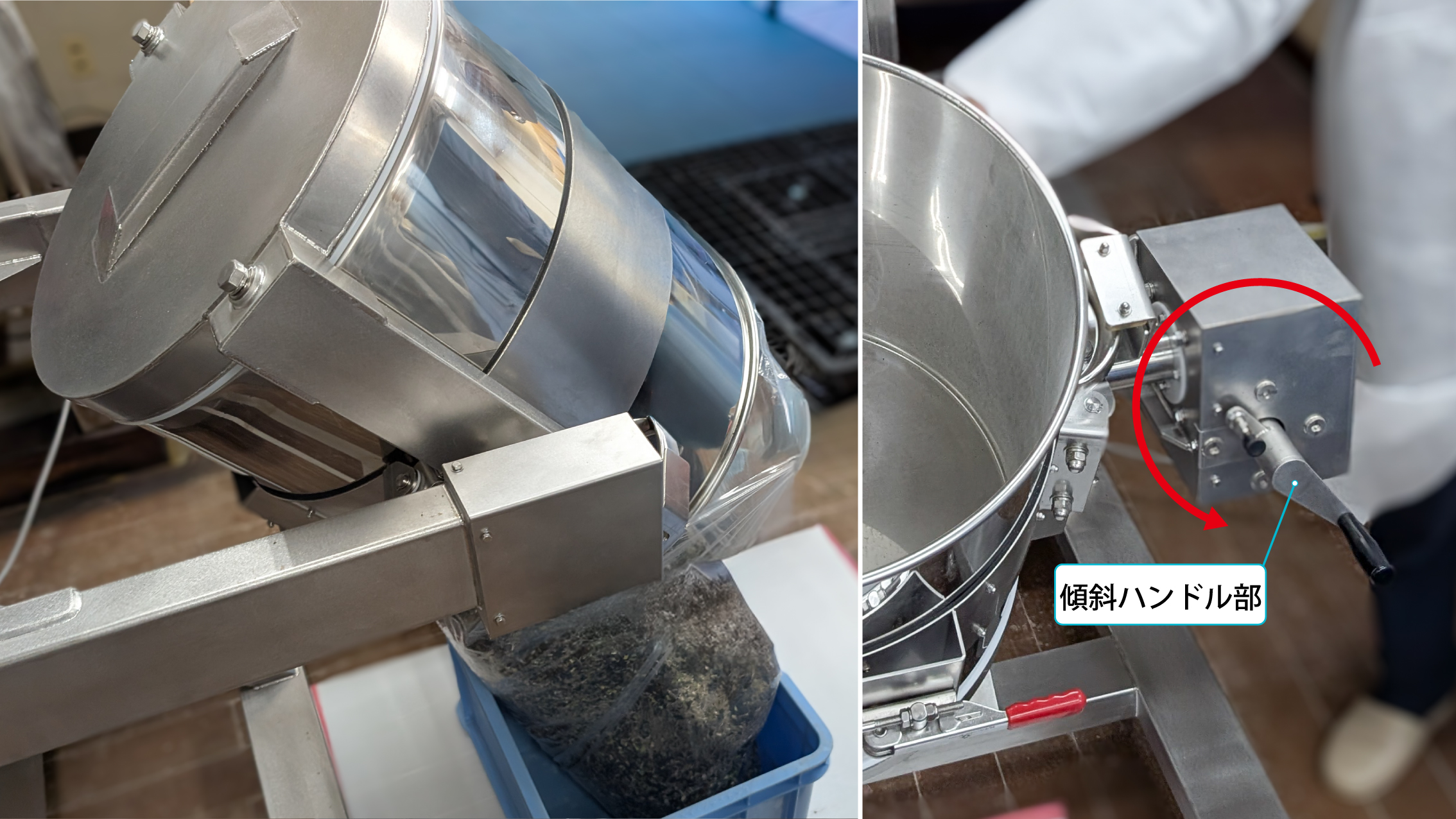
The moment that stands out most is simply seeing output rise while production stays stable with fewer people. Where the process once demanded a large crew, a limited team can now run production exactly to plan. Maintaining efficiency without relying on manual labor, they say, is a real achievement — and having made this change, going back to mixing this volume entirely by hand with this few people isn’t something they’d consider anymore.
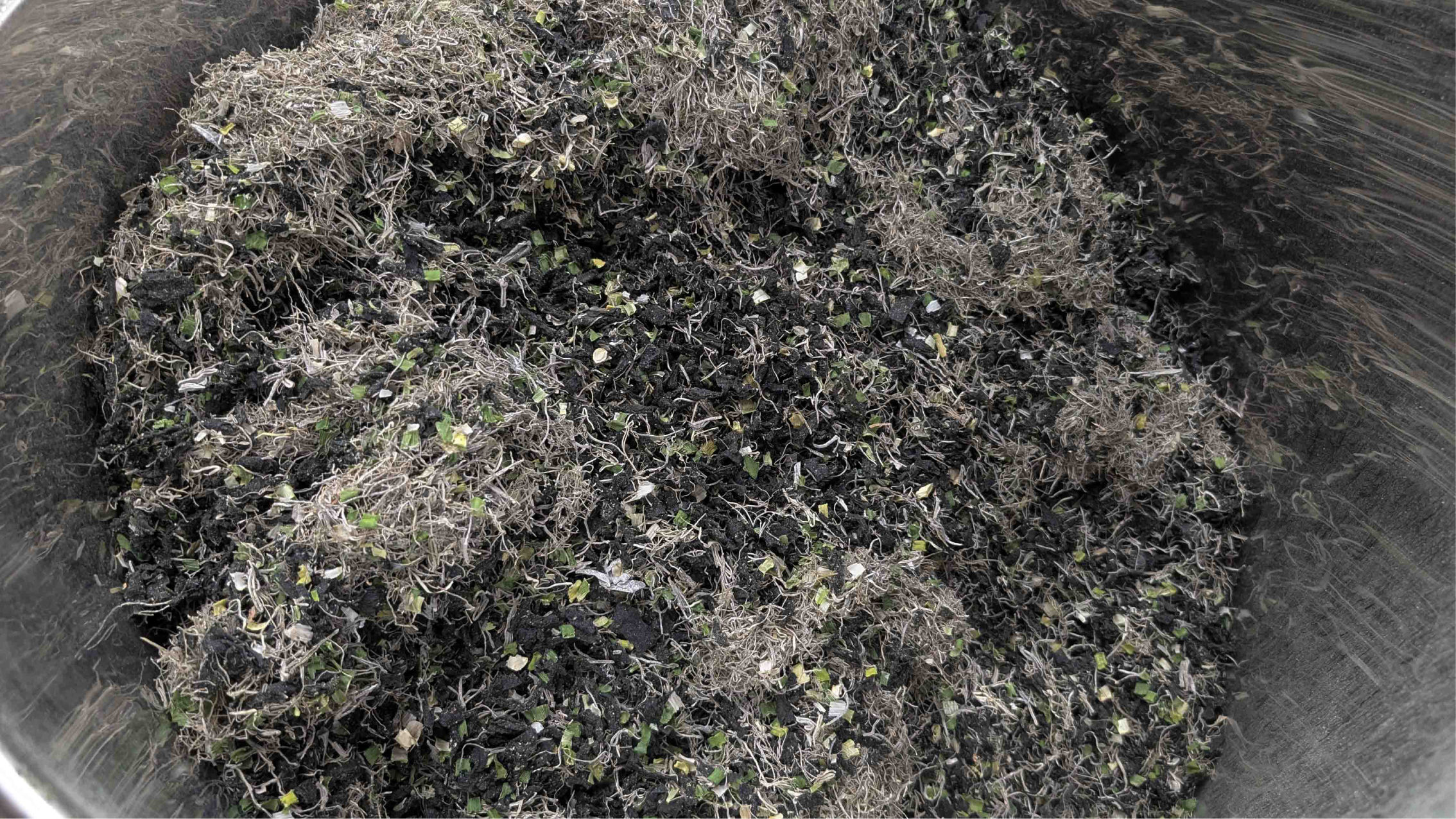
Looking Back, and What’s Next
One small point of friction has been the lid gasket, which comes loose a bit more easily than they’d like. During a recent after-sales visit, though, a technical discussion on site cleared things up — the gasket’s tendency to come off easily turned out to be intentional, designed to make cleaning easier — and MONOVATE offered to propose an alternative lid style as well, reinforcing just how valuable an in-person conversation can be.
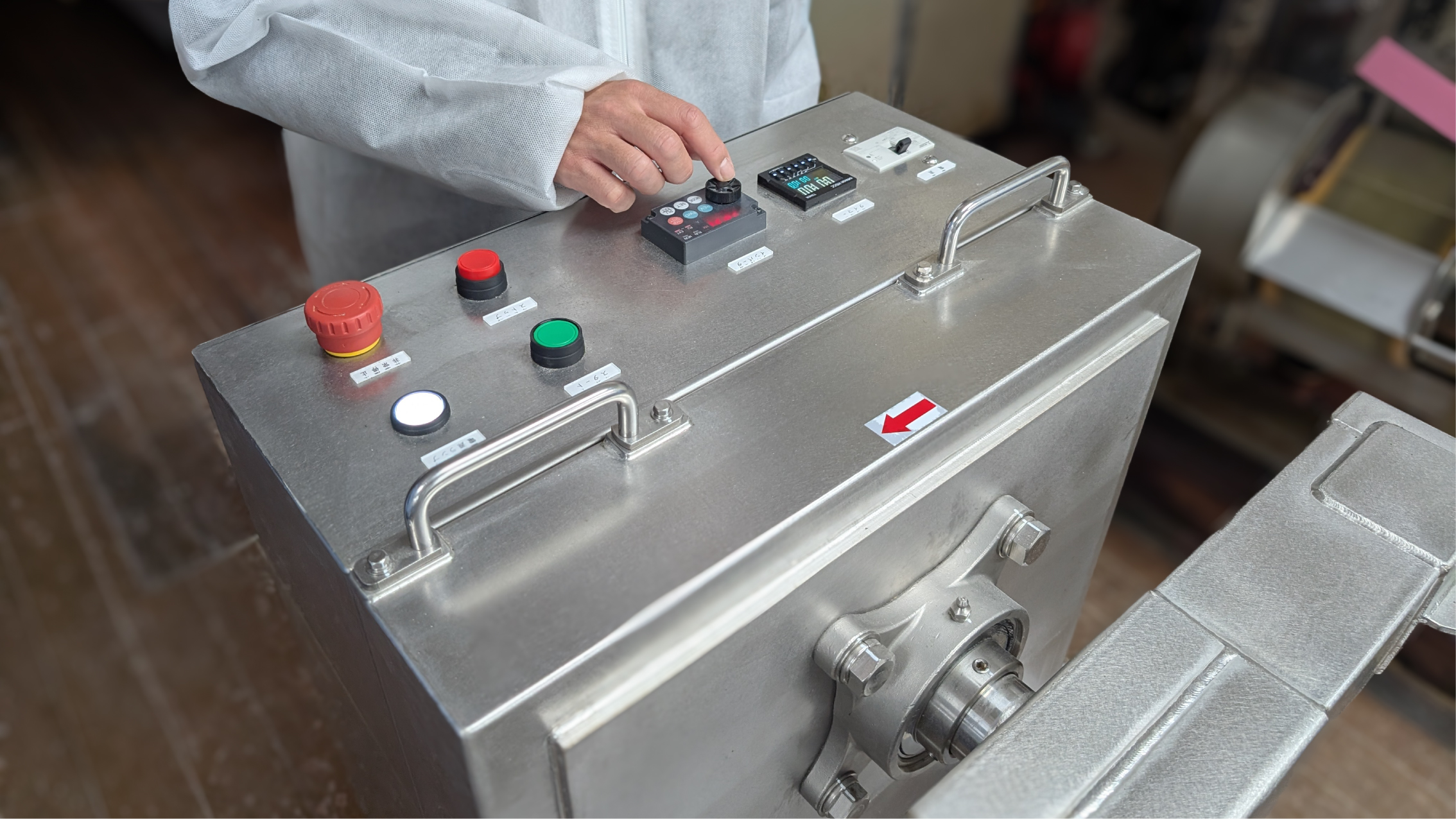
Looking back on the whole project, operations on the floor have gotten noticeably smoother, and production can now continue confidently with a smaller team. Overall, they’re glad they made the switch.
From the sales team: We first met this customer’s president directly at our booth at FOOMA JAPAN — a leader clearly focused on easing the burden on staff wherever possible, and genuinely enthusiastic about the idea from the start. Given the distance between the customer’s location and our Saitama plant, we ran the demo over a live video call, and the results were strong enough that they decided to move forward right away. This particular unit was custom-sized larger than standard, based on a request to increase mixing volume. Visiting after delivery and hearing that “efficiency has improved dramatically” was genuinely rewarding. Out of personal curiosity, we also bought some of Yamane Foods’ soup ourselves — and, with no exaggeration, it was excellent. We’ve been repeat customers ever since.
Editor’s note: We got to see, firsthand, a manual mixing process this company had kept going for years — and in some cases, depending on the ingredients and conditions, still relies on today, a real testament to hard-earned skill. At the same time, it was genuinely encouraging to see the rotary drum mixer running effectively on the floor, refined through the team’s own trial and error into a real efficiency gain. Getting a close look at how equipment and human skill can be combined to improve a production floor was a valuable experience. Our sincere thanks to Yamane Foods for supporting this interview.
No tags for this post.