
Case study: Custom suction filtration vessel
Challenge
- Hitting a scale-up wall: moving from lab scale to a 100-liter process.
- No standard product fit: nothing off-the-shelf matched what the new scale required.
Solution
- Bringing the problem to MONOVATE: demo testing to determine whether suction or pressure filtration was the right approach.
- A fully custom build: a suction filtration vessel supporting 240mm-diameter filter paper, delivered as a complete unit.
Expected Results
- Enough filtration area: a custom design delivering the area a standard product couldn’t.
- Filtration time on target: process adjustments brought filtration time within their working-hours target.
Customer profile: A manufacturer operating in the electronic components field, applying technology built up through its existing business to active R&D on new ventures.
What This Vessel Is Used For
This vessel is used in a step that separates powder out of a liquid. The company’s research lab is developing a process to recover and regenerate valuable components found in powders derived from electronic materials — and what they actually need is the liquid left over after those components have been dissolved out. An upstream tank heats and agitates the material to dissolve out the target components; this suction filtration vessel then removes carbon and other powders, so the extracted liquid can move on to the next step.
Right now, the project is in the middle of scaling up from lab scale to a 100-liter process, and this vessel is part of that scale-up.
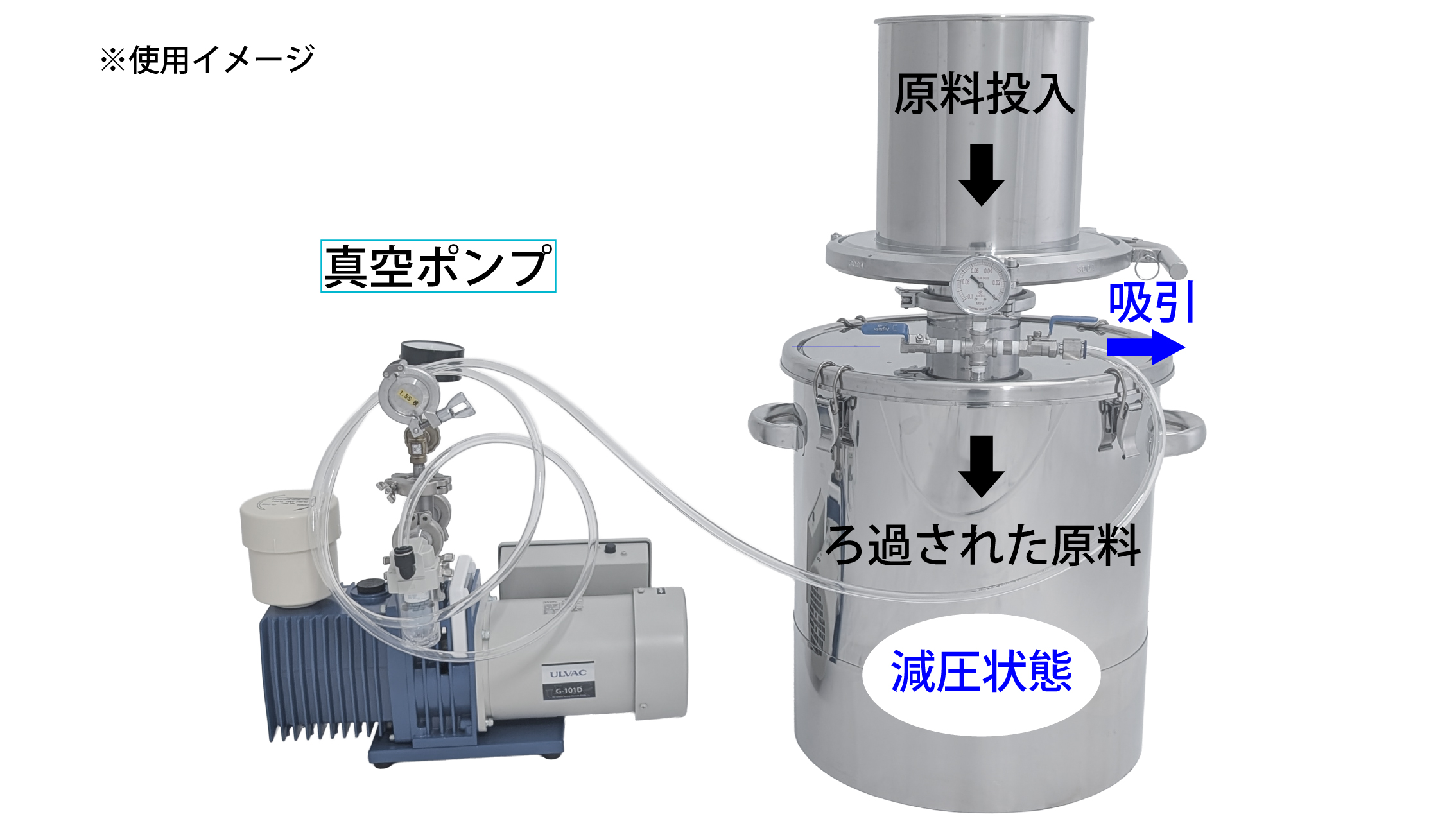
They’d previously bought their lab-scale filtration equipment through a distributor, and started looking for something larger — which is how they were introduced to MONOVATE. MONOVATE initially proposed an existing off-the-shelf model, and the customer nearly ordered it as-is. But looking closer, the filtration area seemed quite small relative to the receiving vessel below it, which raised a concern that filtration could end up far too slow — so they raised it with MONOVATE before committing. In hindsight, installing that standard unit without checking would have been a risky move.
From Demo Test to Custom Build
Two rounds of demo testing followed. The first compared standard suction filtration against pressure filtration, and settled on a direction: stick with suction, but increase the filtration area. The second built and tested an actual 240mm-diameter filter section, and once that produced solid results, the receiving vessel was built to match — the two delivered together as one complete unit.
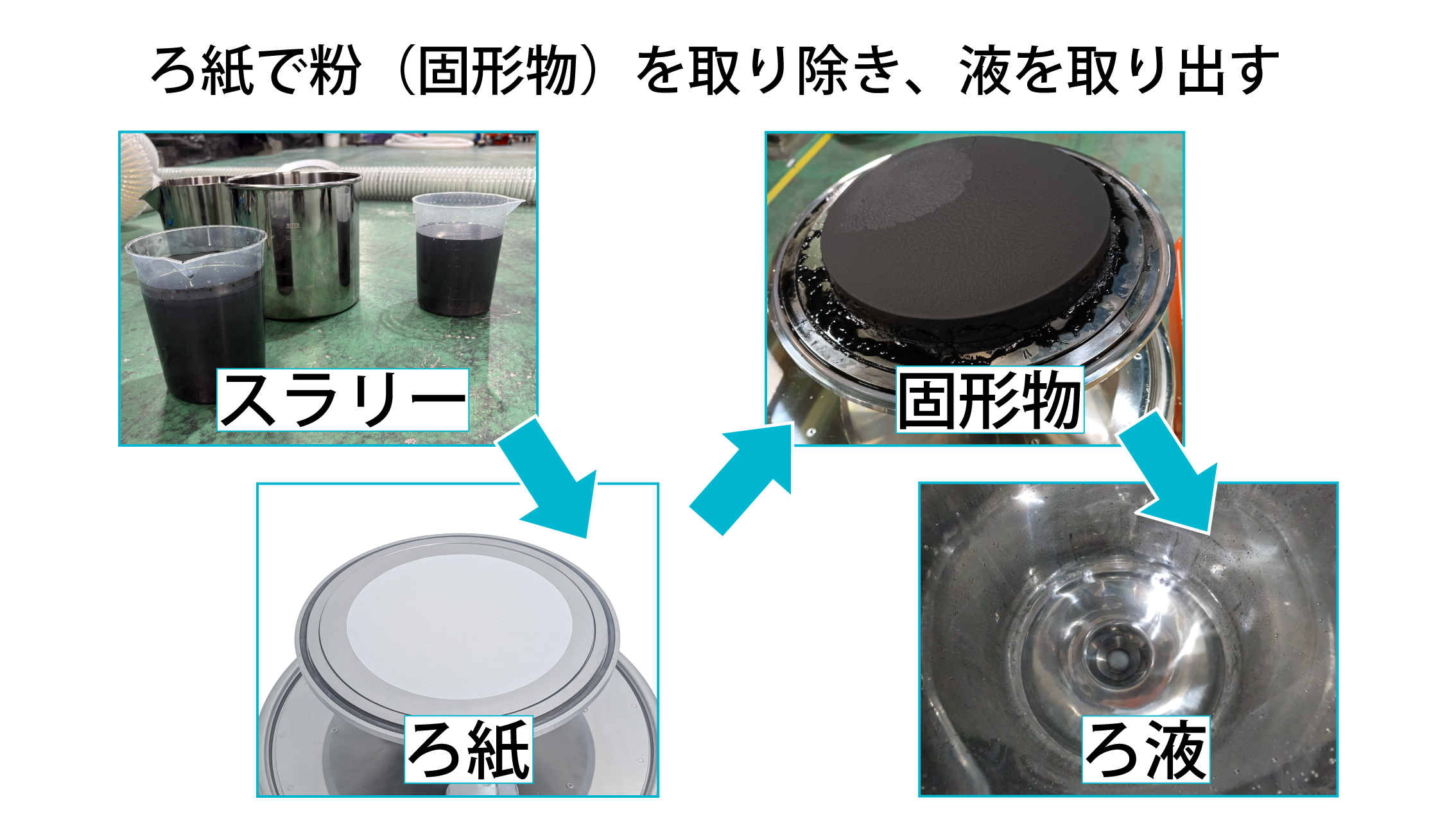
Running the demo test firsthand was, in their words, absolutely worth it. They’d had a rough sense of what filtration speed they wanted, but installing equipment untested and then discovering it was far too slow in practice would have left them with no way back. The test let them confirm exactly how many liters cleared in how many minutes, down to what the liquid’s color looked like afterward.
Notably, no other manufacturer they approached was willing to run a test like this beforehand. Given the cost involved, getting it wrong would mean spending more money and time fixing it after the fact — so having that kind of proof-of-concept up front, they say, is the best approach both for saving time and for building mutual trust.
On the customization side, MONOVATE never treated any request as off the table. Raising a concern about the filtration area got an immediate, concrete customization proposal back. Other manufacturers, in their experience, would stay engaged and attentive, but the actual output often fell short — this was a different experience entirely.
Operating It Since Installation
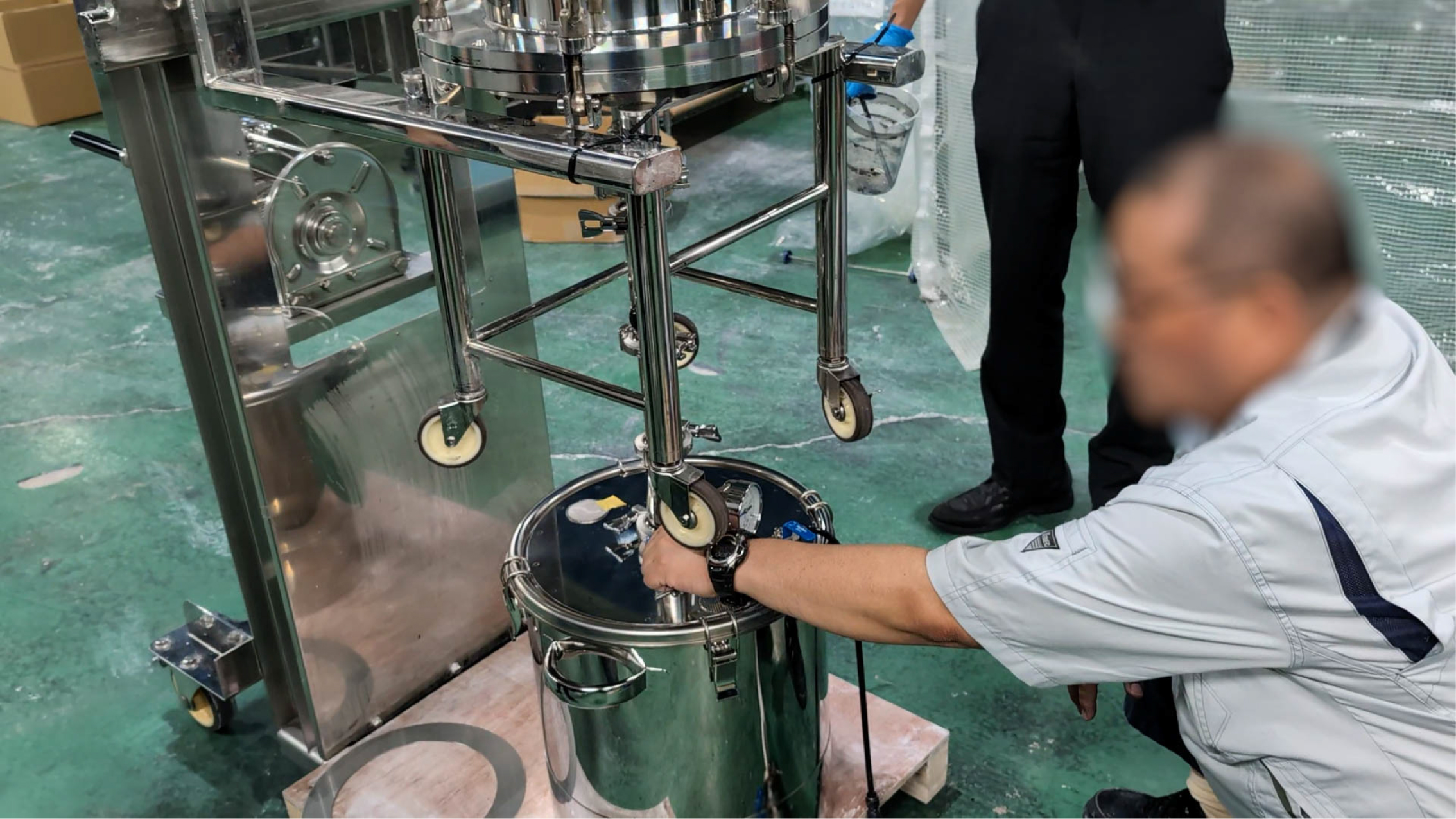
With the right operating approach, the vessel runs without clogging. The liquid coming from the upstream process contains fine powder, and filtering it directly tends to clog the filter paper quickly. Through some trial and error on the operating procedure, filtration time now comfortably fits within their target window — a meaningful result, since every step in the process needs to finish within a fixed working-hours schedule.
What Matters Most When Choosing an Equipment Supplier
Easy communication and genuine follow-through on after-sales support matter most. They’d previously split orders across multiple companies and struggled when coordination between them broke down. Safety specifications matter too — their internal safety requirements are fairly strict, so a lower price that comes at the cost of safety specs is a real risk. They’d rather work with a supplier willing to have that conversation, even if the price is higher.
On that front, despite the physical distance between their site and MONOVATE’s, communication was easy — MONOVATE even scheduled a demo test around a trip the customer already had planned to Tokyo, which they appreciated.
What’s Next
The immediate priority is building solid data showing no meaningful gap between this scale and lab results. Later process steps will likely need their own equipment as well, and once internal direction is set, they’d like to bring that to MONOVATE too.
From the sales team: Thank you for the opportunity to share this as a case study. The customer walked us through their thinking and goals in real detail, and it was a genuinely valuable conversation for us as well. We don’t see equipment as finished the moment it’s delivered — we hope to remain a resource this customer can turn to whenever something comes up, for a long time to come.
Editor’s note: This conversation, from a research team pushing from lab scale into the next stage, captured a real dilemma: standard products don’t have the specs you need, but you can’t afford to just install something and find out it doesn’t work. Working through each option via demo testing, and building the custom vessel together step by step, was R&D collaboration in its truest form. The more ambitious the project, the more often standard equipment falls short — and we’re glad a simple question, “could you build something like this,” could take shape the way it did here. We hope this case offers a useful reference for other research and development teams hitting their own scale-up wall. Thank you for the thorough tour of your facility during a busy schedule.
No tags for this post.