
Case study: Integrated water-bath, mixing, and transfer line for honey production
Challenge
- Couldn’t process drum-barrel raw material: no water-bath equipment sized for 200L drums, so decanting had to be outsourced.
- A real cost burden: outsourcing that decanting into smaller containers added up to a significant annual expense.
- Low operating efficiency: manual mixing and transferring was physically demanding and capped how much they could process.
Solution
- A large-capacity water bath: a rectangular tank sized for two 200L drums, or eight smaller 18L containers, at once.
- One integrated line: water bath → transfer → temperature-controlled mixing → pre-filling, built as a single continuous process.
- Specification tuned to honey’s behavior: flange heaters and pump specs adjusted specifically for honey’s properties.
Result
- Pre-processing brought in-house: no more dependence on outsourced decanting, for major cost savings.
- Sharply higher efficiency: the integrated line cut processing time to roughly a third of before.
- Less physical strain: manual mixing is gone, with stable, consistent production and no compromise on quality.
- Investment paid off: five years in, the equipment cost has been fully recovered.
Customer profile: B-Skep Co., Ltd., operating as “Yama no Hachimitsuya” (Mountain Honey Shop), a honey specialist built on its own beekeeping operations, handling production, processing, and sales. The company maintains a production system capable of handling both domestic and imported raw honey, pursuing high quality that reflects each material’s individual character.
The Process, and the Problem Before the Upgrade
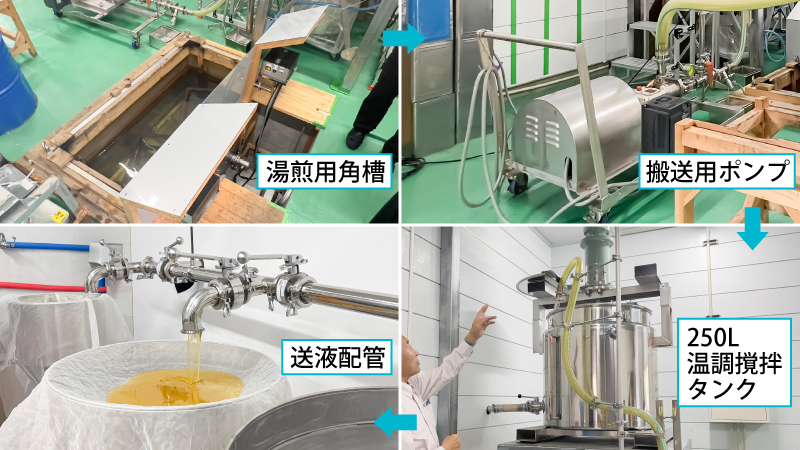
The company produces honey at a scale of roughly 40–50 tons a year. Imported honey typically arrives in 200-liter drums, domestic honey in smaller 18-liter containers. This equipment now handles the full process: melting the raw material in a water bath, pumping it into a temperature-controlled mixing tank, and finally sending it on to the filling tank.
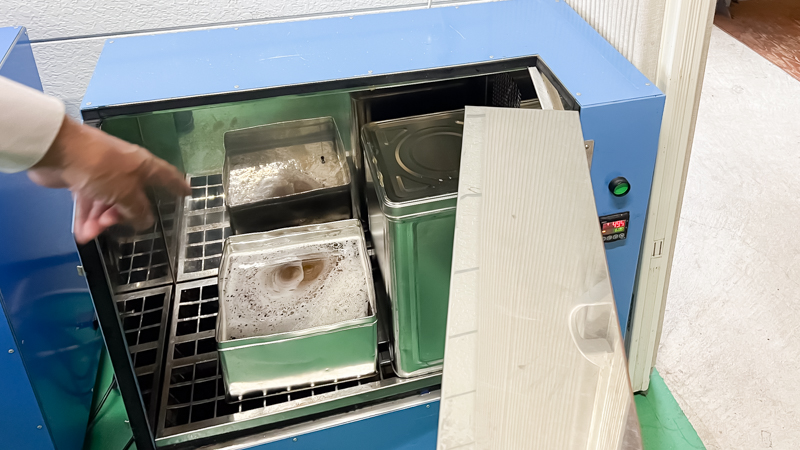
Before installing this line, the company used two hot-air circulation melters, each holding only two 18-liter containers, to melt honey in small batches. Because that equipment could only handle 18-liter containers — not 200-liter drums — the volume they could process at any one time was tightly limited.
Once melted, the thick, viscous honey then had to be mixed by hand and manually transferred to another container for the next step — a process that severely limited both batch size and overall efficiency.
The biggest problems were poor operating efficiency and the outsourcing costs that came with it. Imported honey arrived in 200-liter drums, but with no equipment able to water-bath and melt a full drum directly — and no way to pump such viscous honey — the company couldn’t process drum-barrel material in-house at all. The only option was to pay an outside contractor to decant it into smaller containers first, which became a significant recurring cost.
On top of that, all post-melt mixing was done entirely by hand, putting real strain on staff — to the point that some developed tendonitis or tennis elbow. As production volume grew, these inefficiencies only became more pronounced, making a more efficient approach increasingly necessary.
Behind the Decision, and the Specification Details
The project began with a simple realization: the company couldn’t process 200-liter drums in-house, and the outsourced pre-processing fee was becoming a real burden. That led to a direct question — wouldn’t it make more sense to invest in equipment that could handle the drums as-is, rather than keep paying that fee indefinitely?
They found MONOVATE while touring other companies’ plants and gathering information at FOOMA JAPAN, a food machinery trade show, and worked through the specification together with MONOVATE checking the site directly. Running the numbers and finding that the investment could pay for itself within a few years was a major factor in the decision.
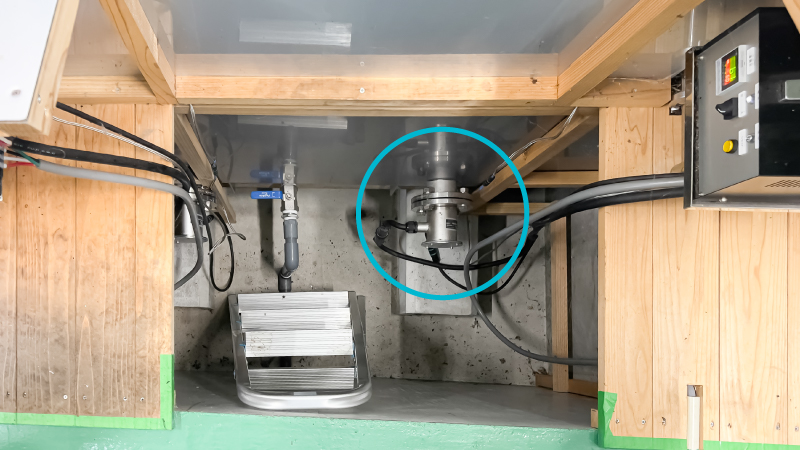
To handle both 200-liter drums of imported honey and 18-liter containers of domestic honey, MONOVATE designed a rectangular water-bath tank sized for two drums, or eight small containers, at once. Because honey loses nutritional value above 60°C, both the water bath and the temperature-controlled mixing tank were fitted with flange heaters and a control panel for precise temperature management.
Honey’s viscosity also changes drastically with temperature, so pump specifications and mixer motor selection were worked out jointly with MONOVATE to ensure clog-free transfer after the water bath. Because the factory’s ceiling height was limited, the floor itself had to be excavated to fit the water-bath tank and still leave enough clearance to load the drums — and the equipment’s height and layout around the tank and water bath were then adjusted to match that finished floor level.
The Results After Installation
The biggest win was the ability to process 200-liter drums entirely in-house. That eliminated the need for outsourced pre-processing altogether, translating directly into major cost savings.
Connecting water bath, transfer, mixing, and filling into a single continuous line also raised overall efficiency, cutting processing time to roughly a third of what it was before.
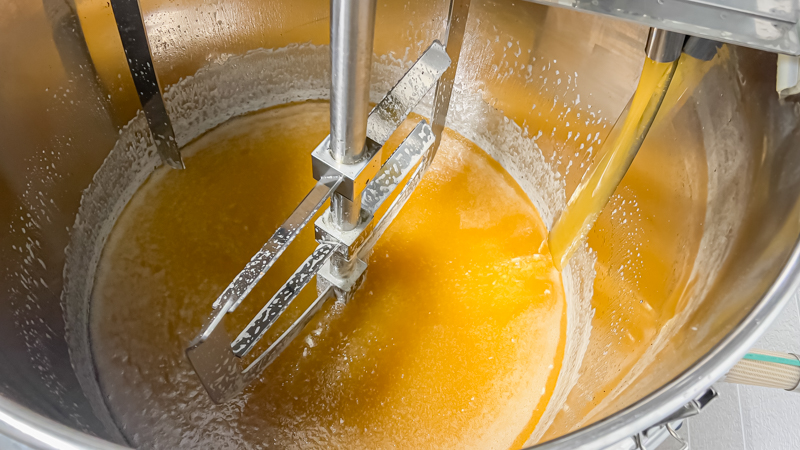
The mixing that used to be done by hand is now handled reliably by an anchor-type mixer, significantly easing the physical burden on staff. Between the eliminated outsourcing fees and the improved process efficiency, the equipment investment has been fully paid back in the five years since installation.
Five Years In: The Overall Evaluation
Throughout the project, MONOVATE was available exactly when needed — for site surveys, installation, and every point where specification decisions had to reflect honey’s viscosity and how staff actually move through the workspace. Careful adjustment of details like flange heater and pump selection, tailored to their specific production flow, built a relationship they felt comfortable consulting throughout.
Five years on, the equipment continues to run reliably, and the savings from eliminated outsourcing and improved efficiency have held steady. All things considered — including the return on investment — they’re glad they made the decision to install it.
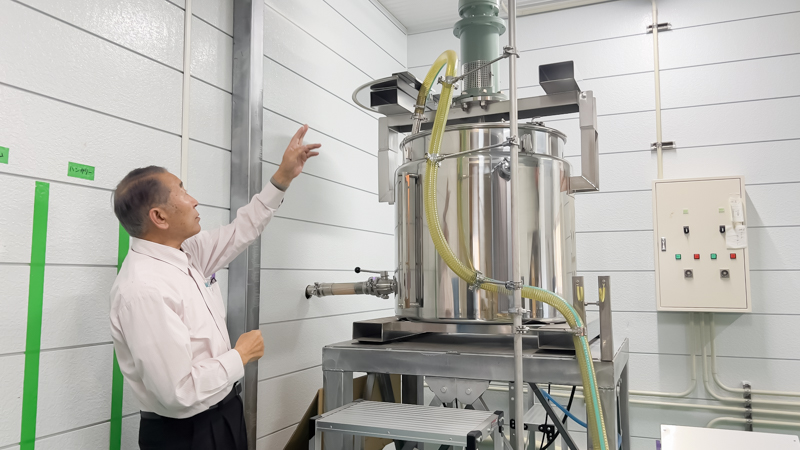
Editor’s note: For this interview, five years after delivery, we heard directly from the company’s president about how the equipment has been running and the results they’ve seen from actually using it. Touring the honey production floor in person, we could feel, at every turn, both the thinking behind the original decision to install this equipment and the quiet care taken toward the staff who work with it daily. As the conversation went on, we found ourselves in a genuinely constructive exchange about ways things could be improved even further — a forward-looking attitude toward the floor that left a real impression. After the interview, we had the chance to taste the honey being produced, and having just seen the process firsthand made it taste even better than usual. We’ll keep doing everything we can to support the equipment side of the business going forward. Thank you sincerely for so generously supporting this interview.
No tags for this post.