
Case study: Craft brewery equipment installation
Challenge
- No domestic equipment fit their brewing style: nothing in Japan offered direct-fire brewing at small batch sizes.
- Language barriers with overseas suppliers: concern that specifications and requests wouldn’t translate.
- Repair risk with imported equipment: welding defects showing up before first use, with repairs costing hundreds of thousands of yen.
Solution
- A full lineup from one domestic manufacturer: everything from the hot liquor tank to fermentation and the chiller.
- Seeing the equipment running first: a visit to a brewery already using the same model before deciding.
- A proposal tailored to the local climate: a chiller capable of both heating and cooling to handle Iwanuma’s cold winters.
Result
- A complete brewing system: from mashing through fermentation, now pouring four taps at all times.
- Hands-on brewing, the way they wanted it: small-batch brewing where they can judge the fire by feel.
- Ongoing support after the sale: adjustments that came up after startup are worked through together.
Customer profile: Iwanuma Craft Beer Workshop, a craft brewery and taproom in Iwanuma City, Miyagi Prefecture. Just two people handle everything from brewing to serving, with a mission to brew beer that matches the local palate.
The Beer, and the Equipment Behind It
The brewery produces three core beers plus seasonal, limited-run brews, sometimes pouring guest beers from other breweries alongside them — always four taps running. The goal: beer people want to drink every day, brewed to match the taste of the local community.
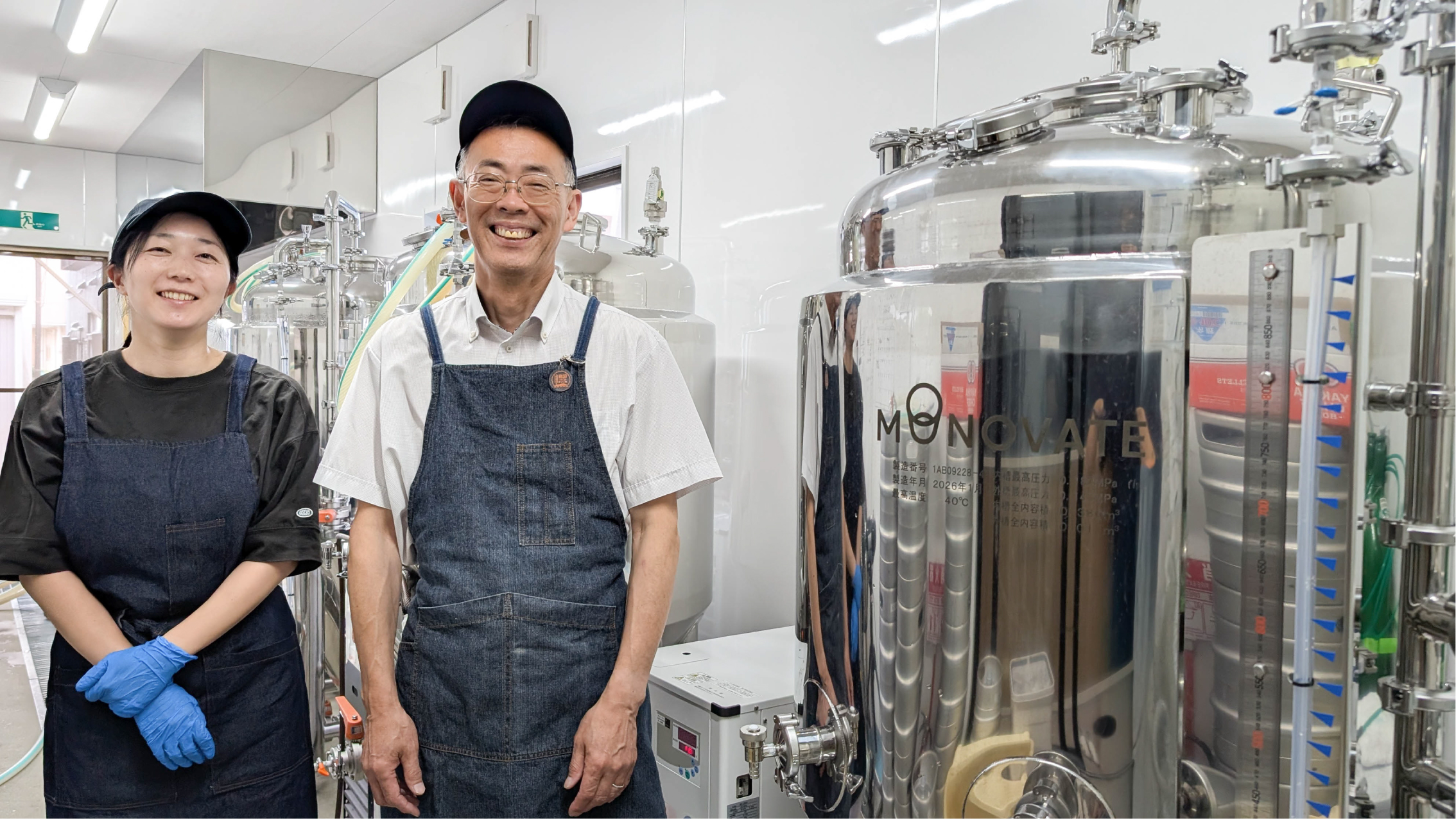
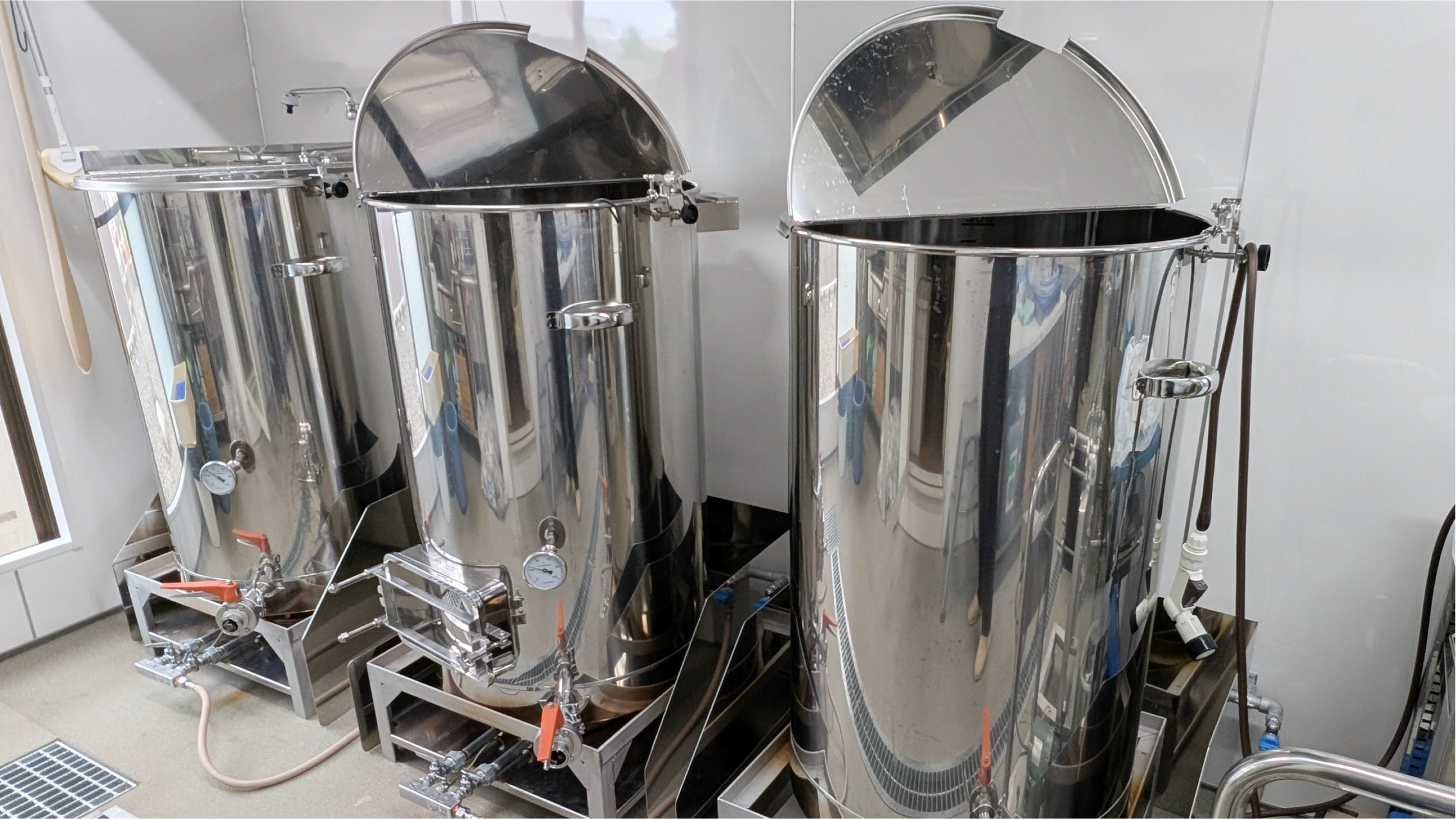
Brewing starts with heating water in the hot liquor tank, converting malt into wort in the mash tun, then boiling it with hops in the boil kettle. The wort is rapidly cooled through a heat exchanger and moved into the fermentation tank, where yeast takes over. The full equipment lineup supplied by MONOVATE covers this entire process in one package:
- Hot liquor tank (heats and holds the brewing water)
- Mash tun (converts malt into wort)
- Boil kettle (boils the wort with hops)
- Pump
- Plate heat exchanger (cools the wort after boiling)
- Three conical fermentation tanks
- Chiller (circulates cooling water, with both heating and cooling capability)
Each tank holds 300 liters, with the three fermentation tanks rotating through the brewing cycle.
Why Direct-Fire Brewing
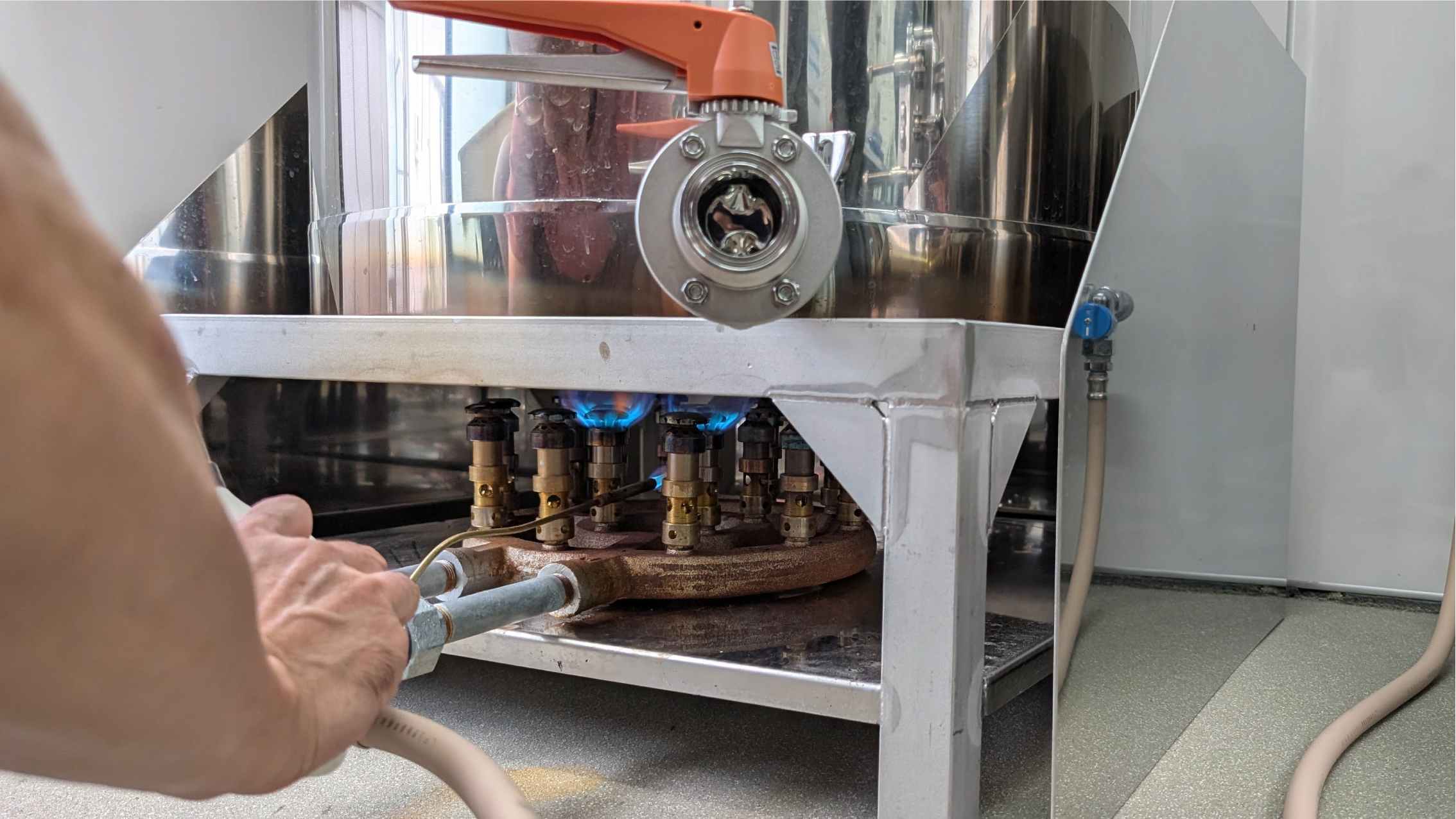
Direct-fire brewing means watching the flame and making the call yourself — “now’s the moment” — in real time. It’s demanding, but it’s also what makes the process feel human. That, they say, is the real appeal of brewing over an open flame.
To be fair, the brew room gets hot — well over 40°C in summer — and the thermal efficiency can’t match a boiler. Even so, they chose the hands-on approach: it lets them brew in small batches without needing boiler equipment at all.
Finding MONOVATE, and the Path to Installation
They found MONOVATE through an online search, as a manufacturer that builds complete tank lineups for craft breweries, and reached out through the inquiry form. MONOVATE pointed them to Yokogawa Brewery in Hiroshima, which was running the same size and type of setup — a chance to see the real thing in operation rather than judging from a catalog and drawings alone.
MONOVATE accompanied them on a visit to that brewery. Seeing the equipment running, and hearing it explained on site, they found it matched almost exactly what they wanted to brew — enough to know “this setup will work as is.” From there, MONOVATE proposed adjustments suited to their own conditions: since Iwanuma winters get cold enough to drag fermentation temperatures below the target range, they added a chiller capable of both heating and cooling, not just cooling.
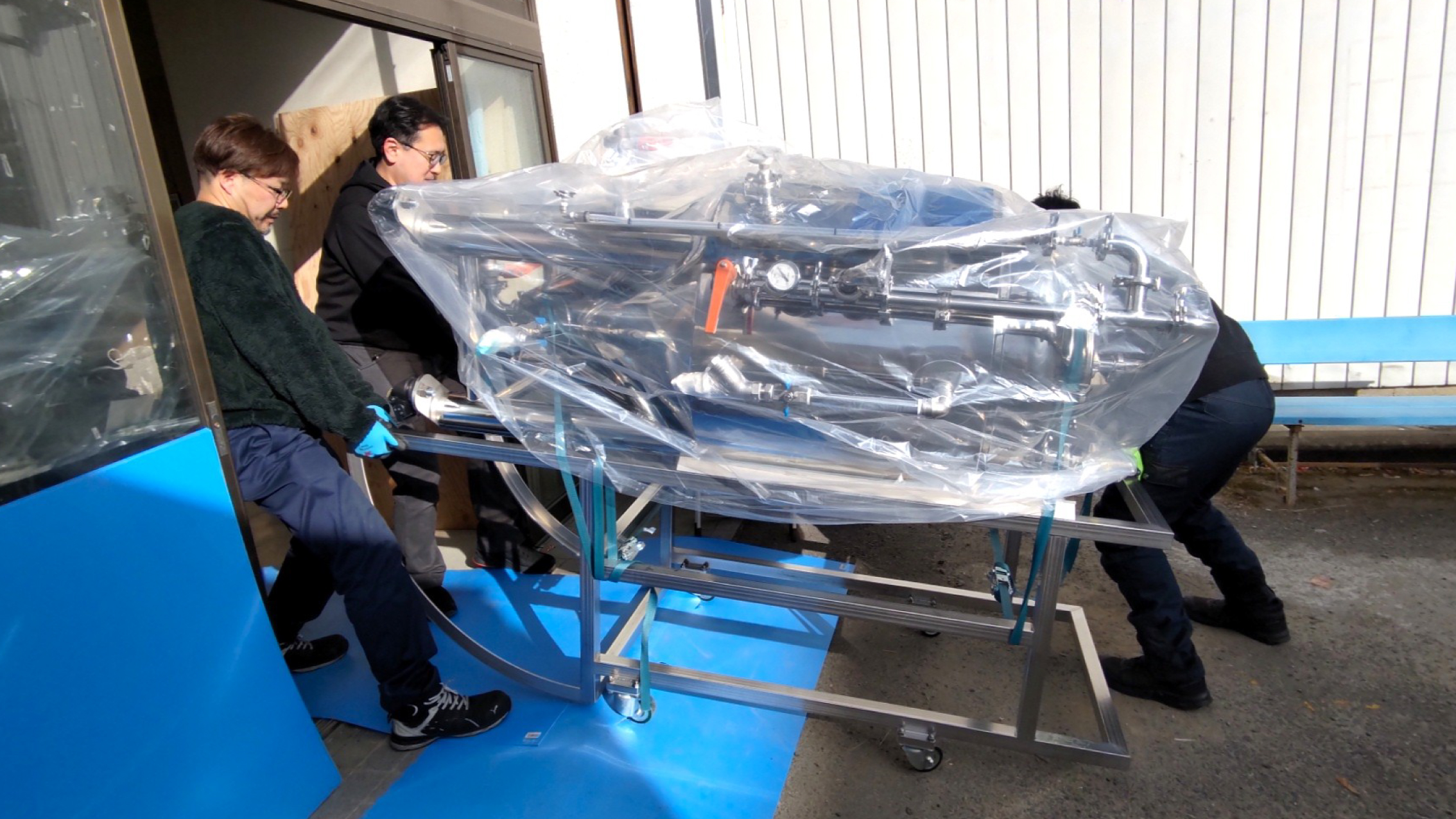
MONOVATE visited the site while it was still under construction to check delivery and installation conditions, attended the actual delivery, and has stayed involved ever since opening.
Weighing Imported Equipment — and the Deciding Factor
They did look at pricing for imported equipment, which is genuinely cheaper. But without English on their side, they worried that detailed requests simply wouldn’t come across clearly, even through a trading intermediary.
They’d also heard from other brewers who’d gone the imported route: welds cracking or leaking before the equipment had even been used. Repairs meant flying a technician in, with airfare and hotel costs alone running two to three days — a “quick fix” costing hundreds of thousands of yen. Once you factor that in, it’s not obvious the imported option is actually cheaper.
The deciding factor, in the end, came down to two things: MONOVATE could actually deliver the direct-fire, small-batch brewing setup they wanted — something they’d struggled to find anywhere else in Japan — and a visit to MONOVATE’s own Yashio plant in Saitama, where they saw the manufacturing and inspection process firsthand and came away confident: “this is going to be fine.”
Working With a Domestic Manufacturer
The value of working with a Japanese manufacturer shows up in the small, ongoing conversations — being able to work through detailed requests together as they come up. Running their own process surfaced adjustments they hadn’t anticipated: the lauter plate (the perforated base plate used to filter the wort) would occasionally clog during mashing. Switching to a coarser malt grind mostly solved it, and they were still discussing further tweaks to the plate itself during this very interview.
With imported equipment, they suspect, the relationship would end once the finished product arrives. Here, they can keep talking it through — before the purchase, during setup, and long after they started using it. That ongoing relationship, they say, is the real difference with a domestic manufacturer.
From the sales team: On price alone, we can’t compete with imported equipment. What we’d ask people to look at instead is what happens after the purchase. For this project, we first brought them to a brewery already running the same setup so they could see it working before finalizing the specification. We then visited the site during construction to check delivery and installation conditions, attended the delivery itself, and recently returned for an after-sales visit to make adjustments on the spot. None of that would have been possible without being entrusted with the full equipment lineup — having consistent specifications across every connection point makes it much faster to isolate any issue that comes up. Equipment isn’t something we deliver and walk away from, and we look forward to continuing to support them going forward.
No tags for this post.