
Case study: Pharmaceutical manufacturer voice-of-customer interview
Challenge
For a new sugar-coating liquid production line, the customer needed roughly 30 sanitary agitator tanks in a single project, and urgently needed a reliable, bulk supply from a manufacturer with a strong track record in the pharmaceutical industry.
Solution
Building on its prior delivery record and the trust it had earned, MONOVATE brought its engineering expertise and proposal capability to fully meet the pharmaceutical industry’s strict requirements.
Result
The customer achieved the manufacturing environment that matters most in the pharmaceutical industry: equipment that keeps running without trouble.
Customer profile: A leading pharmaceutical manufacturer specializing in the production of prescription drugs requiring advanced technology. The company contributes to healthcare by delivering safe, effective medicines under strict quality standards and manufacturing controls.
Background: A New Sugar-Coating Line and the Need for a Trusted Bulk Supplier
Q: Could you tell us the background behind this large-scale equipment installation?
A new project required an expansion of equipment, which meant we needed several additional tanks. The primary product involved is sugar-coating liquid, used to coat the surface of tablets.
MONOVATE’s Proposal Strength: “We Give Back 12 for Every 10”
Q: What made you choose MONOVATE for this tank installation?
We had used MONOVATE before with complete confidence, having experienced no issues whatsoever, so we asked them again this time.
Another reason is that it’s not just the sales staff — the engineering team also responds flexibly to our design requests. To put it simply, when we give them 10, they give us back 12.
I regularly work with more than ten equipment manufacturers, but very few of them — across sales and design alike — offer that extra value on top of what’s asked. Through repeated back-and-forth with MONOVATE’s engineers on the design, I was consistently impressed by their sharp eye for detail and their proposals that addressed exactly the points we needed.
To begin with, in my mind, “stainless steel vessel” simply equals “MONOVATE.” I don’t really consider other options. And compared to other equipment manufacturers, MONOVATE also has an edge on cost.
Addressing Weight and Metal-Contamination Risks After Liquid Filling
Q: What did you pay the most attention to when actually proceeding with the tank installation?
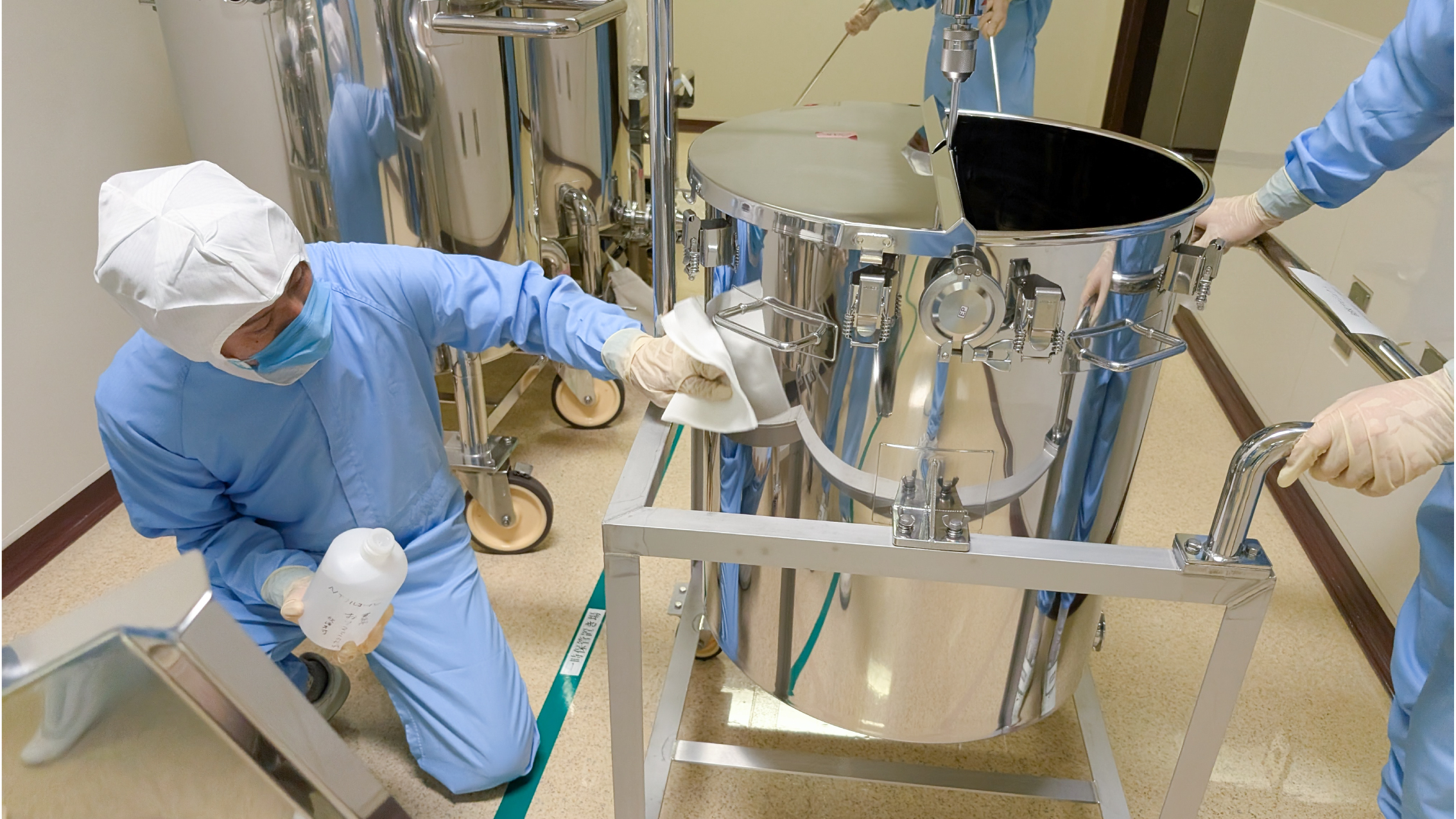
Some of the tanks we installed this time have a capacity of around 300 liters, and when filled to capacity with liquid, they become quite heavy. We held repeated discussions with the design team about portability, so that anyone on-site could handle the tanks easily.
For example, we requested larger casters to make the tanks easier to move, and adjusted the height of the handles to improve operability — attention to detail was built into every part of the request. We even tested this in practice during the FAT, filling the tanks with liquid and moving them to confirm.
Workability matters, of course, but the real priority is achieving both quality and safety at the same time.
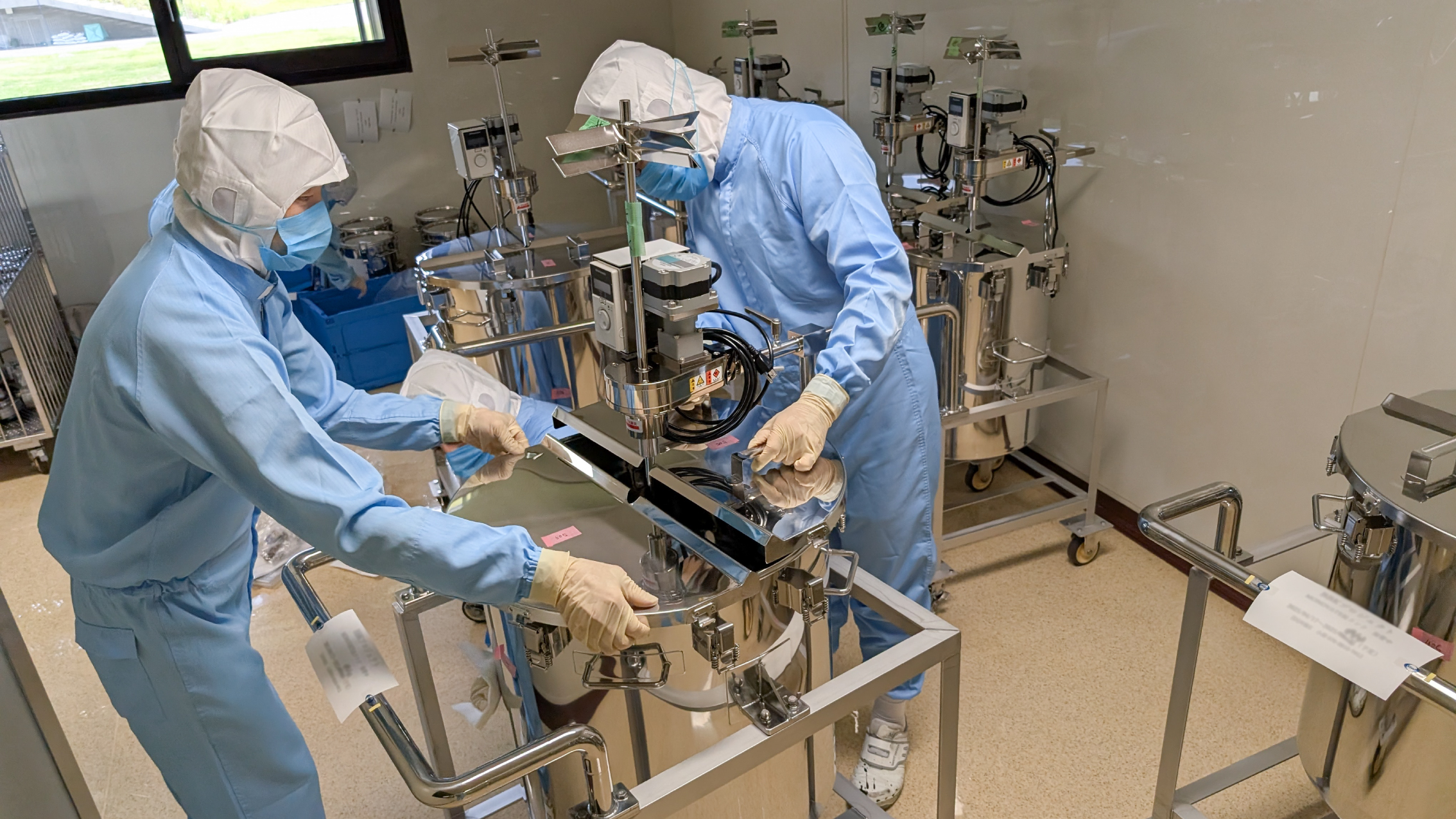
MONOVATE’s design team was also flexible in areas such as selecting snap latches that let the tank and lid always be fixed in the same position, ensuring the agitator shaft never contacts the lid opening.
Building this kind of trust through our exchanges naturally makes MONOVATE our first choice again for the next project.
Inspection Readiness for a Leading Pharmaceutical Manufacturer
Q: Could you share your thoughts on the importance of validation documentation in the pharmaceutical industry?
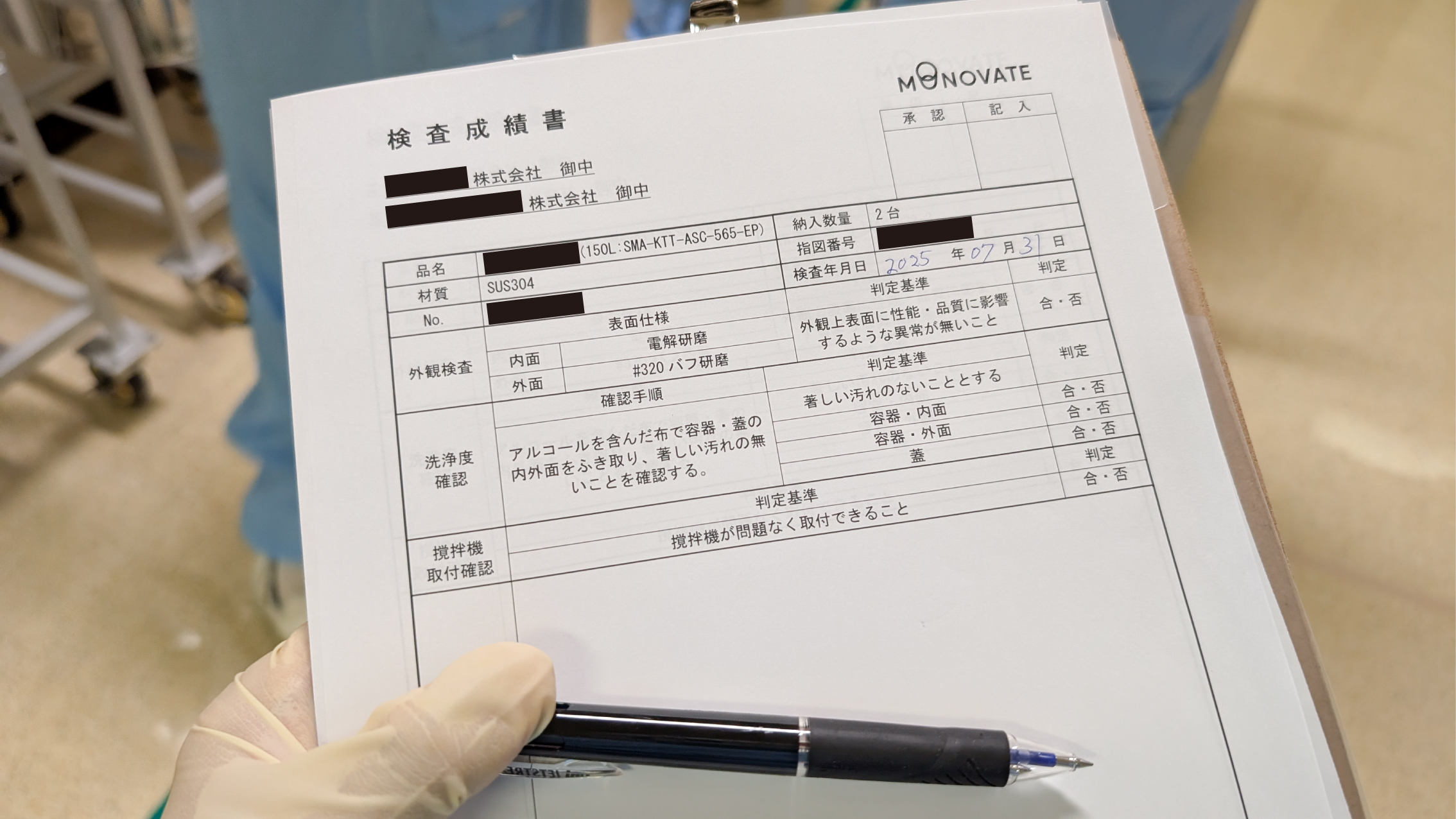
Because we face rigorous inspections both domestically and internationally, validation documentation is of course essential. During inspections, we use the manufacturer’s documents to provide explanations, so sloppy content or formatting simply isn’t acceptable.
On that point, MONOVATE reliably prepares thorough validation documentation, which gives us peace of mind.
Validation documents submitted for this project
FAT (Factory Acceptance Test) — Pre-shipment quality verification
- Quality verification documents (5 items): Mill sheets, steel material inspection certificates, and material certificates, used to confirm the quality and composition of materials used and serving as evaluation material for pharmaceutical industry standards.
- Electropolishing certificates and measuring-instrument calibration certificates, demonstrating surface treatment and instrument control status in support of GMP compliance.
- Design and inspection documents (4 items): Product specifications and completed drawings, recording conformity with design requirements as a basis for traceability.
- Inspection procedures and inspection reports (dimensions, appearance, pressure resistance, material), providing objective records of manufacturing quality.
IQ/SAT (Installation Qualification / Site Acceptance Test) — On-site installation qualification
- On-site verification documents (2 items): Inspection procedures and inspection reports (appearance, cleanliness, agitator mounting), recording functional confirmation after on-site installation and supporting quality checks prior to operation.
Why “Trouble-Free Operation” Matters Most
Q: Now that the tanks are installed, what benefits do you expect going forward?
It’s less about any specific benefit and more about the fact that, as a manufacturer of original pharmaceutical products, what matters most to us is being able to keep manufacturing exactly as before, without any issues.
Rather than chasing standout results, what matters most is that operations continue without trouble, on both the quality and safety fronts. That’s precisely why we continue to rely on MONOVATE, whose track record we trust.
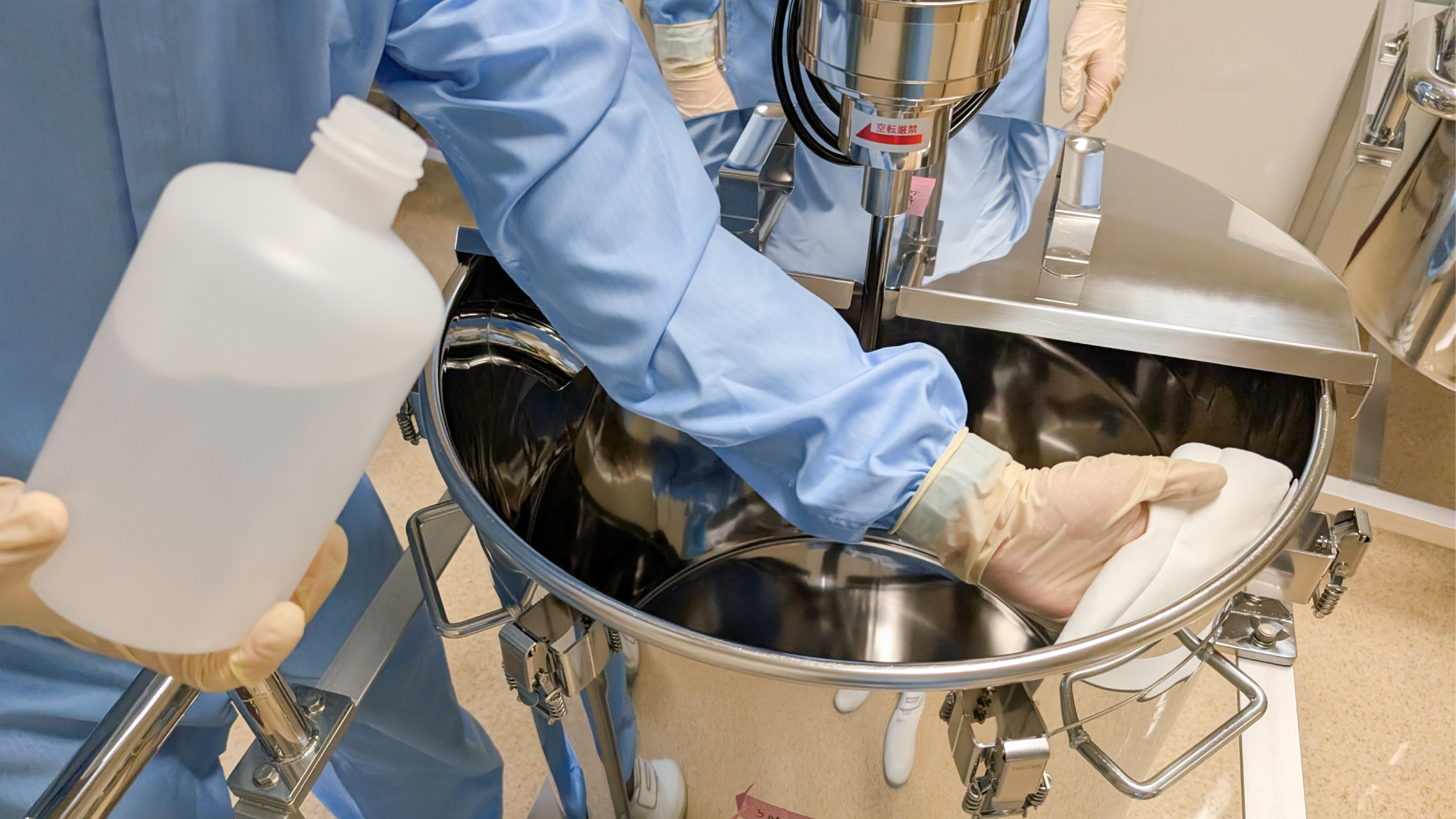
MONOVATE is grateful for the opportunity to supply approximately 30 tanks for this large-scale project. We understand deeply how critical “trouble-free operation” is in the pharmaceutical industry — if production were to stop, it could in the worst case lead to a product shortage in the market, affecting the manufacturer’s reputation. We take that responsibility seriously, and being trusted with it means a great deal to us. We will continue to refine our technology and quality so we can keep supporting stable manufacturing environments for our customers.
No tags for this post.