From 20kg to 70kg a Night, Hands-Free: How a YouTube Video Solved a Tea Maker’s Toughest Powder Problem

Case study: Automated matcha transport with an aeration hopper

Challenge

  • Collection hit a physical wall: expanding from two grinding mills to five doubled overnight output to 70kg, making manual collection and hauling physically impossible.
  • Matcha’s difficult physical properties: an extremely sticky, rathole-prone powder that resisted moving smoothly into the next process step.

Solution

  • A new pneumatic powder transport system: automating the flow from grinding mills through the sieving machine to the filling hopper, fully unattended overnight.
  • An aeration hopper: injects air at the discharge point to stop matcha from sticking, ensuring it empties out completely every time.

Result

  • Production capacity maximized: 70kg transported overnight, fully unattended, meeting the plant’s full increased-output target.
  • Workload dramatically reduced: manual collection, once heavy physical labor, is gone — and the clogging and ratholing that plagued next-morning discharge is resolved, sharply improving overall efficiency.

Customer profile: Suisouen Honpo Co., Ltd., founded in 1959. A tea manufacturer handling everything from processing to sales of tea leaves sourced directly from tea-growing regions, built around a philosophy of safe, reliable, delicious products — and a hardworking, hands-on approach to manufacturing that continues to embrace new technology, including advanced matcha production equipment, to meet the demands of the times.

The Process, and the Problem Before the Upgrade

It all started with a decision to increase matcha output by adding more fine-grinding mills. More mills naturally means more powder produced — and that powder had been collected in stainless drums. Once the plan called for running the expanded output overnight, unattended, manual collection simply couldn’t keep up, making some kind of holding vessel essential.

At first, the idea was simply to add a large tank to hold the powder. But that raised a harder question: not just how to store it, but how to move it smoothly into the next process and discharge it cleanly — which is what sent them looking for a real solution.
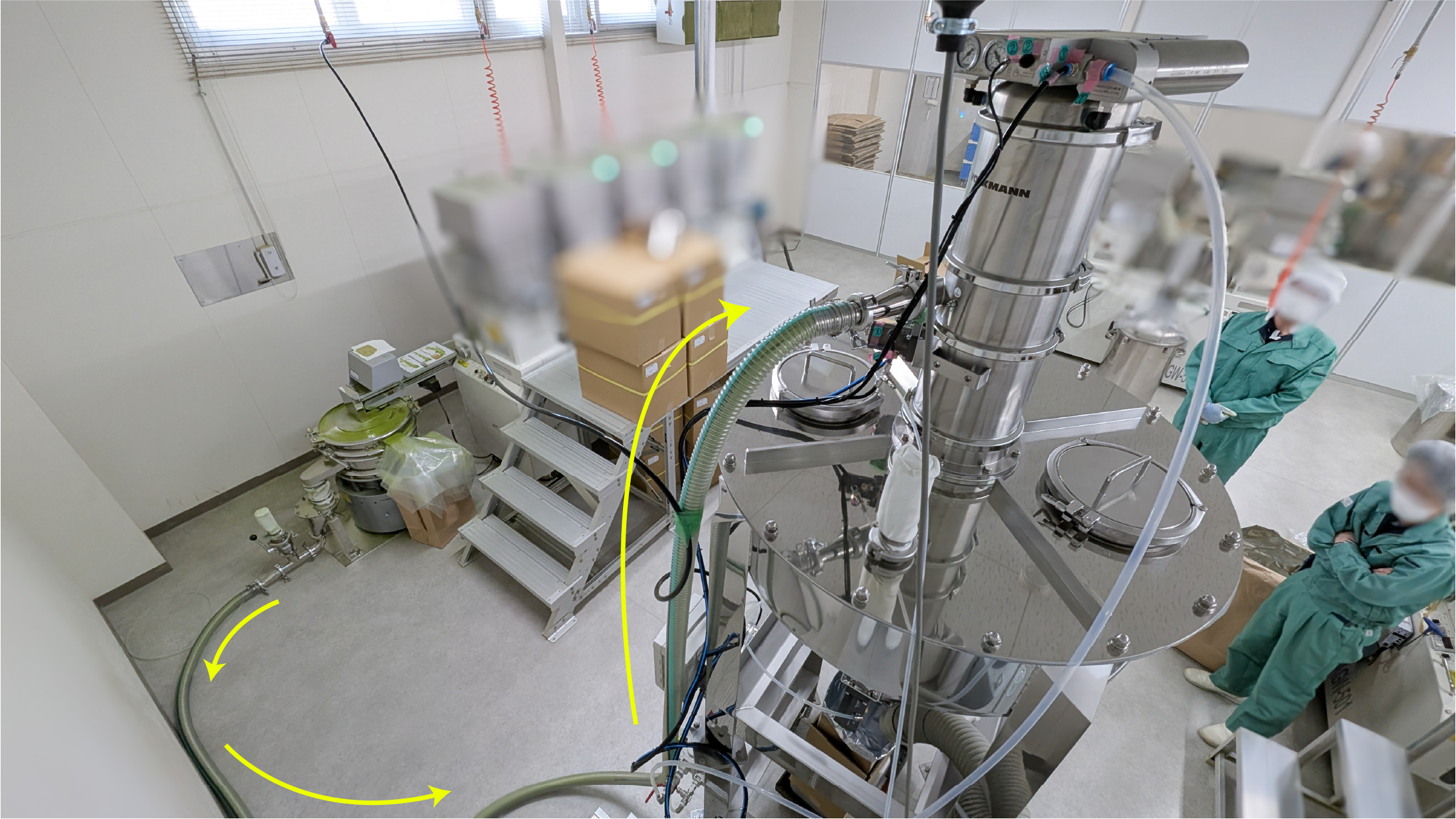
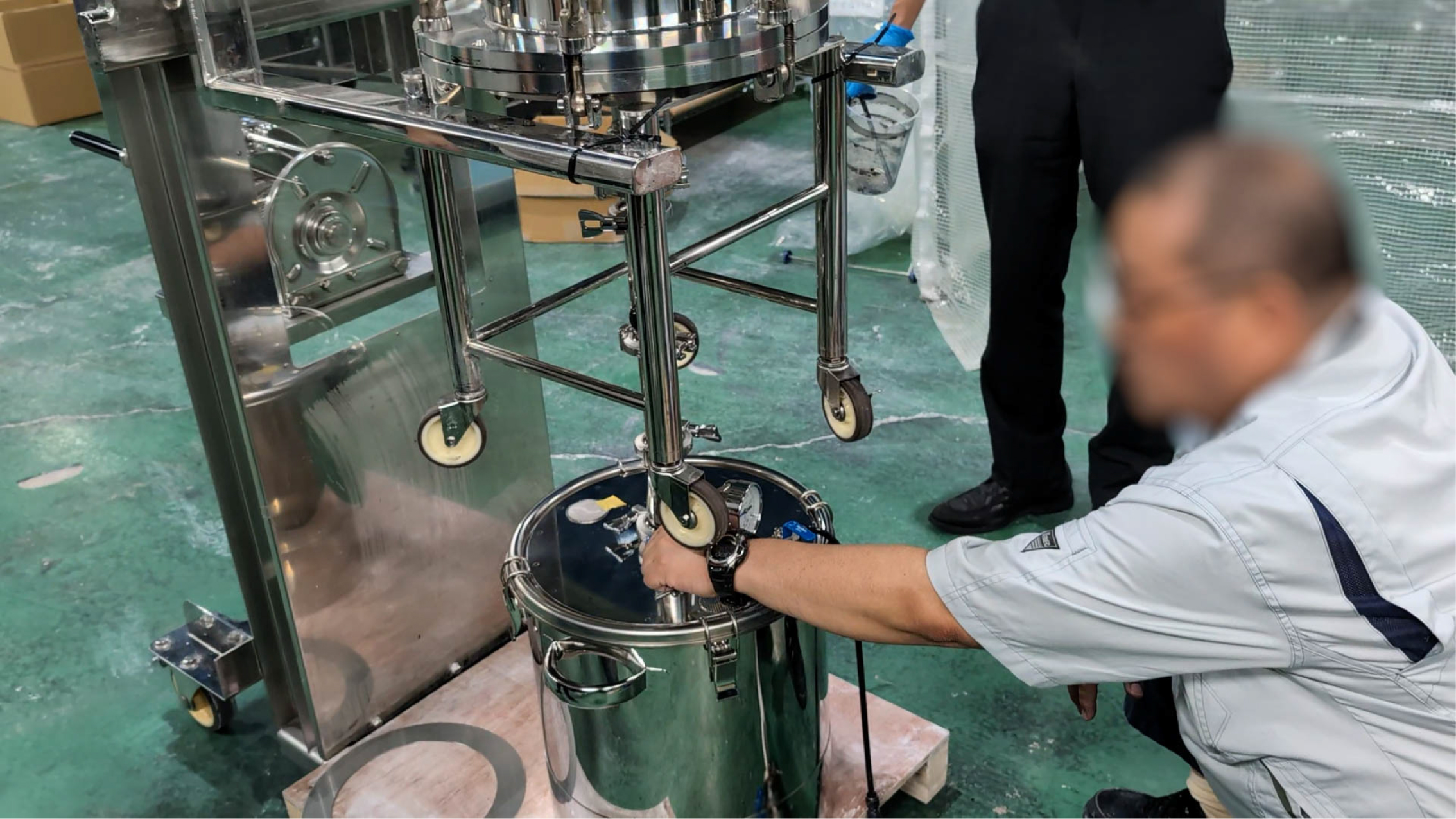
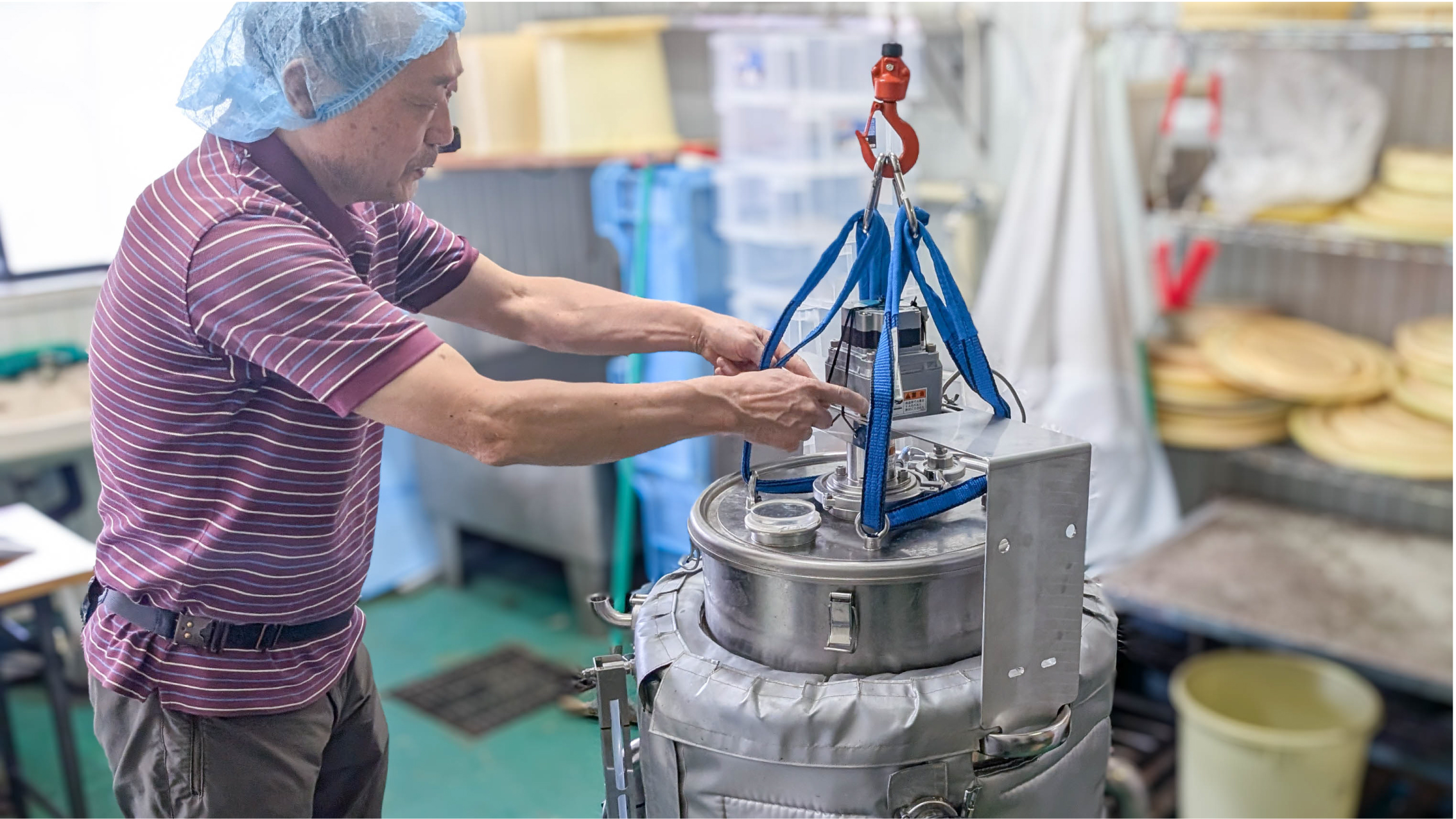
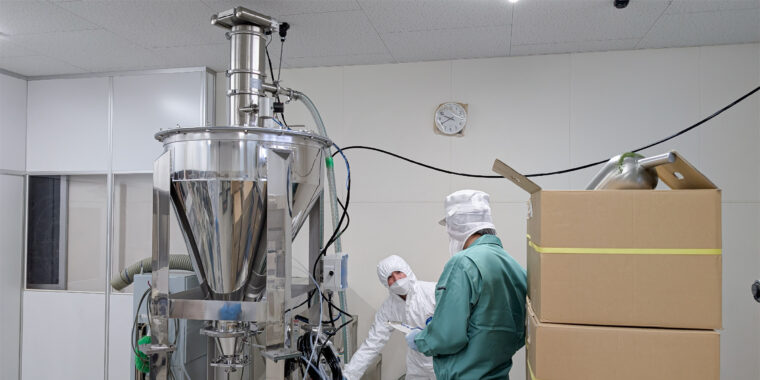
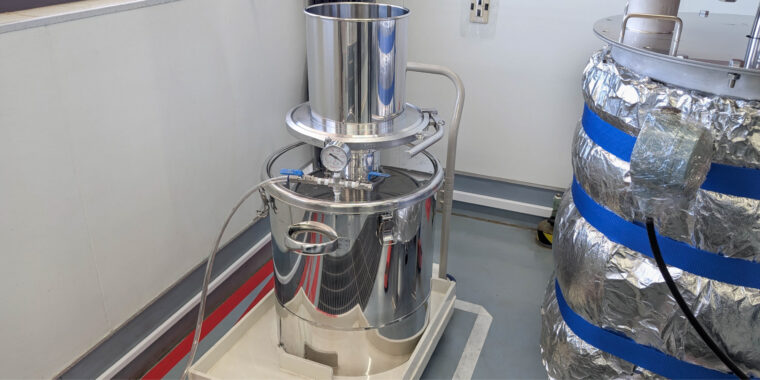
The powder transport system installed for this project
The pneumatic powder transport system installed for this project

Previously, with two grinding mills running, a single night’s output was around 20kg — manageable with one collection vessel. The real burden was in what came after: pulling a heavy 20kg bag of powder out of the vessel and lifting it required physical strength, work that inevitably fell to male staff and wasn’t something everyone on the floor could do.

Expanding to five mills, with an overnight target of 70kg, made it clear that the old method was approaching a hard physical limit.

Finding MONOVATE, and Building Confidence in the Approach

While researching matcha transport on YouTube, a MONOVATE video demonstrating an aeration hopper discharging matcha stood out immediately — the customer was struck by how cleanly the matcha emptied out, and intuitively thought, “this looks promising.”

The demo that followed used their actual matcha, under conditions matching real production. Seeing the same smooth motion from the video reproduced with their own material gave them real confidence to move forward.
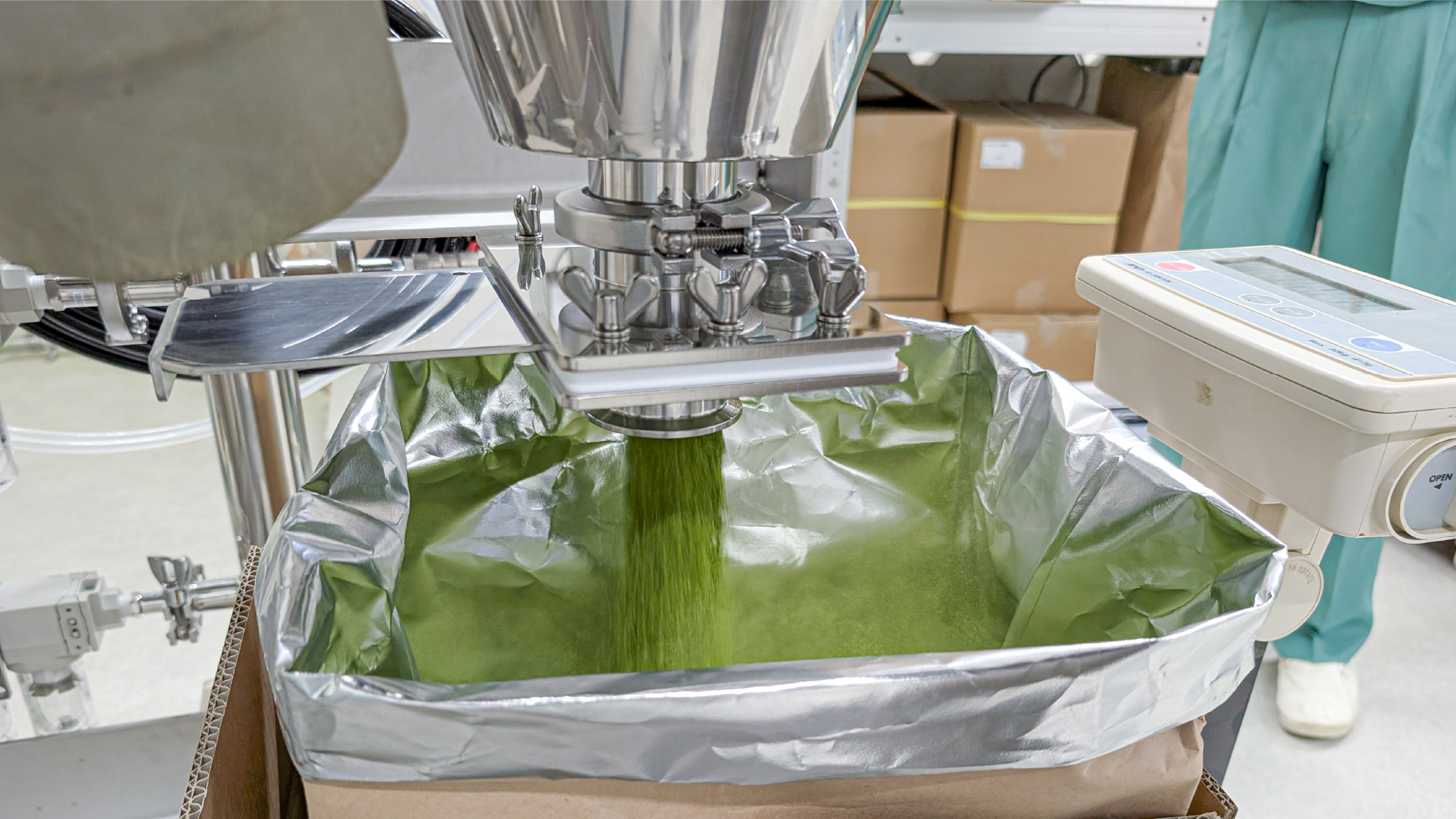
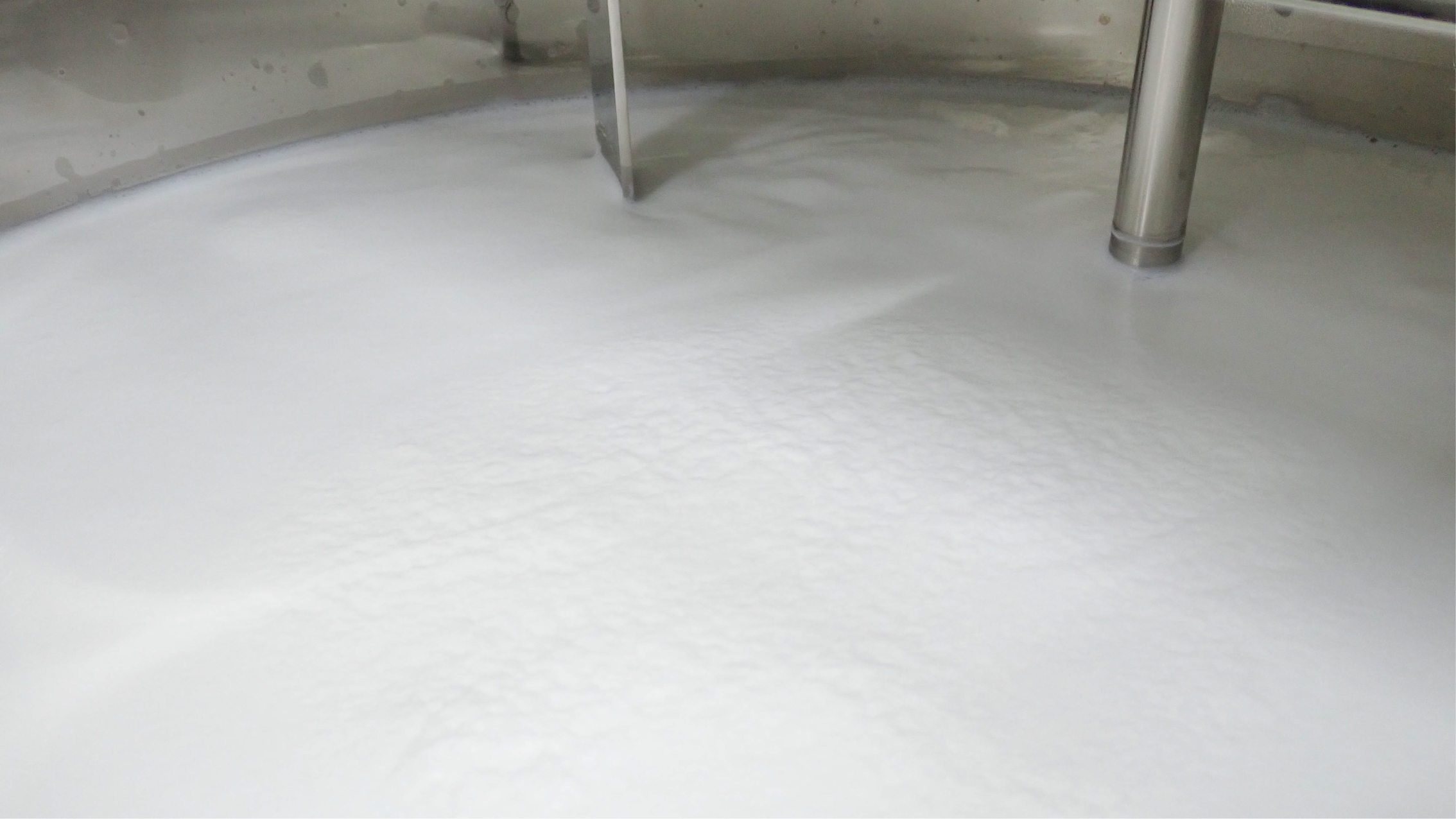
Matcha discharging through the aeration hopper
Matcha discharging cleanly through the aeration hopper, which resolves ratholing

Asked what tipped the decision toward MONOVATE among the manufacturers they considered, the answer was straightforward: the aeration hopper itself. It’s a MONOVATE-original product built specifically to solve matcha’s discharge problem, and nothing else compared. From the moment they saw that YouTube video, it was effectively MONOVATE or nothing.

Getting to a Confident Decision

Custom equipment like this is apparently rare in the tea industry, so this installation was a genuine first for the customer as well. They were careful throughout the demo testing and operator training process, making sure their own requirements came across clearly to MONOVATE’s sales and engineering teams — and by their own account, the project ultimately unfolded exactly the way they’d hoped.
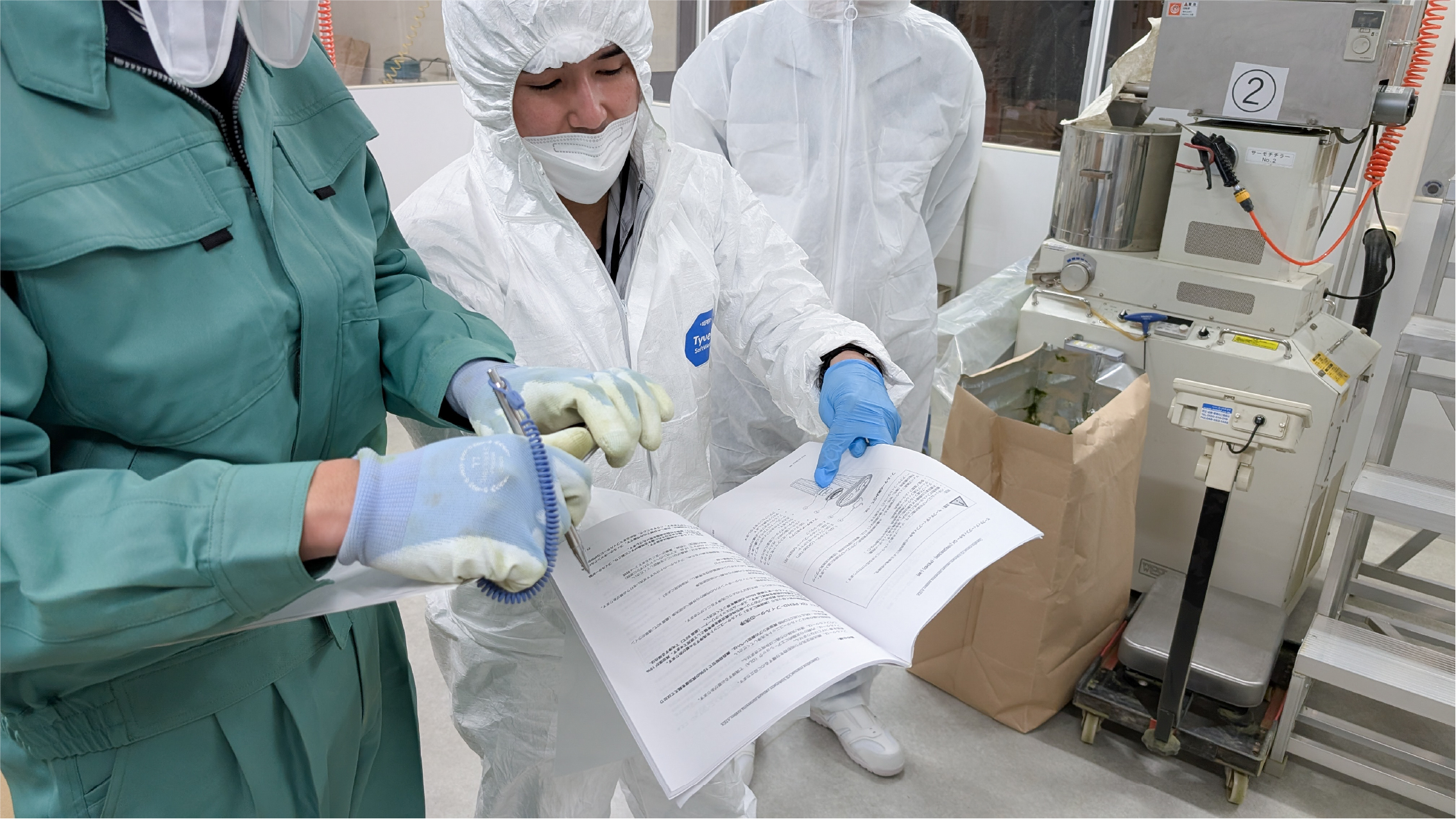
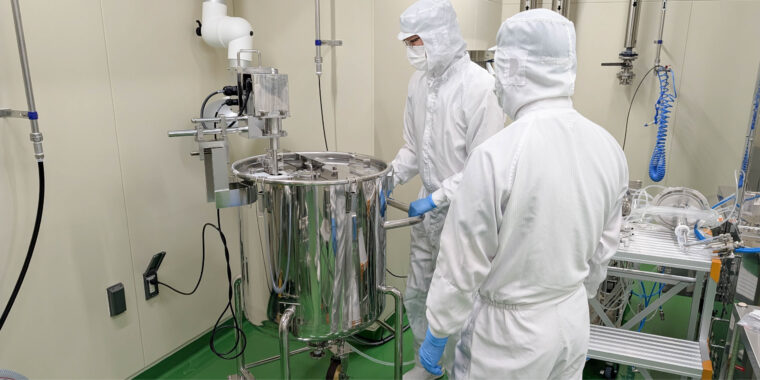
Operator training on the new equipment
Operator training on the new system

The Results So Far

The biggest win is that unattended overnight operation with five grinding mills running is now a reality — hitting a production target of 70kg a night, 3.5x the previous output.

The hygiene benefits are significant too. Because the powder’s entire path through the system is fully enclosed, with no open points anywhere along the route, the risk of outside contamination is kept extremely low.

And with the heavy lifting of 20kg powder bags gone, the work is no longer dependent on specific staff members. Everyone on the floor can now work safely, in a cleaner environment, and more efficiently — a change the customer considers highly valuable in its own right.

Lessons From Running It in Practice

The automated transport performed as expected, but running it in practice also surfaced matcha’s well-known tendency to stick to surfaces. More powder than expected was left behind inside the hoses and parts of the transport equipment — a finding they’re now taking seriously for ongoing operation.

Matcha varies in color from vivid to deep green depending on the grade, and any leftover powder mixing into the next batch affects that color. To address it, they’re testing their own maintenance approaches — trimming hoses to an optimal length and removing sharp bends to reduce buildup, and vacuuming the inside of the hoses with a tethered cloth.
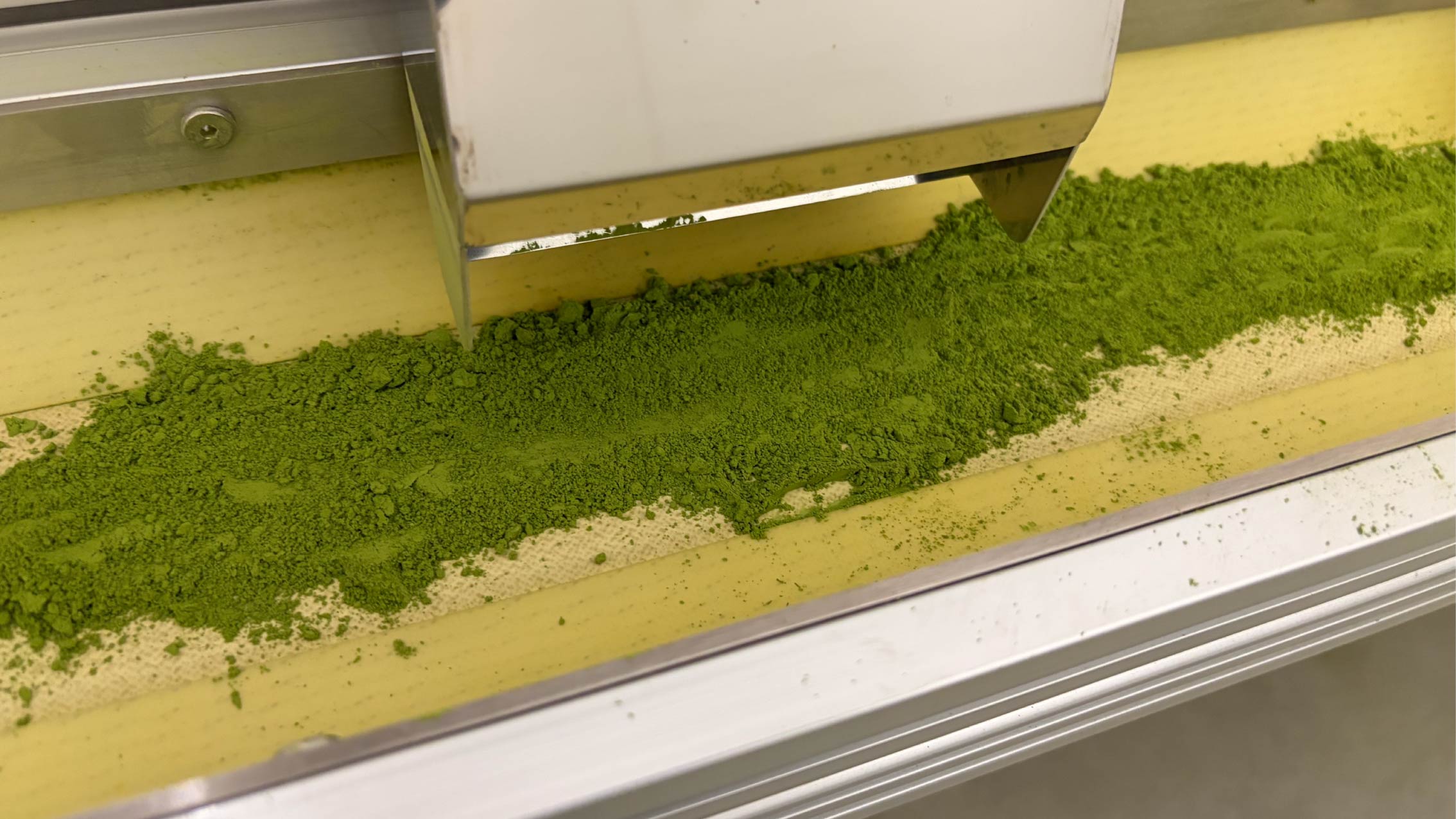
Matcha ground by the fine-grinding mills
Matcha freshly ground by the fine-grinding mills

What Could Have Gone Better

Looking back, they would have liked a single, unified proposal covering the upstream sieving machine as well — with direct coordination between equipment manufacturers and MONOVATE overseeing the delivery on-site as one package. Without CAD design software of their own, whether the different pieces of equipment would actually line up correctly on-site was their biggest source of uncertainty.

Having manufacturers coordinate directly and consolidate everything into a single drawing would have helped considerably. They’d also have appreciated having the manufacturer take full responsibility for safety management during delivery itself, given the forklift work involved in moving heavy equipment into place.

Would They Recommend It to Others?

Without hesitation. The entire tea industry is currently investing heavily in matcha — once the domain of a limited number of specialized tea shops, matcha production has opened up to a much wider range of producers thanks to technology like the fine-grinding mills used here. As more companies enter that space, the exact wall this customer hit — how to automatically collect a sharply increased output — is one many others will run into as well. They see this project, shaped by MONOVATE’s technology, as a strong potential solution for the industry as a whole.


Editor’s note: We’re told custom equipment installations are rare in the tea industry, which makes it all the more meaningful that our product was chosen for this kind of first-of-its-kind challenge. Facing a genuinely positive problem — the need to scale up — with a willingness to bring in the latest automation technology, rather than relying on tradition alone, was inspiring to see as fellow manufacturers. We’re especially glad that our aeration hopper became the key to solving matcha’s notoriously difficult discharge behavior. We hope this installation supports Suisouen Honpo’s continued growth, and opens up new possibilities for the tea industry more broadly. Thank you sincerely for your cooperation with this interview during such a busy time.
The Only Supplier Willing to Test It First: How a Custom Filtration Vessel Saved an R&D Team From an Expensive Guess

Case study: Custom suction filtration vessel

Challenge

  • Hitting a scale-up wall: moving from lab scale to a 100-liter process.
  • No standard product fit: nothing off-the-shelf matched what the new scale required.

Solution

  • Bringing the problem to MONOVATE: demo testing to determine whether suction or pressure filtration was the right approach.
  • A fully custom build: a suction filtration vessel supporting 240mm-diameter filter paper, delivered as a complete unit.

Expected Results

  • Enough filtration area: a custom design delivering the area a standard product couldn’t.
  • Filtration time on target: process adjustments brought filtration time within their working-hours target.

Customer profile: A manufacturer operating in the electronic components field, applying technology built up through its existing business to active R&D on new ventures.

What This Vessel Is Used For

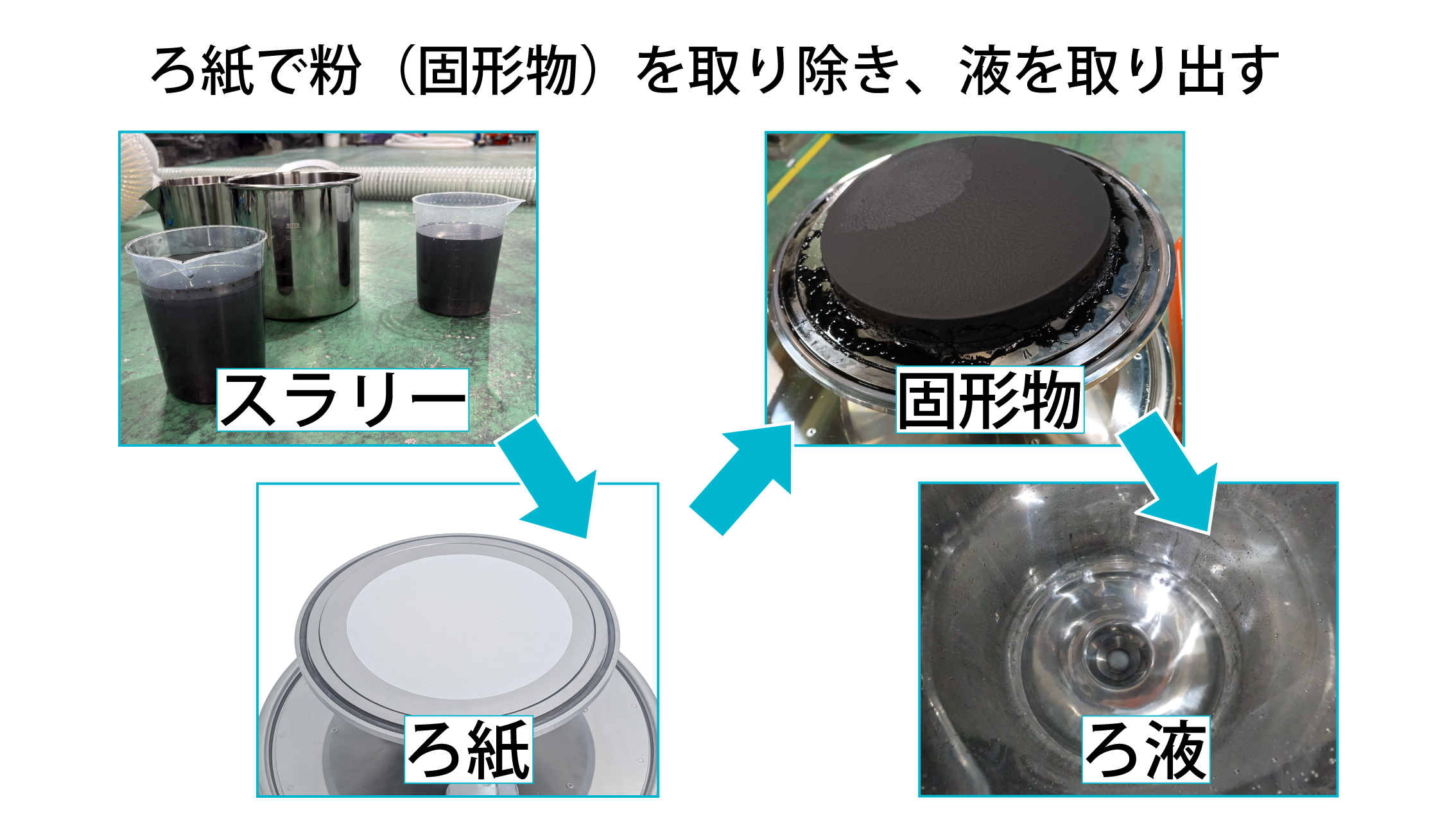
This vessel is used in a step that separates powder out of a liquid. The company’s research lab is developing a process to recover and regenerate valuable components found in powders derived from electronic materials — and what they actually need is the liquid left over after those components have been dissolved out. An upstream tank heats and agitates the material to dissolve out the target components; this suction filtration vessel then removes carbon and other powders, so the extracted liquid can move on to the next step.

Right now, the project is in the middle of scaling up from lab scale to a 100-liter process, and this vessel is part of that scale-up.

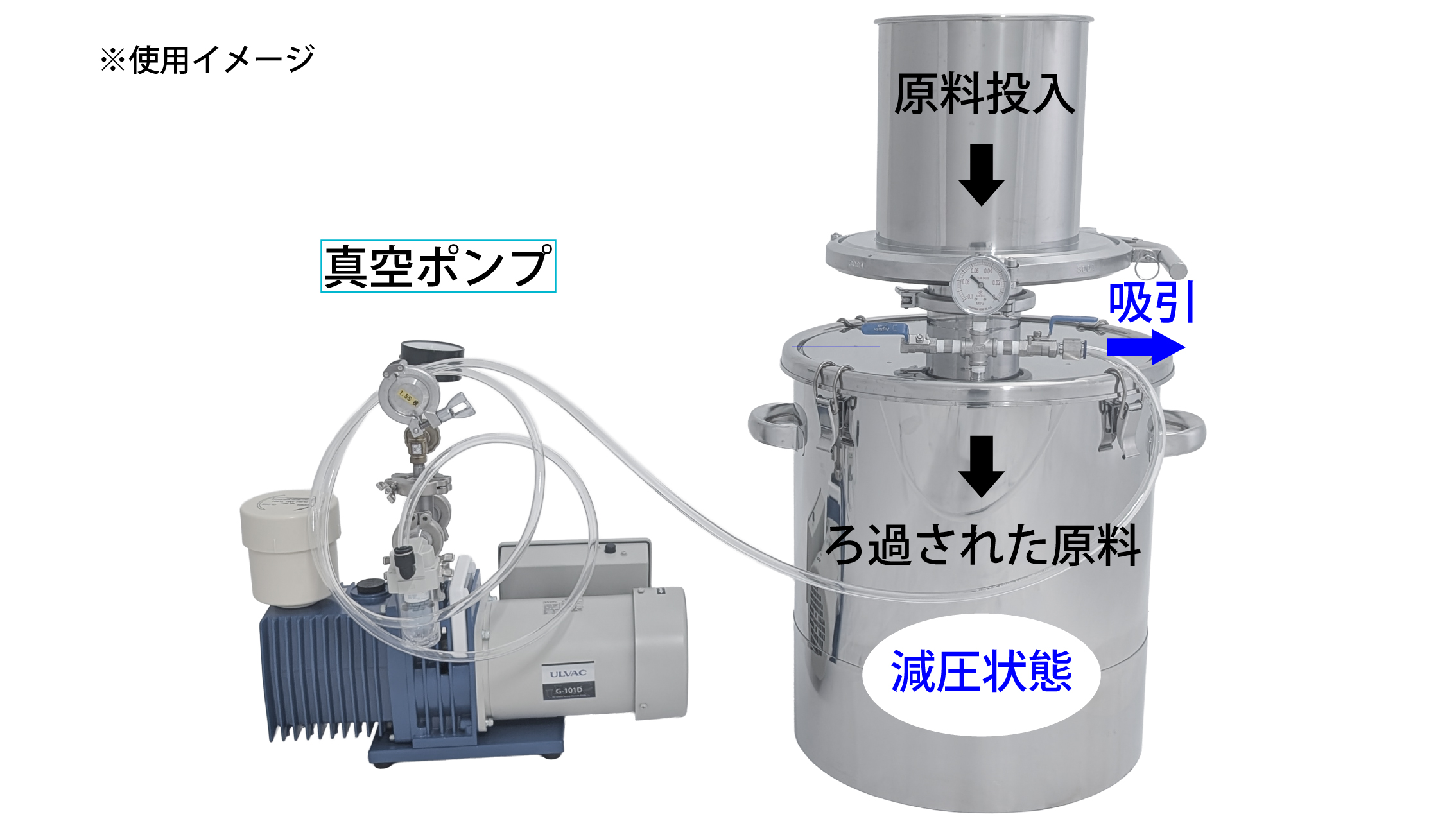
Suction filtration vessel in use, drawing a vacuum to pull liquid through the filter
A vacuum pump depressurizes the vessel, using suction to drive filtration

They’d previously bought their lab-scale filtration equipment through a distributor, and started looking for something larger — which is how they were introduced to MONOVATE. MONOVATE initially proposed an existing off-the-shelf model, and the customer nearly ordered it as-is. But looking closer, the filtration area seemed quite small relative to the receiving vessel below it, which raised a concern that filtration could end up far too slow — so they raised it with MONOVATE before committing. In hindsight, installing that standard unit without checking would have been a risky move.

From Demo Test to Custom Build

Two rounds of demo testing followed. The first compared standard suction filtration against pressure filtration, and settled on a direction: stick with suction, but increase the filtration area. The second built and tested an actual 240mm-diameter filter section, and once that produced solid results, the receiving vessel was built to match — the two delivered together as one complete unit.

Carbon filtration during the demo test
Filtering out carbon during the demo test

Running the demo test firsthand was, in their words, absolutely worth it. They’d had a rough sense of what filtration speed they wanted, but installing equipment untested and then discovering it was far too slow in practice would have left them with no way back. The test let them confirm exactly how many liters cleared in how many minutes, down to what the liquid’s color looked like afterward.

Notably, no other manufacturer they approached was willing to run a test like this beforehand. Given the cost involved, getting it wrong would mean spending more money and time fixing it after the fact — so having that kind of proof-of-concept up front, they say, is the best approach both for saving time and for building mutual trust.

On the customization side, MONOVATE never treated any request as off the table. Raising a concern about the filtration area got an immediate, concrete customization proposal back. Other manufacturers, in their experience, would stay engaged and attentive, but the actual output often fell short — this was a different experience entirely.

Working through the demo test together
Working through combinations of existing components together during the demo test

Operating It Since Installation

With the right operating approach, the vessel runs without clogging. The liquid coming from the upstream process contains fine powder, and filtering it directly tends to clog the filter paper quickly. Through some trial and error on the operating procedure, filtration time now comfortably fits within their target window — a meaningful result, since every step in the process needs to finish within a fixed working-hours schedule.

What Matters Most When Choosing an Equipment Supplier

Easy communication and genuine follow-through on after-sales support matter most. They’d previously split orders across multiple companies and struggled when coordination between them broke down. Safety specifications matter too — their internal safety requirements are fairly strict, so a lower price that comes at the cost of safety specs is a real risk. They’d rather work with a supplier willing to have that conversation, even if the price is higher.

On that front, despite the physical distance between their site and MONOVATE’s, communication was easy — MONOVATE even scheduled a demo test around a trip the customer already had planned to Tokyo, which they appreciated.

What’s Next

The immediate priority is building solid data showing no meaningful gap between this scale and lab results. Later process steps will likely need their own equipment as well, and once internal direction is set, they’d like to bring that to MONOVATE too.


From the sales team: Thank you for the opportunity to share this as a case study. The customer walked us through their thinking and goals in real detail, and it was a genuinely valuable conversation for us as well. We don’t see equipment as finished the moment it’s delivered — we hope to remain a resource this customer can turn to whenever something comes up, for a long time to come.

Editor’s note: This conversation, from a research team pushing from lab scale into the next stage, captured a real dilemma: standard products don’t have the specs you need, but you can’t afford to just install something and find out it doesn’t work. Working through each option via demo testing, and building the custom vessel together step by step, was R&D collaboration in its truest form. The more ambitious the project, the more often standard equipment falls short — and we’re glad a simple question, “could you build something like this,” could take shape the way it did here. We hope this case offers a useful reference for other research and development teams hitting their own scale-up wall. Thank you for the thorough tour of your facility during a busy schedule.

Cracked, Stained, Hard to Clean: Why This Deodorant Manufacturer Finally Replaced Its Resin Tank with Stainless

Case study: Upgrading from a resin tank to an electropolished stainless tank

Challenge

  • An aging resin tank: years of use had left it hardened, cracked, and scratched, with grime settling into the scratches and dents.
  • Staining and cleaning burden: colorant soaked into the resin, and the tank needed antibacterial treatment and heavier cleaning to keep up.
  • An old propeller mixer that “misbehaved”: running it hard sent liquid splashing over the sides, so they couldn’t mix as aggressively as they needed to.

Solution

  • Upgrading to an electropolished stainless tank: an interior finish that resists buildup and contamination.
  • Adopting a Bernoulli-flow mixer: confirmed on the actual machine to run hard without splashing, mixing evenly without disturbing the surface.
  • Keeping the same 500L capacity: a smooth, drop-in replacement with no need to change the batch size.

Expected Results

  • Better cleanability and sanitary performance: solving the resin tank’s core weakness of grime settling into scratches.
  • No more color staining: without colorant soaking into the surface, cleaning becomes far less work.
  • Room to expand into more product lines: better cleanability should make it easier to manufacture a wider range of products.

Customer profile: A manufacturer of deodorizing and antibacterial products, built around natural-origin ingredients with a focus on balancing effectiveness and safety.

The Process, and the Problem Before the Upgrade

The newly installed equipment is a 500-liter stainless mixing tank fitted with a Bernoulli-flow mixer, with an electropolished interior finish. It’s used to prepare the raw materials that go into the company’s deodorizing products.

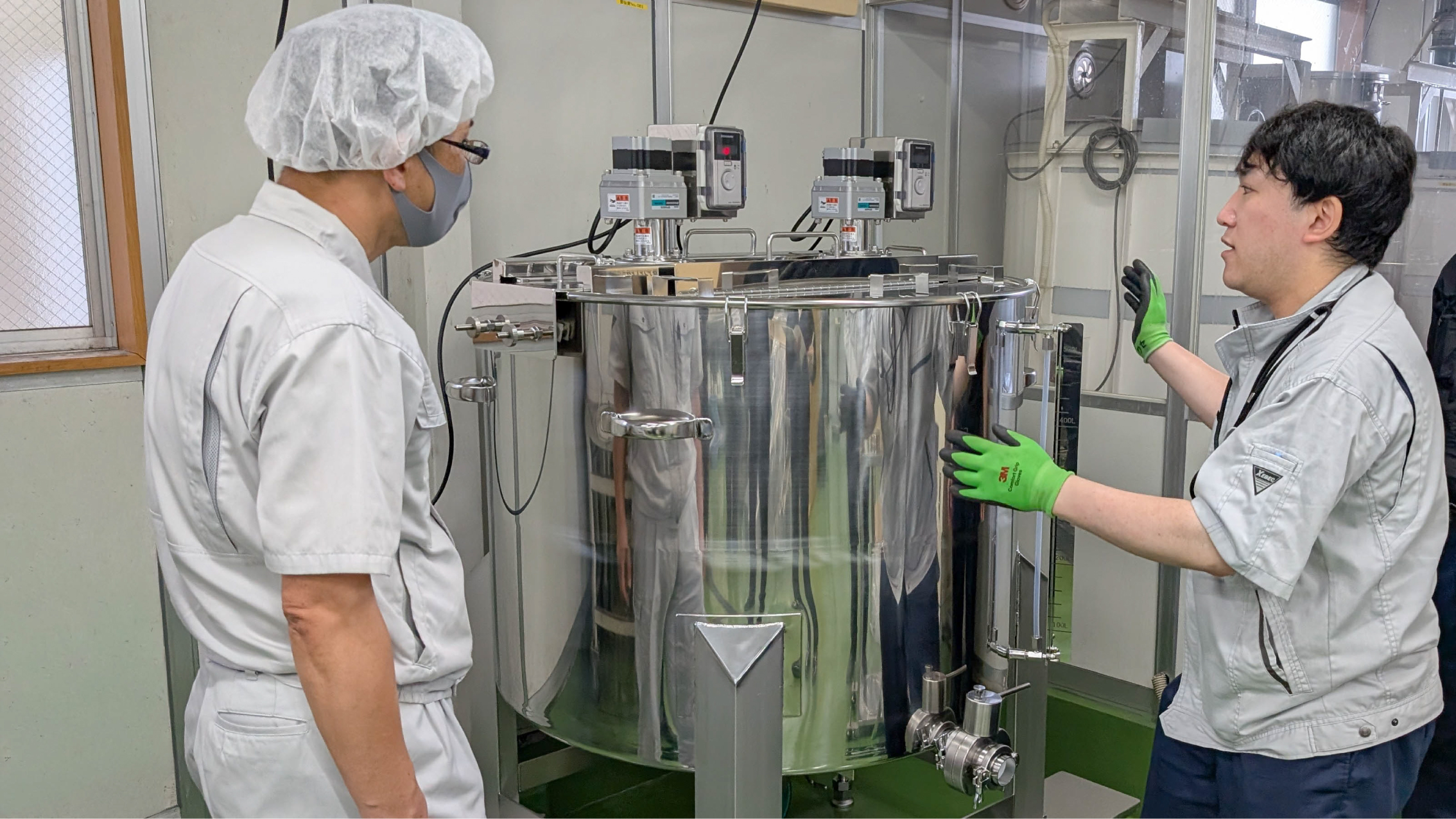
The newly installed 500L stainless tank
The newly installed 500-liter stainless tank, fitted with two mixer units

Before this upgrade, the company used a resin tank. Over years of use, the resin hardened, cracked, and picked up scratches on the interior. Grime worked its way into those scratches and dents, which they managed by relying on antibacterial agents. On top of that, colored products containing colorant would stain the resin itself, and as the material degraded, cleaning only got more time-consuming.

The old mixer was a simple propeller type. Run it hard, and the liquid surface would churn and splash over the sides — which meant they always had to hold back on mixing intensity, and handle the equipment carefully.

The previous resin tank, same 500L capacity
The previous resin tank — the same 500L capacity as its stainless replacement

Behind the Decision to Upgrade

MONOVATE had already supplied this customer with boiler equipment and a temperature-controlled tank around five years earlier, and the idea of eventually replacing the resin tank had been on their minds ever since. Budget constraints kept pushing the decision back, until this year, when they finally moved forward.

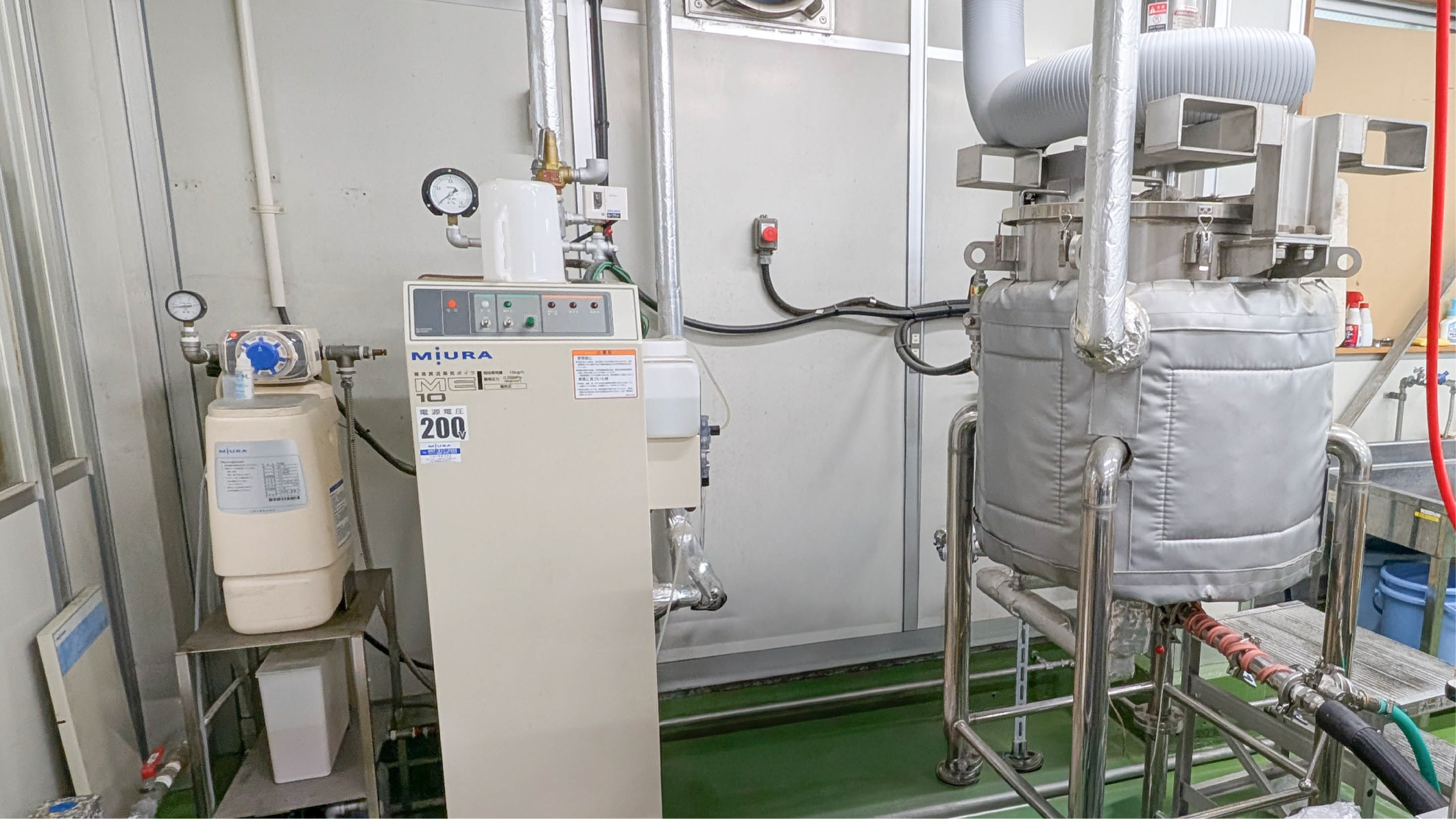
Boiler and temperature-controlled tank equipment delivered around five years earlier
The boiler and temperature-controlled tank equipment MONOVATE delivered roughly five years earlier

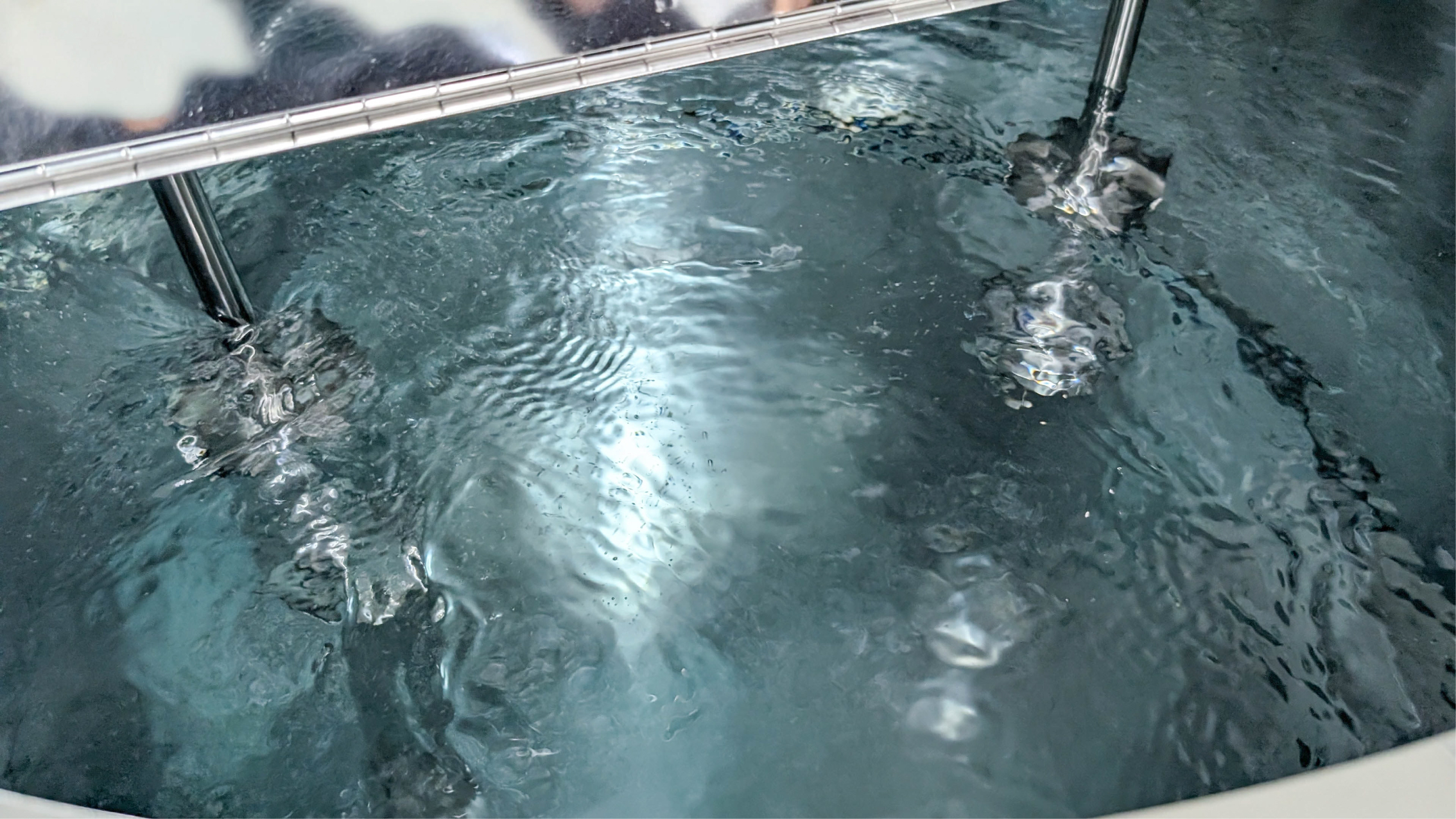
For the mixer, MONOVATE’s sales team recommended a Bernoulli-flow mixer as a versatile, all-purpose choice. Seeing it run in person — and confirming that the liquid surface stayed calm even at speed — was enough to convince them. Because a Bernoulli-flow mixer can run fast without splashing, it may also come in handy down the line if they need to work with ingredients that are harder to dissolve.

MONOVATE also proposed a larger 1,000-liter tank, but the customer opted to keep the original 500-liter capacity, allowing for a straightforward, drop-in replacement without changing their batch sizes. For the material finish, they chose an electropolished interior — a high-grade surface treatment that uses electrical current to smooth the surface at a microscopic level, reducing residue buildup — specifically to improve sanitary performance and resist grime.

Water test showing a calm surface even at high mixing speed
A water test: even at high speed, the surface stays calm rather than churning

What They’re Expecting from the New Equipment

With stainless steel — and an electropolished finish on top of that — they expect far less risk of grime working its way into scratches, the way it did with resin. Without colorant soaking into the surface anymore, cleaning should get considerably easier.

Because stainless cleans more thoroughly, they also expect improved cleanability to open the door to manufacturing a wider range of products on the same equipment.

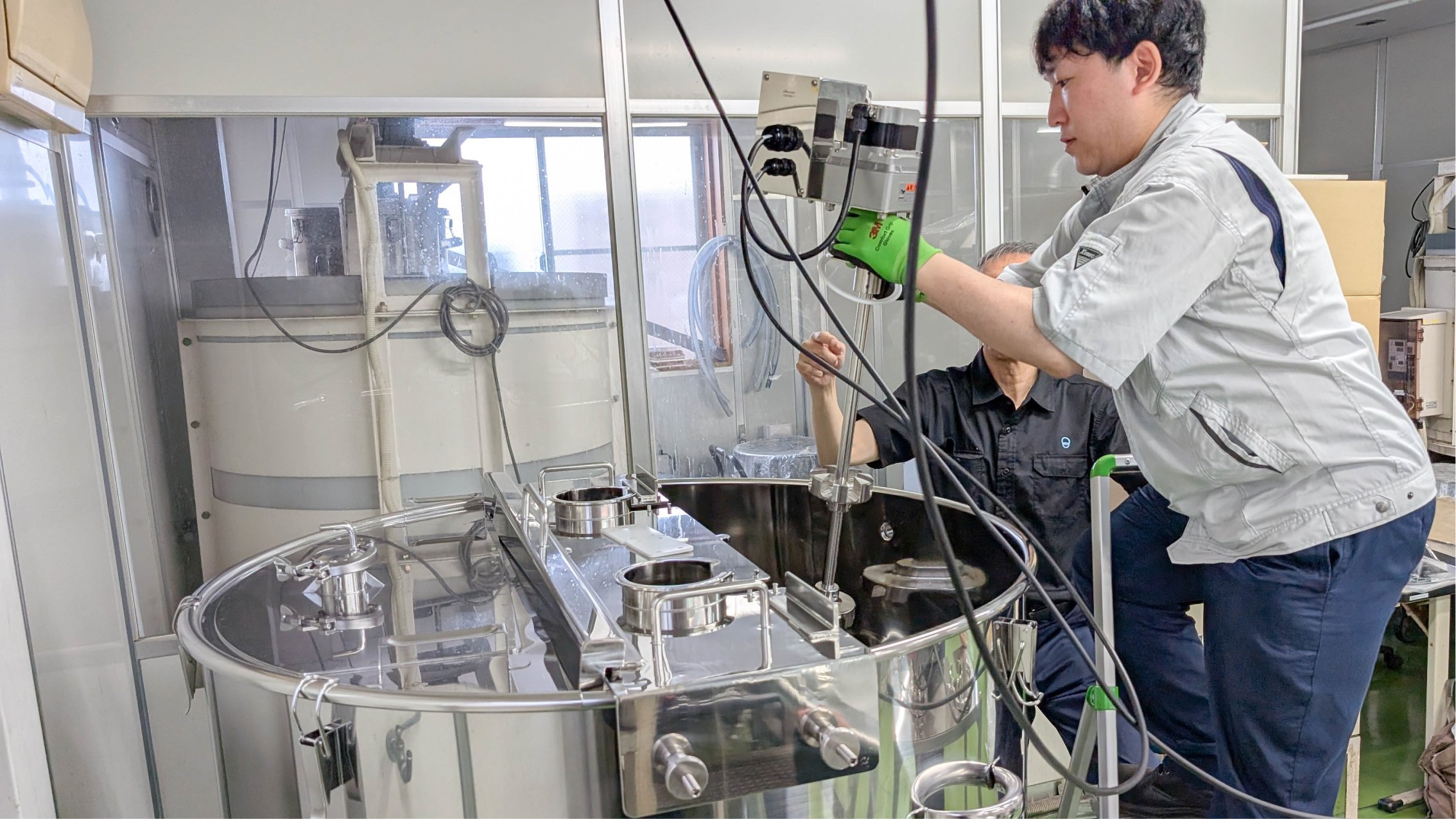
IQOQ (installation and operational qualification) in progress
IQOQ (installation and operational qualification), confirmed on site with MONOVATE’s technical staff present

What’s Next

If this first stainless tank performs well, the plan is to keep converting more equipment to stainless over time, budget permitting. Capital investment decisions like this haven’t always been easy to commit to — which is exactly why they’re taking the approach of installing one unit first, confirming it works, and then expanding gradually from there.


Editor’s note: It genuinely meant a lot to us that this customer thought of MONOVATE again for this upgrade, five years after our first project together. Picturing how much more comfortable day-to-day work will feel with better cleanability and mixing performance made us feel invested in the outcome ourselves. Thank you for taking the time to talk with us during such a busy IQOQ schedule.

Five Years, One Stubborn Lid: How MONOVATE Finally Solved a 240-Year-Old Miso Maker’s Ongoing Problem

Case study: Temperature-controlled tank, five years of after-sales support

Challenge

  • Manual mixing was exhausting: staff had to heat and stir each product by hand, staying with it the whole time.
  • Batches were small: only a limited volume could be made at once.

Solution

  • Discovering MONOVATE at a trade show: found a temperature-controlled tank (heater unit) at FOOMA JAPAN.
  • Testing before committing: verified the results with their own miso before installing.

Result

  • Manual work dropped sharply: temperature control became semi-automatic, freeing staff from constant attention.
  • Batch sizes grew significantly: far more product per run than before.

Customer profile: Kokuhira Miso Brewery, founded in 1784 in Obuse, Nagano Prefecture. For more than 240 years, the company has continued naturally brewed miso production, alongside koji-based products such as amazake, salt koji, and roasted miso.

On the Production Floor, Before the Upgrade

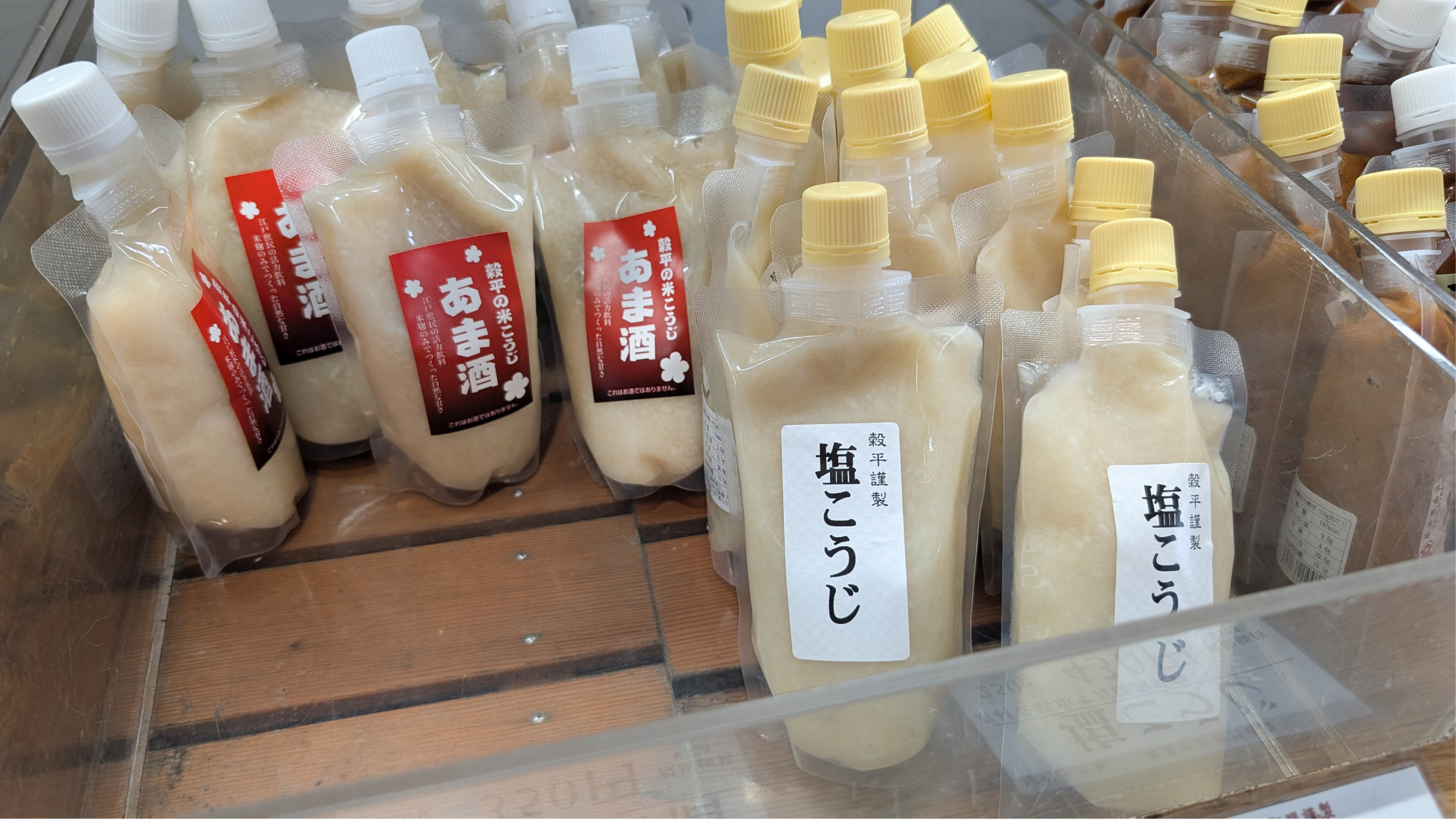
This tank is used to make amazake, salt koji, and roasted-miso products — all koji-based foods. Amazake is heated to around 50–60°C, roasted miso to around 90°C. Because both involve a saccharification process, precise temperature control matters a great deal.

Amazake and salt koji made with this temperature-controlled tank

Before installing this equipment, the heating method changed depending on the product. Lower-temperature items like amazake (50–60°C) were heated in roughly 30-liter pots with immersion heaters, essentially a water bath. Higher-temperature items like roasted miso, closer to 90°C, were heated directly over an open flame. Either way, staff had to stir by hand while watching a thermometer — exhausting work, and the batch size stayed small no matter what.

Discovering the Tank, and the Decision to Install It

They first came across MONOVATE’s temperature-controlled tank at the FOOMA JAPAN trade show, and thought it might actually work for them — enough to make a special trip to MONOVATE’s Yashio plant to see it in person.

Before committing, they sent about 20kg of their own miso for a mixing test. It went well, and that result was what gave them the confidence to move forward with the purchase.

A Problem That Lingered for Years, and a Visit in Year Five

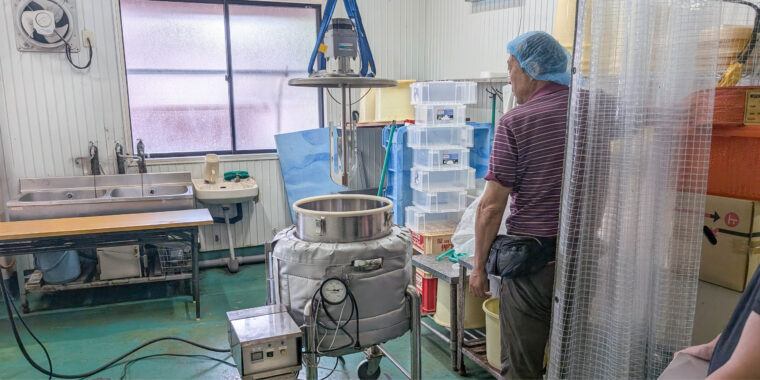
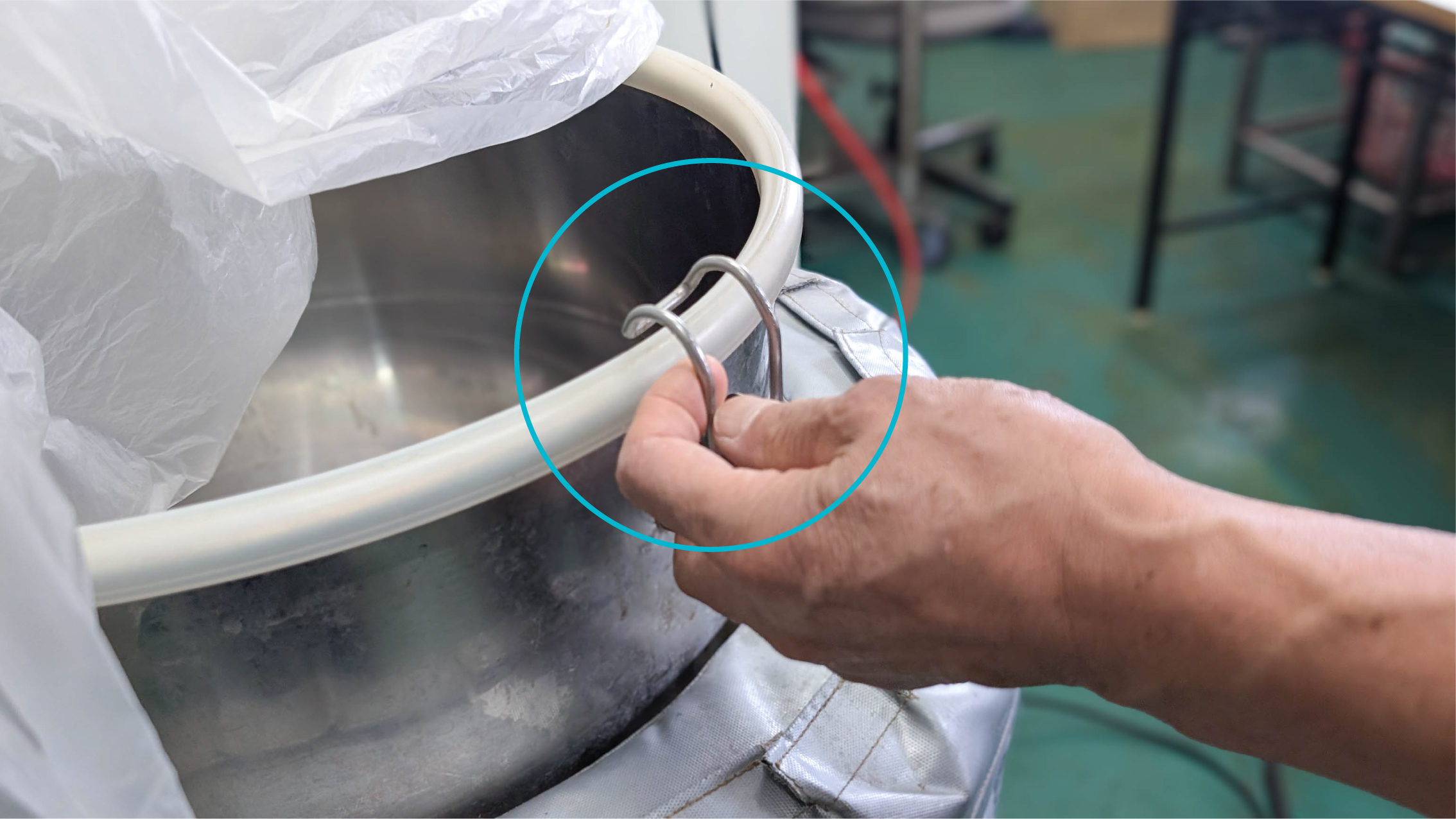
Asked candidly, five years in, whether anything had been less than ideal: yes — the lid would spin. The anchor-type impeller (designed to scrape thick contents off the walls and bottom while mixing) worked fine in the pre-purchase test, which used miso in paste form. But early in amazake production, the mixture is still mostly rice koji and water — high in solids and high in resistance. Turning it required strong torque, and the catch clips holding the tank lid in place couldn’t withstand that force. They’d deform, and the lid would spin right along with the impeller.

When that happened, staff had to physically hold the lid down, or stop mixing altogether and stir by hand while the temperature gradually softened the mixture through saccharification — sometimes staying with it for two to three hours at a stretch. Every time a clip deformed, they’d hammer it back into shape, worried it would eventually give out for good. It had been an inconvenience from almost the moment the tank was installed.

Catch clip securing the lid
The catch clip securing the lid — deformed repeatedly by the force of mixing

The issue surfaced through a customer satisfaction survey, which brought MONOVATE’s sales representative out to the site in person to hear about it directly. Having someone actually show up and listen, they said, was in itself a relief — even though it had taken far too long to get there.

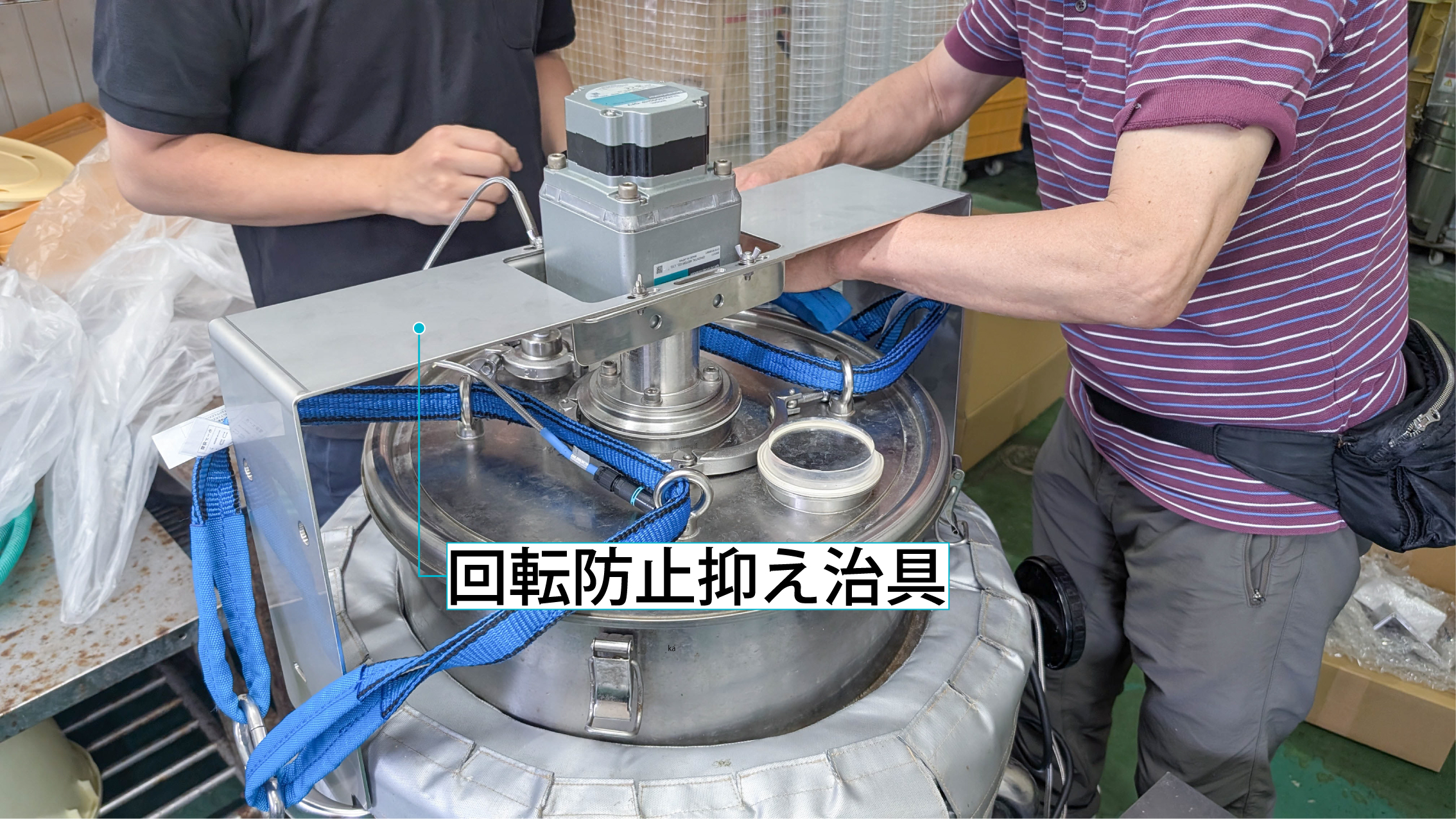
MONOVATE then built a jig to keep the lid from spinning and returned to install it. Trying it out for the first time, the response was simple: hopefully this keeps it from spinning — and thank you. Anything better than before would be welcome.

Jig built to stop the lid from rotating
The jig MONOVATE built, based directly on feedback from the floor, to stop the lid from rotating

Day-to-Day Operation, and What’s Next

Given how much temperature precision matters, day-to-day operation still takes a practiced hand. Left running automatically, the heater can overshoot the target temperature and keep climbing. So staff watch the jacket temperature (the heating layer around the outside of the tank) and switch the heater off just before the target — say, at 60°C — letting residual heat carry the mixture the rest of the way. Because the saccharification stage is temperature-sensitive, that judgment call still requires close attention, even now.

Temperature-controlled tank with the jig installed
The temperature-controlled tank, now fitted with the anti-rotation jig

Looking back at how much has changed: it’s a completely different operation from the manual days, when staff were constantly stopping to stir by hand while watching a thermometer. Now, heating and mixing run semi-automatically, and day-to-day work is far easier. Batch sizes have grown substantially too. Five years in, the tank has run with no major problems — and, they add, when a manufacturer genuinely listens to feedback from the floor and acts on it, the equipment only gets better from there.


Editor’s note: Hearing this story five years after delivery, we couldn’t help but reflect honestly on how long it took us to respond. The lid-spinning issue had been an ongoing inconvenience for a long time, and we’re grateful the customer didn’t give up on us and instead shared that feedback directly. Equipment isn’t finished the day it’s delivered — if anything, the feedback that surfaces after years of real use is exactly what’s worth taking seriously. We’ll be watching closely to make sure the new jig keeps doing its job. Thank you for such a warm welcome during a busy time.
“Stir Too Little, It Sinks. Stir Too Much, It Breaks”: Inside a Pharma Manufacturer’s Toughest Mixing Problem

Case study: Pharmaceutical manufacturer custom mixing tank

Challenge

  • Heavy manual transport: 20-liter batches of liquid had to be carried by hand from a separate mixing room to the production room.
  • Mixing that depended on one person’s feel: with an air-driven mixer, speed was hard to control, and operators had to watch for sinking, foaming, and separation, adjusting by experience alone.

Solution

  • A custom 150-liter mixing tank: purpose-built around the exact behavior of this liquid.
  • A two-tier Bernoulli-flow mixer: strong enough to keep mixing all the way to the bottom of the tank, without whipping in excess air.
  • A detachable controller and a custom motor cover: a controller that unclips for cleaning, and a cover that shields the motor from powder and liquid.

Expected Results

  • Consistent quality even with a difficult liquid: the Bernoulli-flow mixer suppresses settling, foaming, and emulsion breakdown, keeping the mixture uniform at all times.
  • Up to 7–8x more output with a tenth of the manual labor: scaling from 20L to 150L means far larger batches in a single run.
  • Less room for human error: mechanizing the process removes the dependence on individual skill.

Customer profile: Nippon Chemiphar Pharma Co., Ltd., founded in 1960, a group company of drug developer Nippon Chemiphar. The company manufactures and sells prescription medicines centered on generics, with a focus on solid oral dosage forms that support quality-driven healthcare in Japan.

The Process — and the Problem Before the Upgrade

This tank produces granule coating liquid: a liquid used to coat roughly 100-micron granules before they’re formed into tablets. Once made, the liquid is fed slowly — over more than six hours — into a fluidized bed granulator-dryer, which handles granulation and drying at the same time.

Granule coating liquid produced by this equipment
The granule coating liquid produced with this equipment

Previously, production ran at around 20 liters, with the mixing room physically separate from the production room — meaning the liquid had to be transferred into containers and carried over by hand. That alone was a significant physical burden on staff.

The second issue was that mixer operation depended entirely on individual skill. With an air-driven mixer, rotation speed was difficult to fine-tune, so operators had to judge the mix visually and adjust based on experience. Too little agitation and the ingredients would settle; too much, and foaming would start, or the emulsion would break and separate. Someone had to watch continuously for proper mixing and foam — and every adjustment relied on judgment built from experience.

The move to a 150-liter tank came with a plant relocation to a new building, which was the original opportunity to scale up. But this particular liquid has very sensitive mixing requirements, so MONOVATE built a fully customized tank around it — including a two-tier Bernoulli-flow mixer arrangement tailored to the liquid’s behavior.

The Custom Specification Behind a Difficult Liquid

The liquid needs constant agitation throughout production. It looks thin and watery, but it contains components that settle out if left still for as little as 15 minutes. At the same time, it contains an emulsifier, so mixing it too aggressively breaks the emulsion and causes separation — similar to what happens when you heat mayonnaise and it splits. Foaming has to be avoided too. In short: agitation is essential, but it can’t be too strong.

The Bernoulli-flow mixer solved exactly that problem — it draws in very little air while still delivering strong mixing power. A demo unit was tested with the actual liquid, and the results were excellent. The impeller was configured in two tiers, so mixing continues effectively even after more than six hours, once the liquid level drops close to the bottom of the tank.

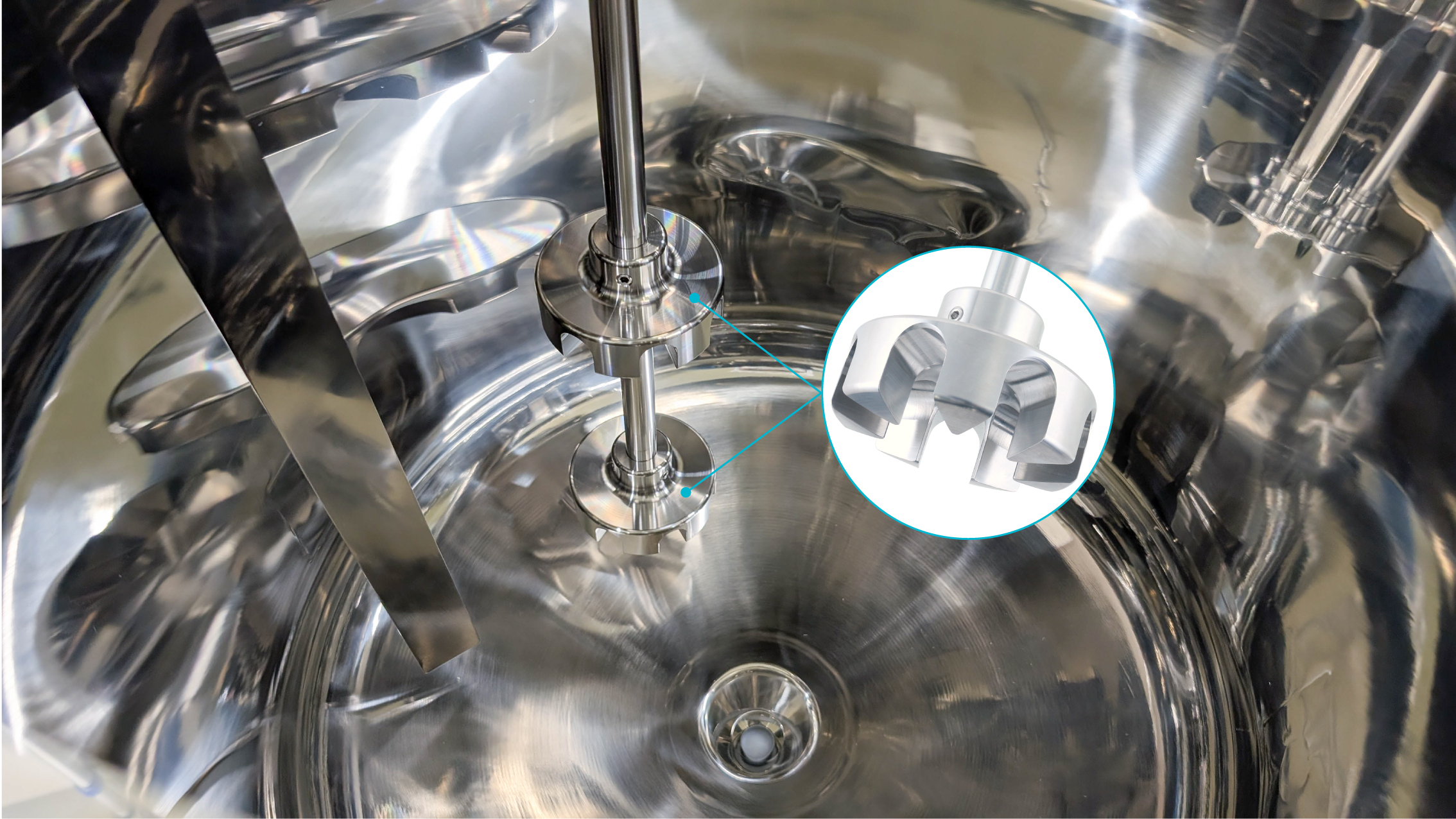
Two-tier Bernoulli-flow mixing impeller
The two-tier Bernoulli-flow mixing impeller

Two other details were customized further. The original proposal used a non-waterproof controller fixed with a knurled knob, which had to be removed every time the tank was cleaned — a recurring hassle for operators. MONOVATE redesigned it as a hook-mounted controller that detaches easily and can be set aside during cleaning, so operators no longer have to worry about splash water near it.

A cover was also added around the motor. Because the room handles both powder and liquid, any buildup on the motor’s uneven surfaces would make cleaning difficult. Reaching the final specification took repeated rounds of discussion — the customer describes it less as “leaving it to the manufacturer” and more as something built together.

Detachable controller and motor cover
The detachable, hook-mounted controller and the motor cover

Why This Pharmaceutical Manufacturer Chose MONOVATE

Among the many manufacturers they considered, the deciding factor was the speed of response from MONOVATE’s sales representative. Where other companies’ sales reps would say “let me check” and then go quiet for a while, MONOVATE turned design feedback around genuinely fast — and came back with additional proposals on top of what was asked, offering perspective as a professional partner rather than just an order-taker. Response speed aside, the cost advantage was significant as well.

Pharmaceutical manufacturers also have to vet suppliers formally before selecting equipment for their plants, evaluating business scale, structure, and support. It’s often compared to buying a car: you wouldn’t buy from a manufacturer with weak quality assurance or support, and manufacturing equipment is no different. MONOVATE already had a track record with this customer on a previous tank installation, backed by solid support — which made it easy to trust them with this project too.

MONOVATE also provided IQ (Installation Qualification) document templates in advance, which made the process go far more smoothly. Whether or not a supplier can provide that kind of documentation up front, they note, makes a real difference.

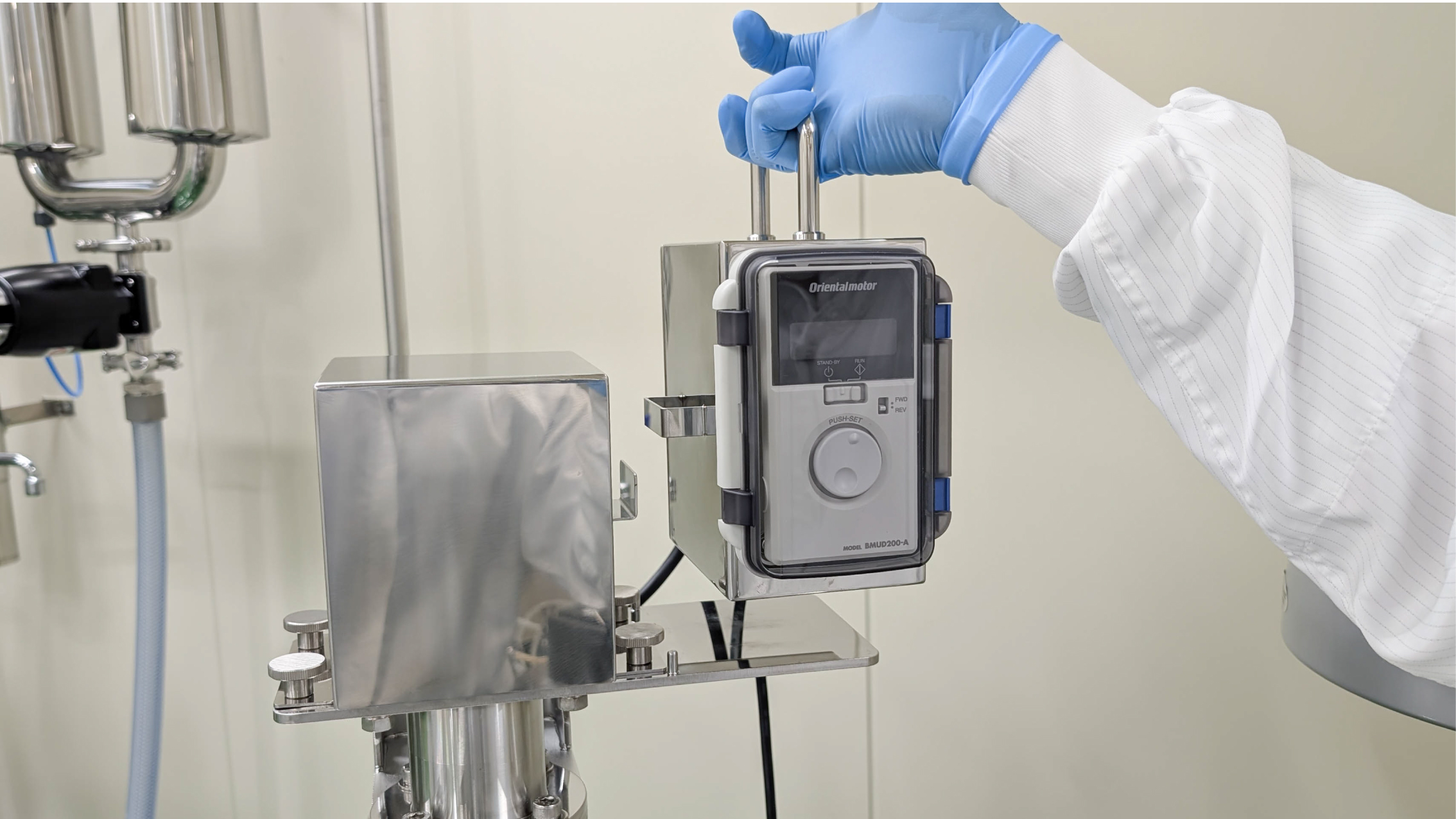
Discussion around the tank during the project
Working through the details together around the tank

The Results They’re Expecting

Manual labor is expected to drop to roughly a tenth of what it was. Running 150 liters without this tank would mean staff repeatedly tracking the clock and feeding the liquid in through 30-liter containers, three to four times over.

With the Bernoulli-flow mixer now suppressing both settling and foaming continuously, the liquid can instead be fed steadily through a hose over more than six hours straight from the tank — eliminating the batch-carrying work entirely. Scale increases 7–8x, and overall efficiency goes up with it.

Human error risk drops too. Operators no longer need to continuously monitor mixing consistency and foam by eye; setting the rotation speed on the machine gives everyone the same result, removing the dependence on any one person’s experience.

When the change was explained to the operators who’d be using it, the reaction was straightforwardly positive: relief that the workload was about to get lighter.

What’s Next

The customer feels MONOVATE was able to turn their intent into a real, working design. They’re now looking into a 350-liter tank as a next step, and plan to keep working with MONOVATE on future proposals and advice.

What stood out most, in their words, was MONOVATE’s ability to deliver genuine customization while still meeting pharmaceutical industry regulatory requirements.


Editor’s note: The more we heard about this liquid — thin enough to look easy to handle, yet prone to settling, and just as prone to breaking apart if mixed too hard — the clearer it became how difficult it really was to work with. What stood out throughout the interview was how often the customer described the process as something built together, rather than simply handed off to a manufacturer. We’re glad our sales and design teams could walk alongside a customer who had such a clear sense of what they wanted and helped turn it into reality, step by step. We hope this case offers a useful reference for anyone in pharma or food manufacturing wrestling with a liquid that settles, foams, or separates too easily. Thank you for the generous, detailed tour of your facility.

Why a Craft Brewery Chose MONOVATE Over Cheaper Imports for Its Entire Direct-Fire Brewhouse

Case study: Craft brewery equipment installation

Challenge

  • No domestic equipment fit their brewing style: nothing in Japan offered direct-fire brewing at small batch sizes.
  • Language barriers with overseas suppliers: concern that specifications and requests wouldn’t translate.
  • Repair risk with imported equipment: welding defects showing up before first use, with repairs costing hundreds of thousands of yen.

Solution

  • A full lineup from one domestic manufacturer: everything from the hot liquor tank to fermentation and the chiller.
  • Seeing the equipment running first: a visit to a brewery already using the same model before deciding.
  • A proposal tailored to the local climate: a chiller capable of both heating and cooling to handle Iwanuma’s cold winters.

Result

  • A complete brewing system: from mashing through fermentation, now pouring four taps at all times.
  • Hands-on brewing, the way they wanted it: small-batch brewing where they can judge the fire by feel.
  • Ongoing support after the sale: adjustments that came up after startup are worked through together.

Customer profile: Iwanuma Craft Beer Workshop, a craft brewery and taproom in Iwanuma City, Miyagi Prefecture. Just two people handle everything from brewing to serving, with a mission to brew beer that matches the local palate.

The Beer, and the Equipment Behind It

The brewery produces three core beers plus seasonal, limited-run brews, sometimes pouring guest beers from other breweries alongside them — always four taps running. The goal: beer people want to drink every day, brewed to match the taste of the local community.

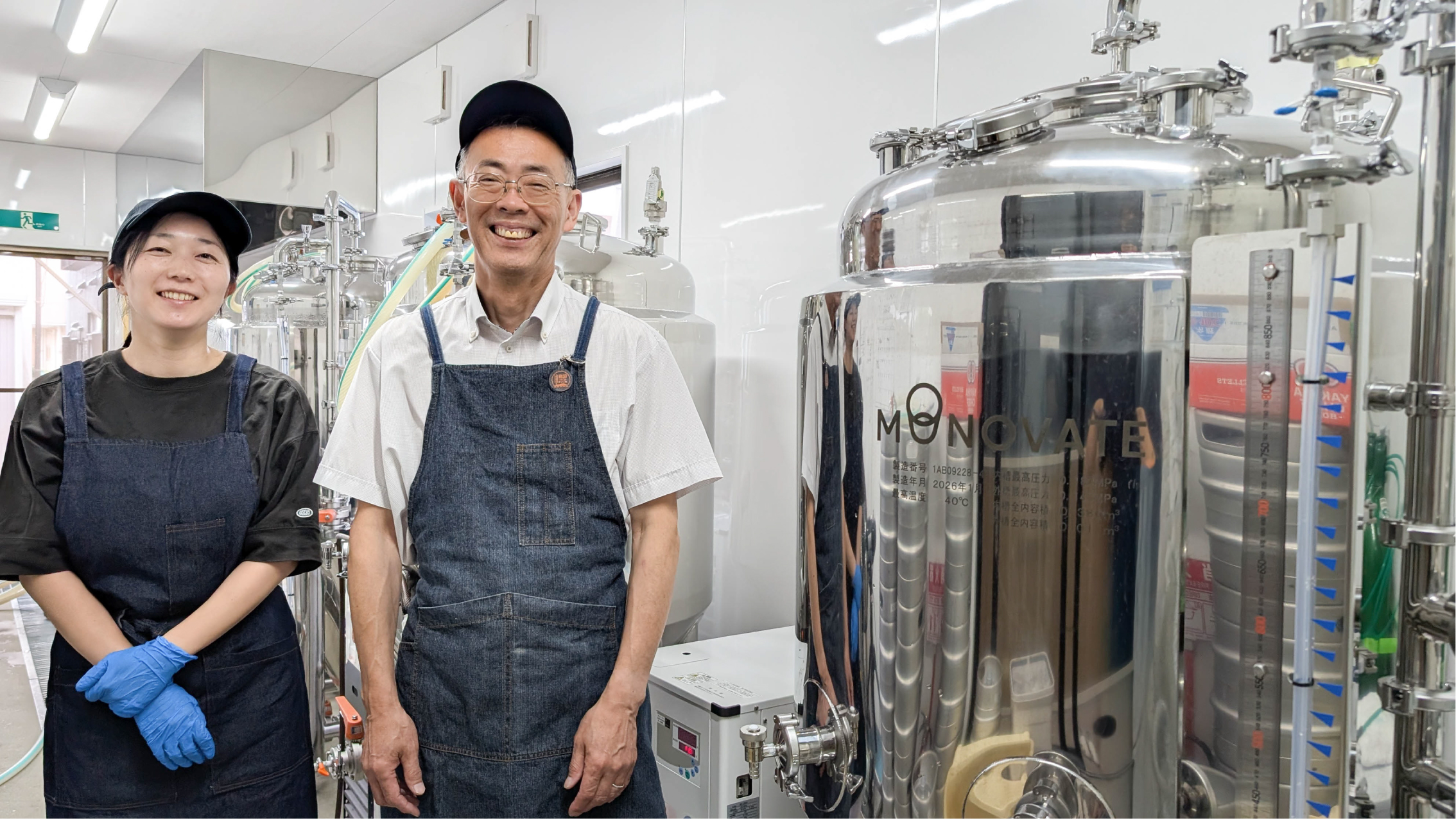
Iwanuma Craft Beer Workshop representative and staff
The two-person team behind the brewing and the taproom

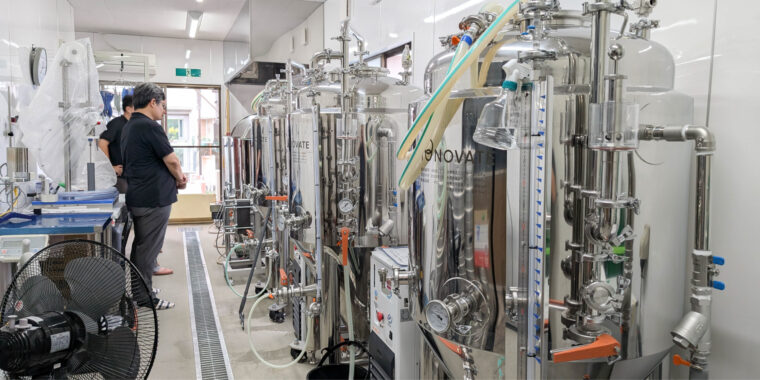
Brewing starts with heating water in the hot liquor tank, converting malt into wort in the mash tun, then boiling it with hops in the boil kettle. The wort is rapidly cooled through a heat exchanger and moved into the fermentation tank, where yeast takes over. The full equipment lineup supplied by MONOVATE covers this entire process in one package:

  • Hot liquor tank (heats and holds the brewing water)
  • Mash tun (converts malt into wort)
  • Boil kettle (boils the wort with hops)
  • Pump
  • Plate heat exchanger (cools the wort after boiling)
  • Three conical fermentation tanks
  • Chiller (circulates cooling water, with both heating and cooling capability)

Each tank holds 300 liters, with the three fermentation tanks rotating through the brewing cycle.

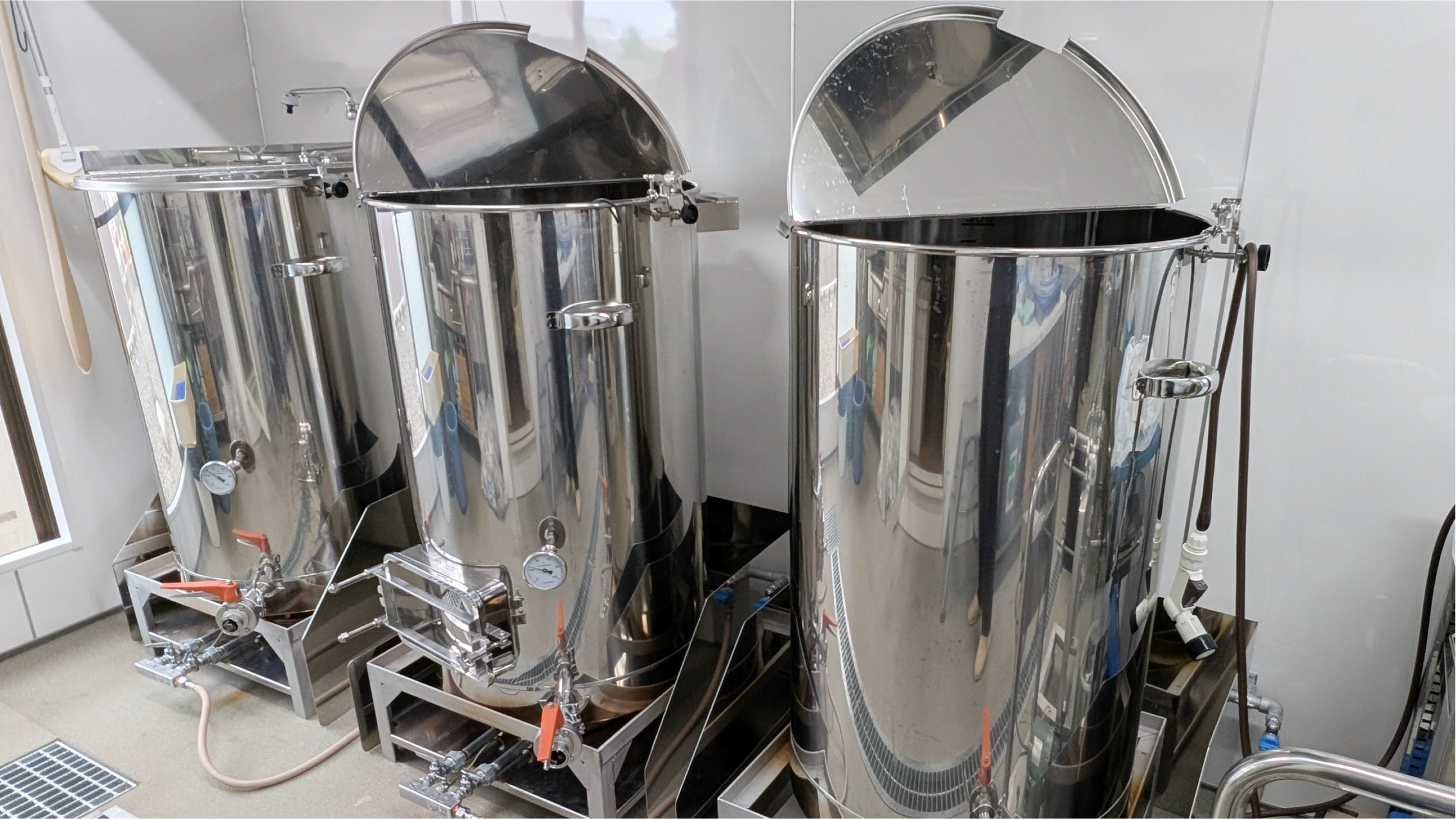
Hot liquor tank, mash tun, and boil kettle
The hot liquor tank, mash tun, and boil kettle

Why Direct-Fire Brewing

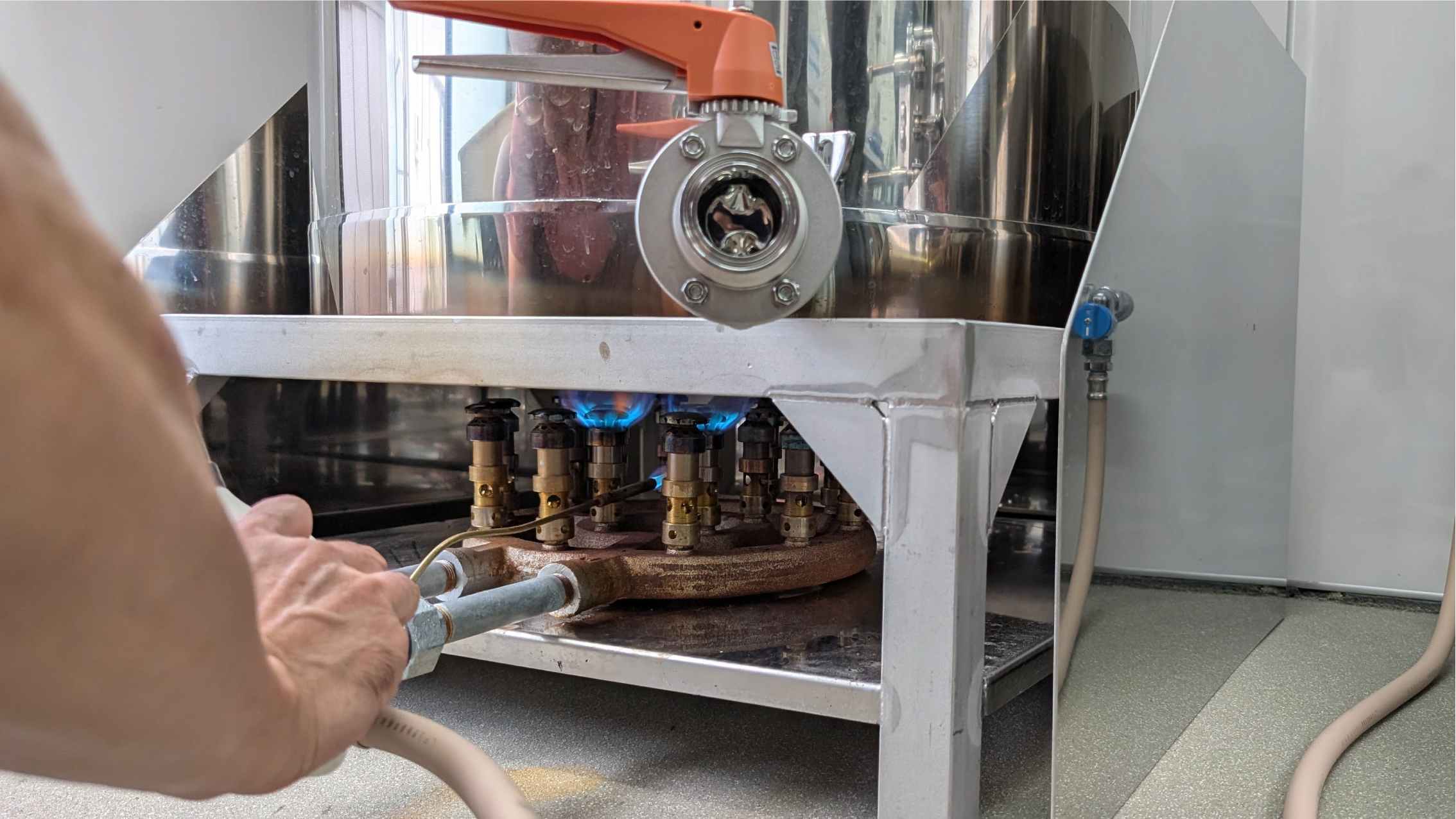
Direct-fire brewing means watching the flame and making the call yourself — “now’s the moment” — in real time. It’s demanding, but it’s also what makes the process feel human. That, they say, is the real appeal of brewing over an open flame.

To be fair, the brew room gets hot — well over 40°C in summer — and the thermal efficiency can’t match a boiler. Even so, they chose the hands-on approach: it lets them brew in small batches without needing boiler equipment at all.

Direct-fire tanks
The hot liquor tank, mash tun, and boil kettle are all direct-fire, heated by open flame rather than boiler steam

Finding MONOVATE, and the Path to Installation

They found MONOVATE through an online search, as a manufacturer that builds complete tank lineups for craft breweries, and reached out through the inquiry form. MONOVATE pointed them to Yokogawa Brewery in Hiroshima, which was running the same size and type of setup — a chance to see the real thing in operation rather than judging from a catalog and drawings alone.

MONOVATE accompanied them on a visit to that brewery. Seeing the equipment running, and hearing it explained on site, they found it matched almost exactly what they wanted to brew — enough to know “this setup will work as is.” From there, MONOVATE proposed adjustments suited to their own conditions: since Iwanuma winters get cold enough to drag fermentation temperatures below the target range, they added a chiller capable of both heating and cooling, not just cooling.

MONOVATE visited the site while it was still under construction to check delivery and installation conditions, attended the actual delivery, and has stayed involved ever since opening.

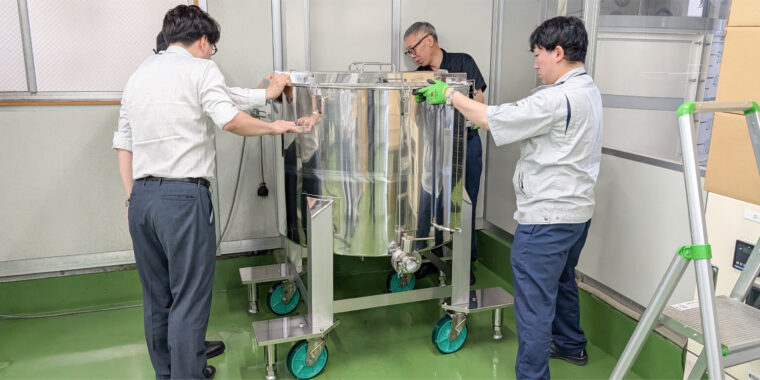
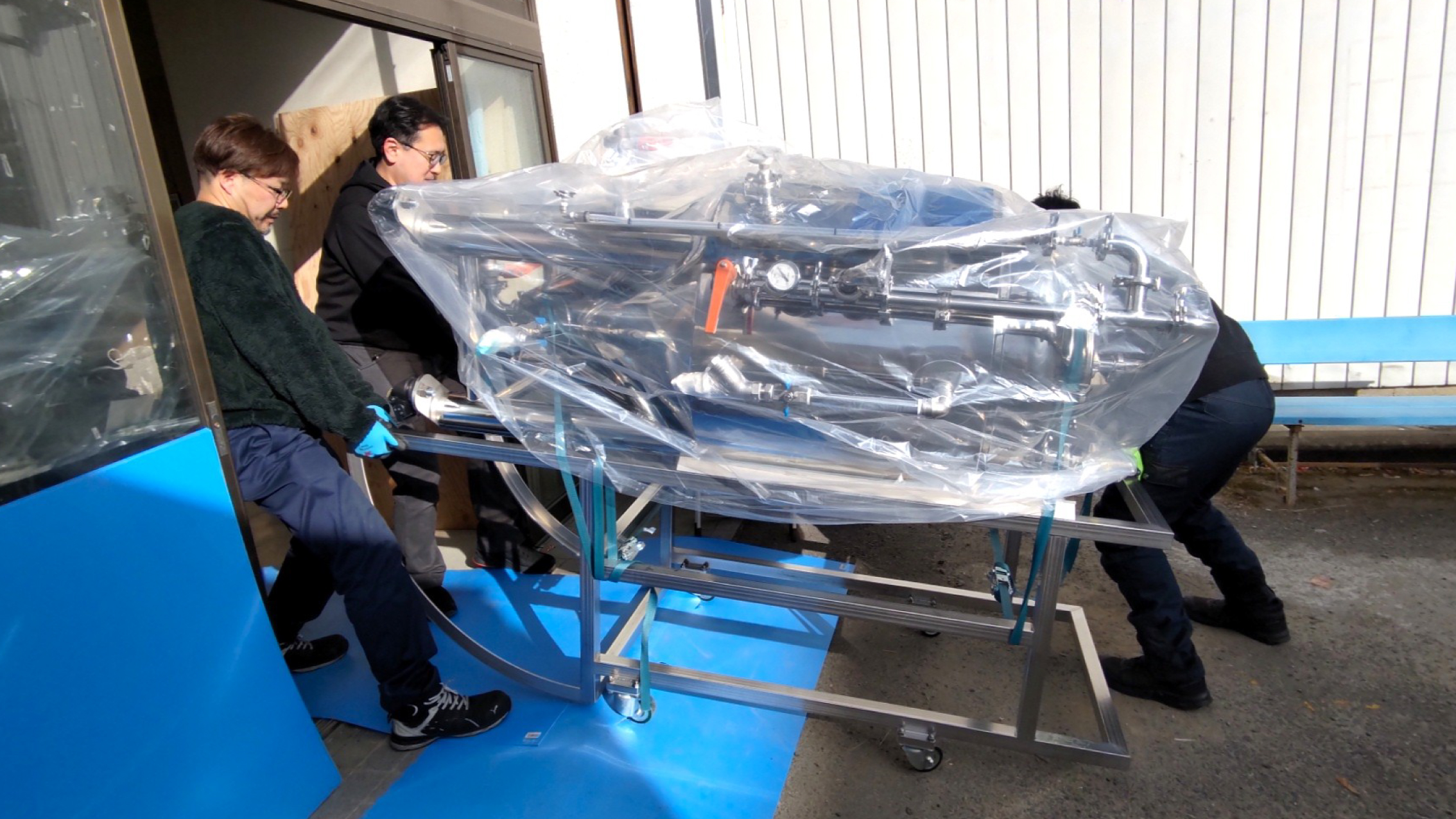
Equipment delivery day
Delivery day — each tank carried in one at a time to its installation spot

Weighing Imported Equipment — and the Deciding Factor

They did look at pricing for imported equipment, which is genuinely cheaper. But without English on their side, they worried that detailed requests simply wouldn’t come across clearly, even through a trading intermediary.

They’d also heard from other brewers who’d gone the imported route: welds cracking or leaking before the equipment had even been used. Repairs meant flying a technician in, with airfare and hotel costs alone running two to three days — a “quick fix” costing hundreds of thousands of yen. Once you factor that in, it’s not obvious the imported option is actually cheaper.

The deciding factor, in the end, came down to two things: MONOVATE could actually deliver the direct-fire, small-batch brewing setup they wanted — something they’d struggled to find anywhere else in Japan — and a visit to MONOVATE’s own Yashio plant in Saitama, where they saw the manufacturing and inspection process firsthand and came away confident: “this is going to be fine.”

Working With a Domestic Manufacturer

The value of working with a Japanese manufacturer shows up in the small, ongoing conversations — being able to work through detailed requests together as they come up. Running their own process surfaced adjustments they hadn’t anticipated: the lauter plate (the perforated base plate used to filter the wort) would occasionally clog during mashing. Switching to a coarser malt grind mostly solved it, and they were still discussing further tweaks to the plate itself during this very interview.

With imported equipment, they suspect, the relationship would end once the finished product arrives. Here, they can keep talking it through — before the purchase, during setup, and long after they started using it. That ongoing relationship, they say, is the real difference with a domestic manufacturer.


From the sales team: On price alone, we can’t compete with imported equipment. What we’d ask people to look at instead is what happens after the purchase. For this project, we first brought them to a brewery already running the same setup so they could see it working before finalizing the specification. We then visited the site during construction to check delivery and installation conditions, attended the delivery itself, and recently returned for an after-sales visit to make adjustments on the spot. None of that would have been possible without being entrusted with the full equipment lineup — having consistent specifications across every connection point makes it much faster to isolate any issue that comes up. Equipment isn’t something we deliver and walk away from, and we look forward to continuing to support them going forward.

Zero Downtime, No Compromises: Why a Pharma Manufacturer Chose MONOVATE for 30 Sanitary Tanks

Case study: Pharmaceutical manufacturer voice-of-customer interview

Challenge

For a new sugar-coating liquid production line, the customer needed roughly 30 sanitary agitator tanks in a single project, and urgently needed a reliable, bulk supply from a manufacturer with a strong track record in the pharmaceutical industry.

Solution

Building on its prior delivery record and the trust it had earned, MONOVATE brought its engineering expertise and proposal capability to fully meet the pharmaceutical industry’s strict requirements.

Result

The customer achieved the manufacturing environment that matters most in the pharmaceutical industry: equipment that keeps running without trouble.

Customer profile: A leading pharmaceutical manufacturer specializing in the production of prescription drugs requiring advanced technology. The company contributes to healthcare by delivering safe, effective medicines under strict quality standards and manufacturing controls.

Background: A New Sugar-Coating Line and the Need for a Trusted Bulk Supplier

Q: Could you tell us the background behind this large-scale equipment installation?

A new project required an expansion of equipment, which meant we needed several additional tanks. The primary product involved is sugar-coating liquid, used to coat the surface of tablets.

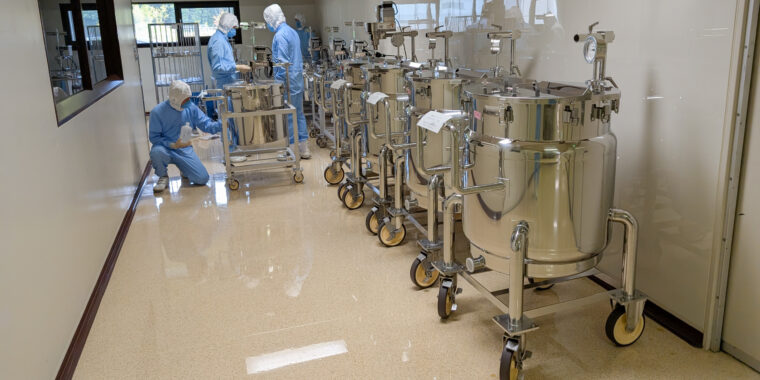
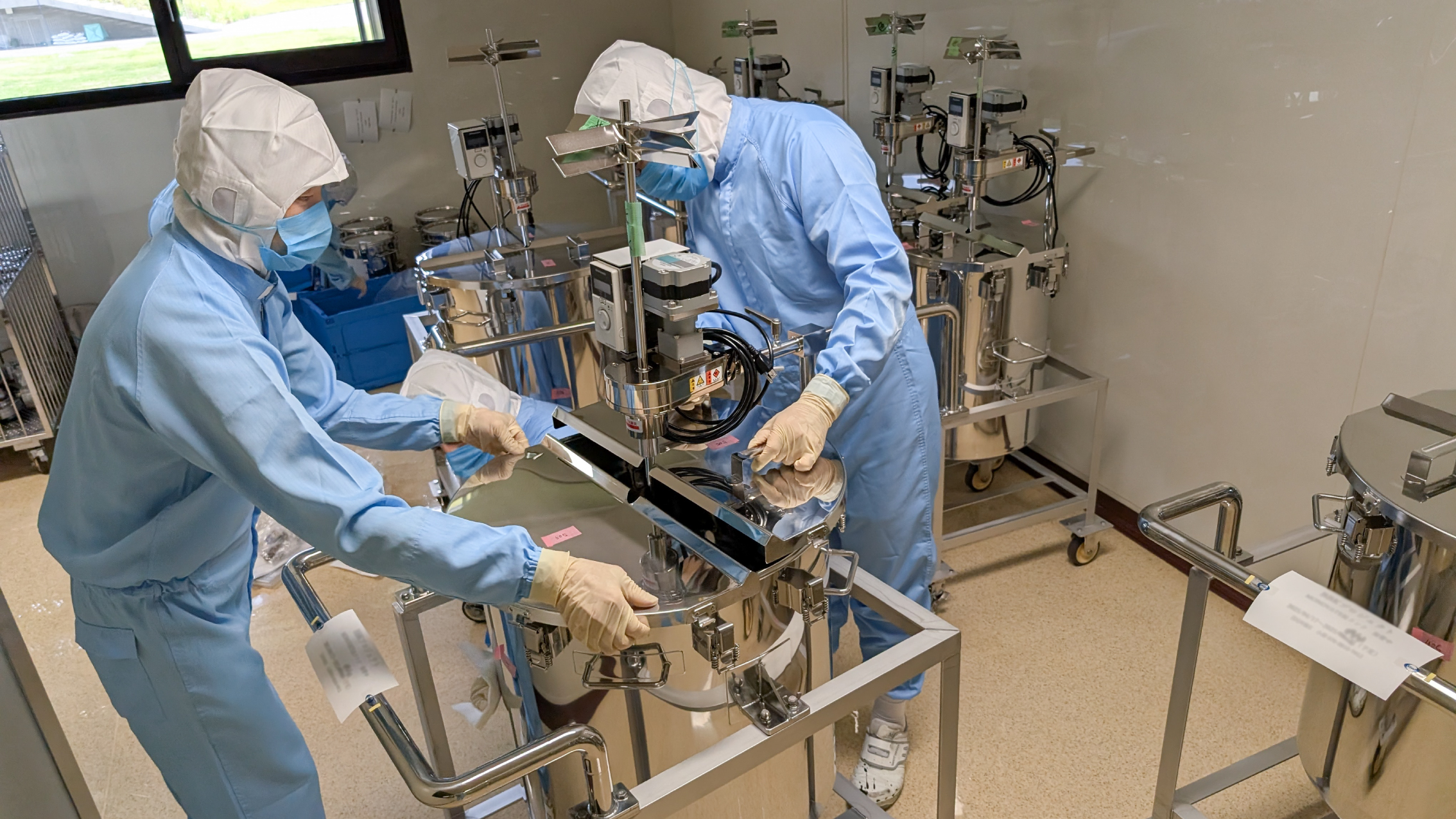
Agitator tank installed for the sugar-coating production line
The agitator tank installed for this project

MONOVATE’s Proposal Strength: “We Give Back 12 for Every 10”

Q: What made you choose MONOVATE for this tank installation?

We had used MONOVATE before with complete confidence, having experienced no issues whatsoever, so we asked them again this time.

Another reason is that it’s not just the sales staff — the engineering team also responds flexibly to our design requests. To put it simply, when we give them 10, they give us back 12.

I regularly work with more than ten equipment manufacturers, but very few of them — across sales and design alike — offer that extra value on top of what’s asked. Through repeated back-and-forth with MONOVATE’s engineers on the design, I was consistently impressed by their sharp eye for detail and their proposals that addressed exactly the points we needed.

To begin with, in my mind, “stainless steel vessel” simply equals “MONOVATE.” I don’t really consider other options. And compared to other equipment manufacturers, MONOVATE also has an edge on cost.

Addressing Weight and Metal-Contamination Risks After Liquid Filling

Q: What did you pay the most attention to when actually proceeding with the tank installation?

Some of the tanks we installed this time have a capacity of around 300 liters, and when filled to capacity with liquid, they become quite heavy. We held repeated discussions with the design team about portability, so that anyone on-site could handle the tanks easily.

For example, we requested larger casters to make the tanks easier to move, and adjusted the height of the handles to improve operability — attention to detail was built into every part of the request. We even tested this in practice during the FAT, filling the tanks with liquid and moving them to confirm.

Workability matters, of course, but the real priority is achieving both quality and safety at the same time.

MONOVATE’s design team was also flexible in areas such as selecting snap latches that let the tank and lid always be fixed in the same position, ensuring the agitator shaft never contacts the lid opening.

Building this kind of trust through our exchanges naturally makes MONOVATE our first choice again for the next project.

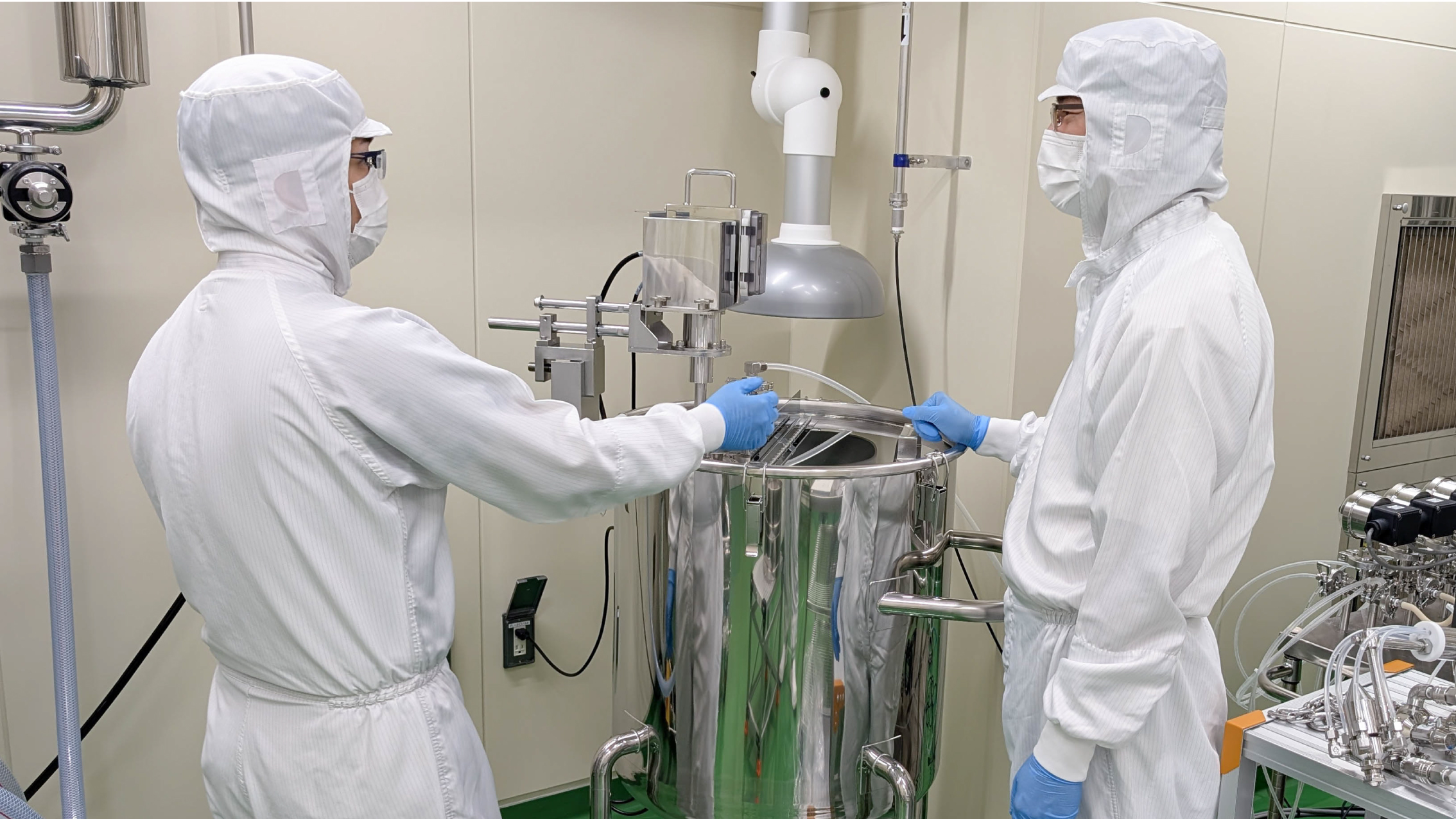
Scene during IQ (Installation Qualification)
During IQ (Installation Qualification)

Inspection Readiness for a Leading Pharmaceutical Manufacturer

Q: Could you share your thoughts on the importance of validation documentation in the pharmaceutical industry?

Because we face rigorous inspections both domestically and internationally, validation documentation is of course essential. During inspections, we use the manufacturer’s documents to provide explanations, so sloppy content or formatting simply isn’t acceptable.

On that point, MONOVATE reliably prepares thorough validation documentation, which gives us peace of mind.

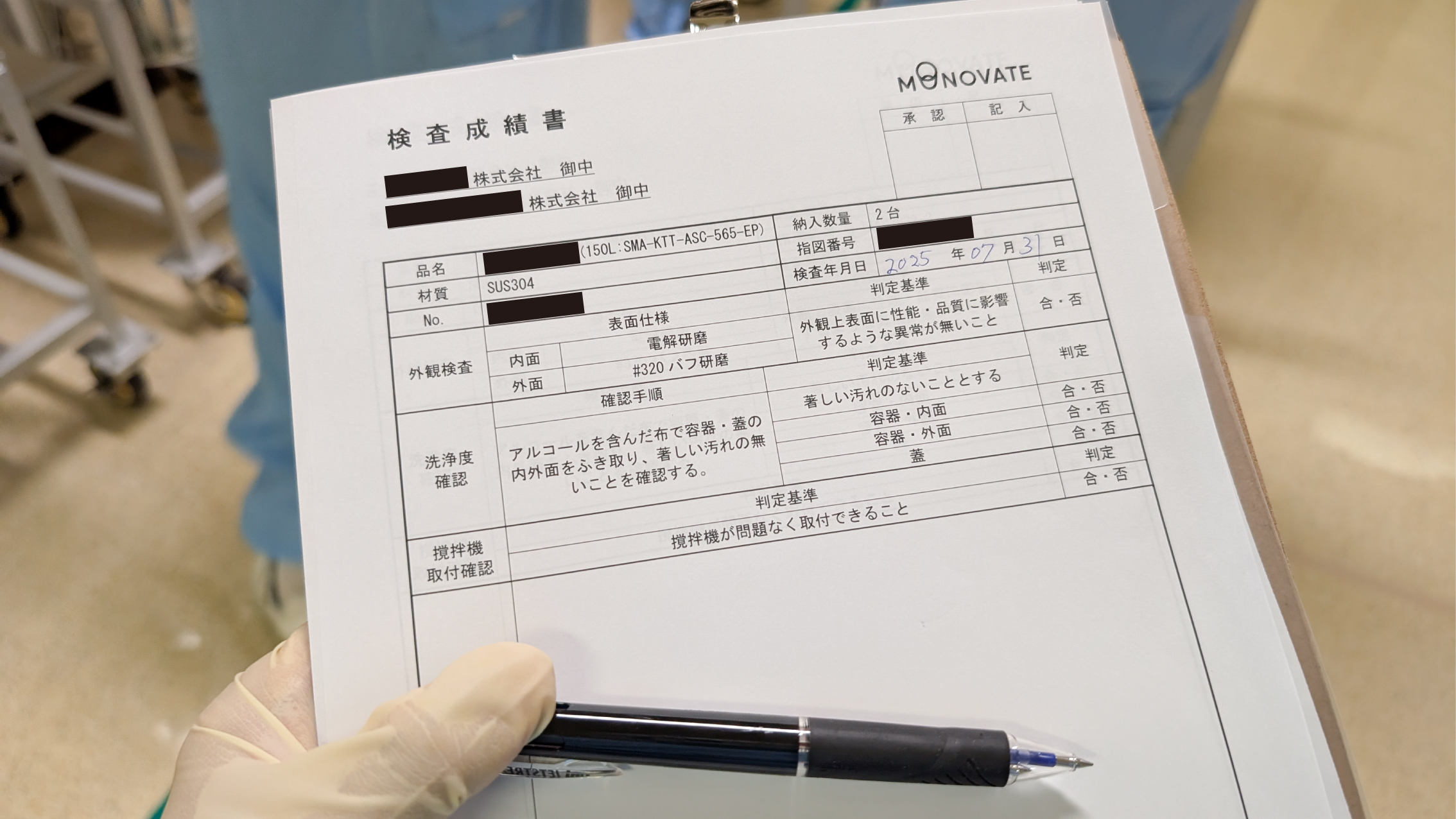
Validation documents submitted for this project

FAT (Factory Acceptance Test) — Pre-shipment quality verification

  • Quality verification documents (5 items): Mill sheets, steel material inspection certificates, and material certificates, used to confirm the quality and composition of materials used and serving as evaluation material for pharmaceutical industry standards.
  • Electropolishing certificates and measuring-instrument calibration certificates, demonstrating surface treatment and instrument control status in support of GMP compliance.
  • Design and inspection documents (4 items): Product specifications and completed drawings, recording conformity with design requirements as a basis for traceability.
  • Inspection procedures and inspection reports (dimensions, appearance, pressure resistance, material), providing objective records of manufacturing quality.

IQ/SAT (Installation Qualification / Site Acceptance Test) — On-site installation qualification

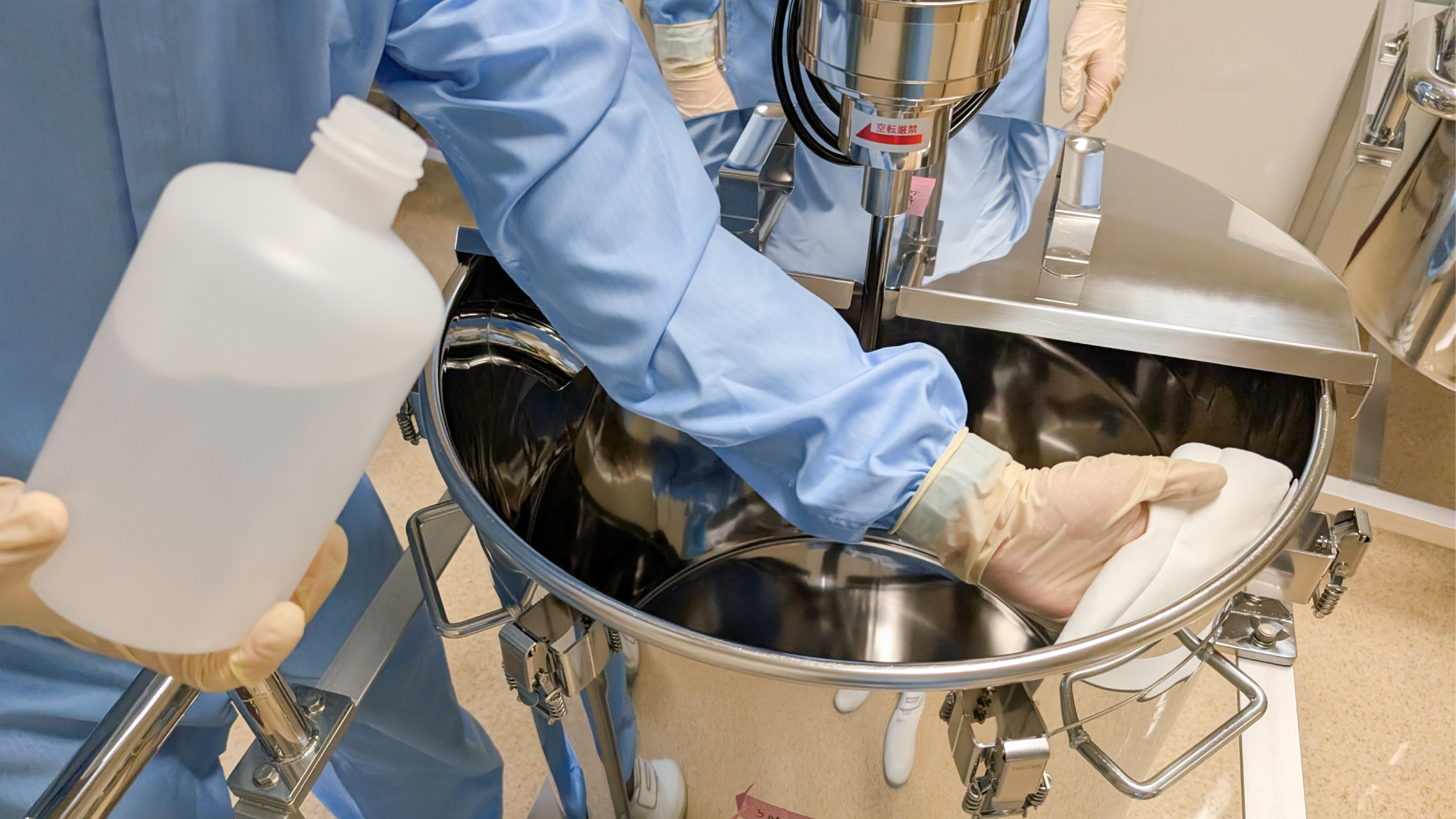
  • On-site verification documents (2 items): Inspection procedures and inspection reports (appearance, cleanliness, agitator mounting), recording functional confirmation after on-site installation and supporting quality checks prior to operation.
Example inspection document during IQ
An example inspection document from the IQ stage

Why “Trouble-Free Operation” Matters Most

Q: Now that the tanks are installed, what benefits do you expect going forward?

It’s less about any specific benefit and more about the fact that, as a manufacturer of original pharmaceutical products, what matters most to us is being able to keep manufacturing exactly as before, without any issues.

Rather than chasing standout results, what matters most is that operations continue without trouble, on both the quality and safety fronts. That’s precisely why we continue to rely on MONOVATE, whose track record we trust.

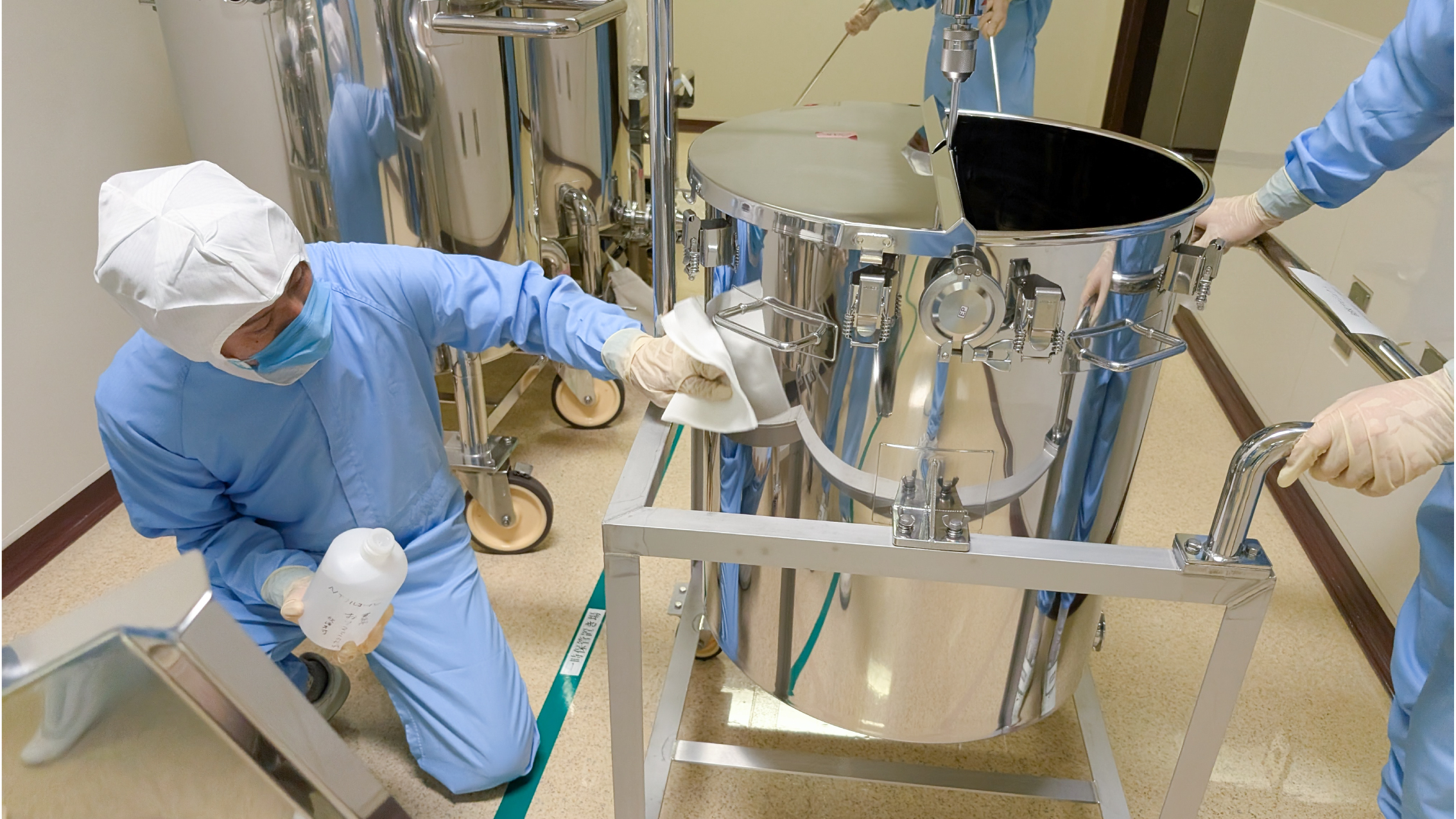
Alcohol wipe-down inspection of tank interior and exterior surfaces
Alcohol wipe-down inspection of the tank’s interior and exterior surfaces

MONOVATE is grateful for the opportunity to supply approximately 30 tanks for this large-scale project. We understand deeply how critical “trouble-free operation” is in the pharmaceutical industry — if production were to stop, it could in the worst case lead to a product shortage in the market, affecting the manufacturer’s reputation. We take that responsibility seriously, and being trusted with it means a great deal to us. We will continue to refine our technology and quality so we can keep supporting stable manufacturing environments for our customers.